





Key Specs Buyers Need When Purchasing a Liquid Soap Mixer Machine
- Key Specs Buyers Need When Purchasing a Liquid Soap Mixer Machine
- Why the right homogenizer mixer matters for liquid soap production
- Product overview: Liquid Soap Mixer Machine for Sale (Yuanyang)
- Mixing Capacity and Tank Design (homogenizer mixer capacity)
- Typical capacities and throughput (comparison table)
- Homogenizer Mixer Type and Shear Requirements
- Materials of Construction and Surface Finish (regulatory & longevity)
- Heating, Cooling and Thermal Control
- Top Agitation, Scrapers, and Bottom Homogenizer Integration
- Control Systems, Automation and Data Logging
- Maintenance, Access and Sanitation (CIP/SIP compatibility)
- Energy Consumption and Operating Costs
- Safety, Compliance and Certifications
- Customization, Scalability and Spare Parts
- Comparing Suppliers: A Practical Checklist
- Brand Advantages — Why Choose Yuanyang's Liquid Soap Mixer Machine for Sale
- Cost-Benefit Example (illustrative)
- FAQ — Frequently Asked Questions
- Q: What is the difference between a homogenizer mixer and a regular agitator?
- Q: Can I use the Liquid Soap Mixer Machine for Sale for hand sanitizer production?
- Q: How often do homogenizer seals need replacement?
- Q: Is the machine CIP-capable?
- Q: What documentation should the supplier provide?
- Contact / View Product CTA
- References & Authoritative Sources
Key Specs Buyers Need When Purchasing a Liquid Soap Mixer Machine
Why the right homogenizer mixer matters for liquid soap production
Choosing the correct homogenizer mixer is a critical decision for any producer of liquid cleaning products. The right equipment—such as the Liquid Soap Mixer Machine for Sale—affects product quality (viscosity, stability, clarity), production throughput, operational costs, regulatory compliance, and scalability. This guide walks through the technical specifications and operational considerations buyers should prioritize so they can select a machine that meets current needs and future growth. After confirming technical specifications, the next challenge is seamless factory deployment. Proper integration tips for homogenizer mixers into factory production lines help avoid bottlenecks and downtime.
Product overview: Liquid Soap Mixer Machine for Sale (Yuanyang)
The Yuanyang liquid soap mixer machine is an industrial homogeneous mixer for liquid soap production. The mixer machine is mainly designed to produce such liquid products as shampoo, body wash, laundry detergent, dish soap, hand sanitizer and other thick liquids.
Features:
⦁ Flat top, half-open lid, electric control system.
⦁ Suitable for various liquid cleaning products and sauces.
⦁ PTFE wall scrapers stirring at top, high shear homogenizer at bottom.
Mixing Capacity and Tank Design (homogenizer mixer capacity)
Capacity is one of the first decisions. Understand current batch sizes, target production rates (batches per day), and future scale-up plans. Tank volume dictates batch size but also affects mixing dynamics. Key points:
- Nominal tank capacity vs. working volume: Always confirm usable working volume (typically 70–85% of nominal) to allow headspace for mixing and expansion.
- Aspect ratio (height to diameter): This influences vortex formation and shear distribution. Taller tanks aid vertical mixing; wider tanks often require more powerful impellers or baffles.
- Multiple tank configurations: For continuous or semi-continuous operations, consider linked tanks (mixing, storage, and recirculation).
Typical capacities and throughput (comparison table)
Below is a sample specification comparison for common industrial homogenizer mixer sizes. Use it to benchmark supplier offerings.
| Model / Tank Volume | Typical Batch Size (L) | Homogenizer Power (kW) | Expected Output (kg/hr) | Suitable Products |
|---|---|---|---|---|
| Small (200–500 L) | 150–400 | 3–7 | 150–500 | Hand soaps, shampoos, small-batch detergents |
| Medium (1000–2000 L) | 800–1600 | 7–15 | 500–1500 | Body wash, laundry liquids, dish soap |
| Large (3000–10000+ L) | 2100–8500+ | 15–60+ | 1500–8000+ | High-volume detergent and sanitizer production |
Homogenizer Mixer Type and Shear Requirements
Not all mixers are equal. A homogenizer mixer applies high shear to break droplets and form stable emulsions—critical for liquid soaps, shampoos, and sanitizers that contain oil and surfactants. Assess:
- Shear type: rotor-stator (high shear), inline homogenizer, ultrasonic—choose based on droplet size targets and product formulation.
- Rotor/stator gap: Smaller gaps produce finer emulsions but require more power and are more sensitive to solids.
- RPM range and variable speed: Variable speed allows tuning shear for different formulations.
- Recirculation capability: Inline homogenizers with recirculation loops can achieve finer and more consistent emulsions.
Materials of Construction and Surface Finish (regulatory & longevity)
Materials contact product directly, so choose corrosion-resistant, easy-to-clean options to comply with GMP and extend equipment life.
- Common materials: 316L stainless steel for product-wetted parts is industry standard due to corrosion resistance and cleanability.
- Seals and gaskets: PTFE or FDA/USP-compliant elastomers depending on chemical compatibility and temperature.
- Surface finish: 0.6–1.6 µm Ra polish for cosmetic and mild surfactant products; finer finishes for high-purity applications.
Heating, Cooling and Thermal Control
Many liquid soap formulas require precise temperature control during mixing—either heating to reduce viscosity for ingredient incorporation or cooling to set final viscosity and stability.
- Jacketed tanks and coil options: Direct steam, electric, or thermal oil jackets are common. Verify design pressure and temperature ratings.
- Integrated temperature sensors and PID controls: Allow automated profiles for repeatable batches.
- Heat transfer efficiency: Consider agitation patterns and wall scrapers (like PTFE wall scrapers) to prevent hotspots and improve heat exchange.
Top Agitation, Scrapers, and Bottom Homogenizer Integration
The combination of top agitation and a bottom high shear homogenizer is ideal for viscous liquids. The Yuanyang Liquid Soap Mixer Machine for Sale uses PTFE wall scrapers at the top and a high shear homogenizer at the bottom—this combination provides:
- Uniform mixing and elimination of dead zones via wall scrapers.
- High shear action to reduce droplet size and stabilize emulsions at the bottom where heavier phases often settle.
- Flexibility to run low-shear and high-shear steps in one vessel, reducing transfers and contamination risk.
Control Systems, Automation and Data Logging
Modern liquid soap production benefits from automation for consistency and regulatory compliance. Assess:
- Electric control system: PLC-based controls with HMI screens for recipe management and parameter monitoring.
- Data logging: Batch records, temperature, speed and homogenizer run times for traceability and QA.
- Remote monitoring and integration: MES/SCADA compatibility for larger plants and Industry 4.0 readiness.
Maintenance, Access and Sanitation (CIP/SIP compatibility)
Downtime and cleaning time directly affect production economics. Evaluate design for maintainability and sanitation:
- CIP (Clean-In-Place) vs. manual: CIP-capable designs with spray balls and accessible ports reduce cleaning time.
- Seal accessibility: Mechanical seals on homogenizers should be serviceable without full disassembly when possible.
- Top access and half-open lid design: Flat top, half-open lids (like on the Yuanyang machine) ease loading and manual cleaning when needed.
Energy Consumption and Operating Costs
Assess total cost of ownership, not just purchase price. Important factors include:
- Motor and homogenizer efficiency—higher-power units consume more energy but may reduce processing time.
- Heating source efficiency—steam systems, electric heaters, and thermal oil vary in cost and responsiveness.
- Maintenance downtime and spare part availability—choose vendors with local service networks to minimize losses.
Safety, Compliance and Certifications
Ensure the machine meets local and industry regulatory requirements:
- Electrical and machine safety: CE, UL or local equivalents for electrical and mechanical safety.
- Cosmetics/soap production: Follow GMP guidelines for cosmetics and household products (e.g., ISO 22716 for cosmetics manufacturing recommended practices).
- Materials and declarations: Certificates of material compliance (e.g., 316L stainless certificates) and food-contact declarations if relevant.
Customization, Scalability and Spare Parts
Select a supplier who offers modular options and clear upgrade paths:
- Field-upgradeable homogenizer modules or higher-power motors to increase capacity without replacing the entire vessel.
- Standardized spare parts lists and local stocking options to reduce Mean Time To Repair (MTTR).
- Options for additional ports, dosing pumps, and inline filtration for complex formulations.
Comparing Suppliers: A Practical Checklist
When comparing quotes for a homogenizer mixer, use this prioritized checklist to ensure apples-to-apples comparisons:
- Rated tank capacity and usable working volume.
- Homogenizer type, rotor/stator gap, and rated rpm/power.
- Materials of wetted parts and surface finish specification.
- Heating/cooling capability and temperature control precision.
- CIP/SIP compatibility and sanitation features.
- Control system and data logging capabilities.
- Warranty, spare parts, and local service availability.
- Certifications (CE, UL) and compliance documents (ISO 22716, material certificates).
Brand Advantages — Why Choose Yuanyang's Liquid Soap Mixer Machine for Sale
For buyers considering the Liquid Soap Mixer Machine for Sale from Yuanyang, the machine offers several advantages tailored to liquid cleaners and viscous formulations:
- Integrated Top Scrapers + Bottom High Shear Homogenizer: Combines gentle top mixing with powerful bottom homogenization to handle a broad range of viscosities and formulations without transferring between vessels.
- Flat top, half-open lid and electric control system: Improves ergonomic access and simplifies operator interventions while providing recipe control for repeatability.
- Material compatibility and industrial-grade construction: Designed for continuous production environments with materials that meet industry cleaning and longevity demands.
- Flexible application: Suitable for shampoo, body wash, laundry detergent, dish soap, hand sanitizer, and other thick liquids—reducing the need for separate equipment for each product line.
Cost-Benefit Example (illustrative)
Consider two options for a medium-scale plant: a basic mixer without integrated homogenizer vs. a combined homogenizer mixer (like Yuanyang). The combined unit typically costs more upfront but reduces transfer steps, labor, and contamination risk and often shortens cycle times. Over a 5-year production horizon, lower operating and labor costs plus fewer quality failures typically yield a favorable ROI for combined units in most formulations that require emulsification.
FAQ — Frequently Asked Questions
Q: What is the difference between a homogenizer mixer and a regular agitator?
A: A homogenizer mixer (high shear) is designed to create fine emulsions and reduce droplet size using rotor-stator mechanisms or inline homogenizers. Regular agitators provide bulk mixing and low to moderate shear suitable for dissolving and blending but cannot consistently produce fine emulsions required for stable liquid soaps or shampoos.
Q: Can I use the Liquid Soap Mixer Machine for Sale for hand sanitizer production?
A: Yes. The Yuanyang machine supports a wide range of liquid viscosities. For alcohol-based sanitizers, ensure material compatibility with high alcohol concentrations and verify seal and gasket specifications.
Q: How often do homogenizer seals need replacement?
A: Seal lifetime depends on operating conditions (temperature, abrasives, solvents). For many operations, planned inspections every 3–6 months and replacement every 6–24 months are typical. Always follow supplier maintenance schedules.
Q: Is the machine CIP-capable?
A: Many configurations offer CIP compatibility. Confirm whether your chosen model includes spray balls, drain angles, and material finishes that meet CIP requirements.
Q: What documentation should the supplier provide?
A: Request mechanical drawings, electrical schematics, material certificates (e.g., 316L SS), surface finish reports, machine CE or local safety certifications, and an operations & maintenance manual including spare parts list.
Contact / View Product CTA
If you are ready to evaluate a homogenizer mixer for your facility or want a quote for the Liquid Soap Mixer Machine for Sale, contact our sales engineers for a technical consultation and ROI estimate. View full specifications and request pricing by contacting our team or visiting the product page.
References & Authoritative Sources
For further reading and standards relevant to soap, cosmetics and mixing equipment design:
- Wikipedia — Homogenizer: https://en.wikipedia.org/wiki/Homogenizer
- ISO 22716 — Cosmetics — Good Manufacturing Practices (GMP) (official ISO page): https://www.iso.org/standard/22757.
- U.S. FDA — Cosmetics Guidance & Compliance: https://www.fda.gov/cosmetics
- Wikipedia — Mixer (machine): https://en.wikipedia.org/wiki/Mixer_(appliance)
- Hygienic Design Guidance — European Hygienic Engineering & Design Group (EHEDG): https://www.ehedg.org
Authoritative sources were consulted to ensure this guide aligns with best practices for homogenization, material selection and regulatory compliance.
How to Choose the filling and capping machine manufacturer and supplier ?
Top 5 auger bunk feeder Company List and Products Compared
How to start the automatic can labeling machine business in Asia ?
YUANYANG Best professional industrial disperser manufacturers and supplier brands in America
Horizontal Filling Machine
Can the hose be used to fill high temperature liquids?
The hose can bear 70 degree temperature.
Portable Storage Tank
What’s the thickness of the stainless steel tank for liquids?
The standard thickness for finished products is 3mm, the water tank thickness is 2mm. But the bigger capacity, the layer will be thicker.
Single Layer Agitator Tank
What capacity do you provide for the mixing tank with agitator?
The steel tank with agitator has different capacity from 50L to 5000L.
Washing Powder
What types of packaging does the equipment support?
Our machines accommodate various packaging formats, including bottles, bags, and small packs, to meet diverse market demands.
Homogneizer mixer tank
How to discharge finished products?
Let the liquid products flow down naturally by valve control. Use a transfer pump to convey products to storage tanks in a short time.
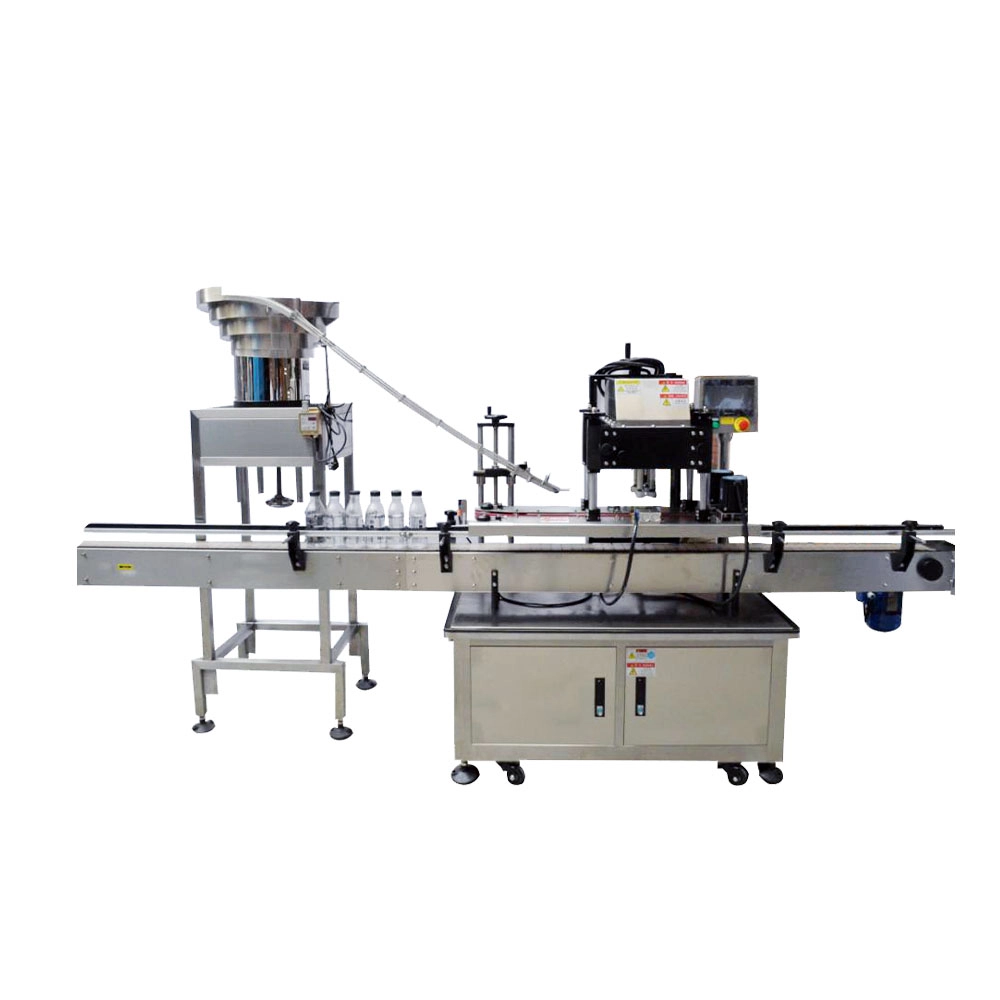
Automatic Plastic Caps Capping Machine with Vibrating Cap Feeder for Sale
Yuanyang automatic screw capping machine is a kind of four-wheel bottle capping machine. The automatic screw capper is often used to close lids of containers such as bottles and jars, especially for plastic bottles, which are widely used in food, medicine, chemical, cosmetic, and other industries for mass production and continuous production lines.
Features:
⦁ Full pneumatic drive;
⦁ Automated fast speed;
⦁ Suitable for various screw caps, pumps, and spray bottles.
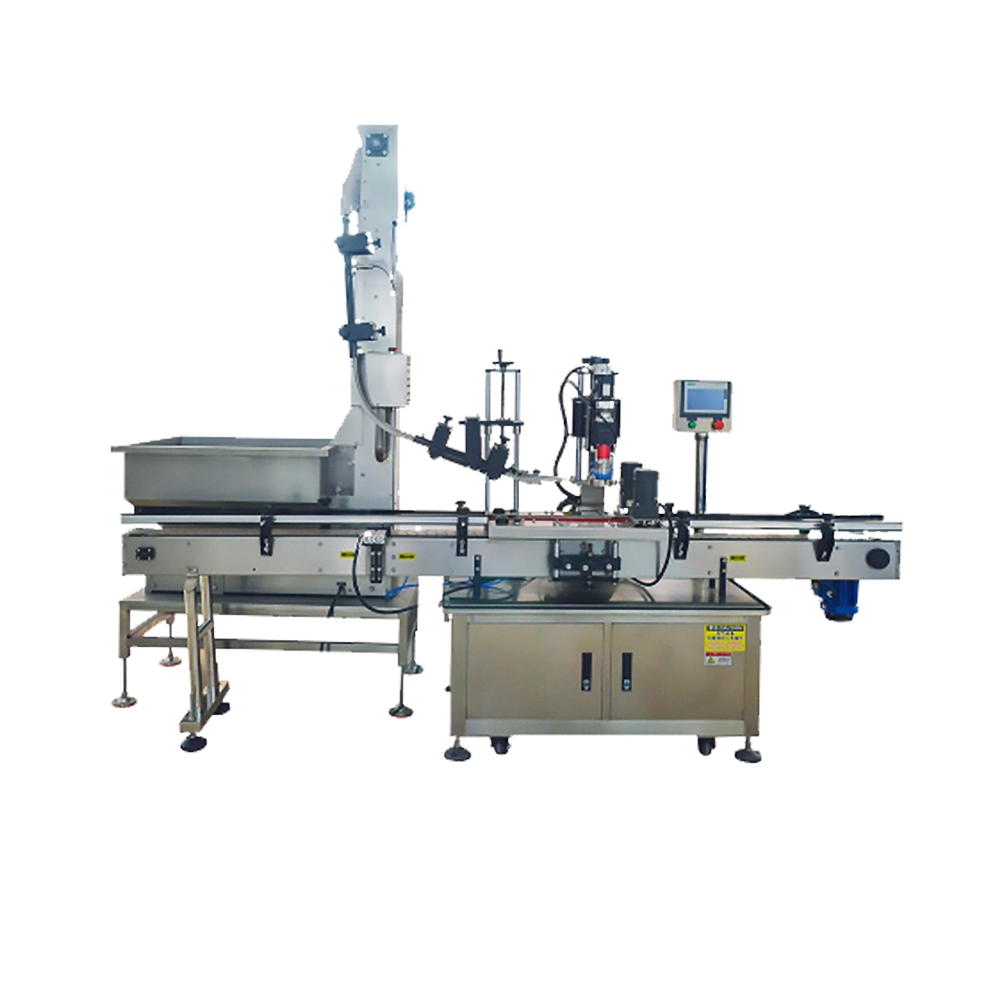
Automatic Metal Caps Capping Machine for Sale
Yuanyang automatic metal cap capping machine is a bottle capper for bottles with metal caps, which is often used to close lids of containers such as bottles and jars. The glass bottle metal capping machine is widely used in food, medicine, chemical, cosmetic, and other industries for mass production and continuous production line .
Features:
⦁ Pneumatic and electric drive;
⦁ Automated fast speed;
⦁ Suitable for glass bottles with metal caps.
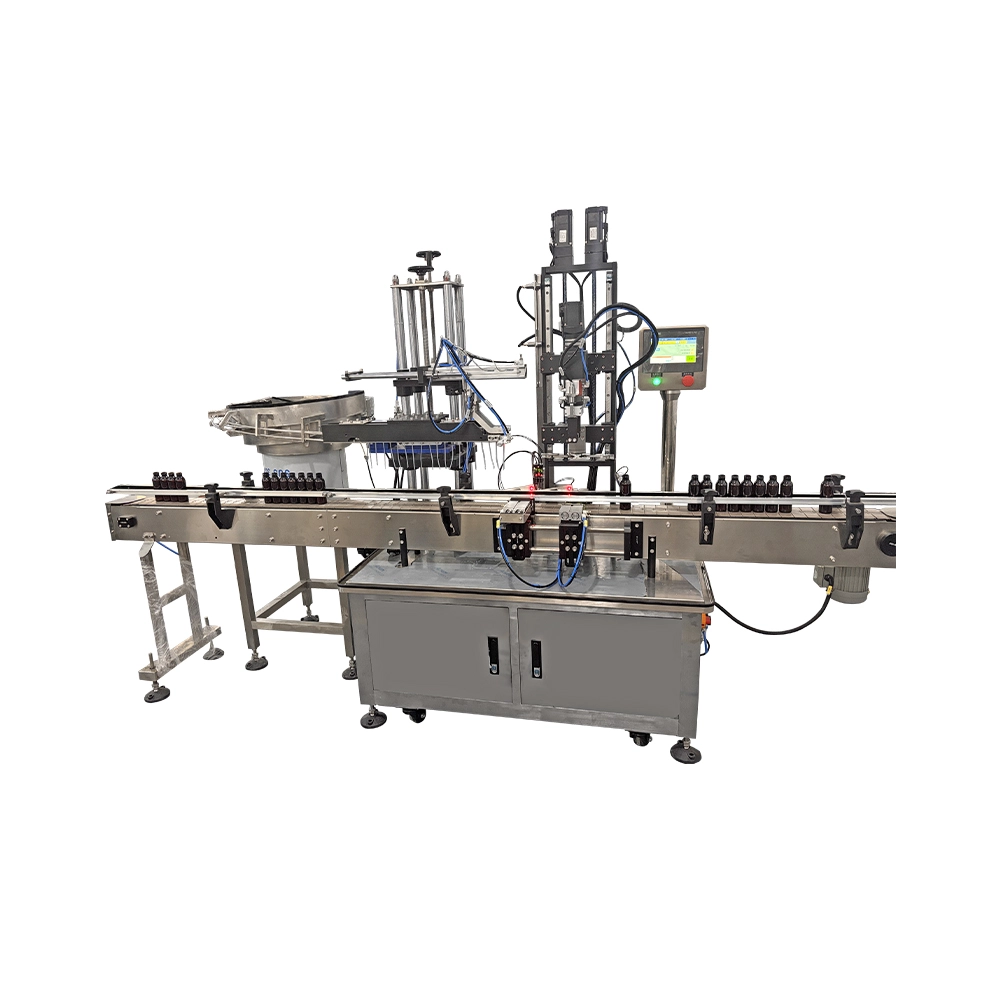
Automatic Pump Head Feeding and Capping Machine for Sale
Yuanyang automatic pump head feeding and capping machine is a bottle cap sorter and capper for bottles with pump heads, which is often used to close lids of containers such as nail polish, sprayers, and shampoo. The capping machine with a pump head feeder is widely used in food, medicine, chemical, cosmetic, and other industries for mass production and continuous production line .
Features:
⦁ Pneumatic and electric drive;
⦁ Automated fast speed;
⦁ Suitable for various types of caps.
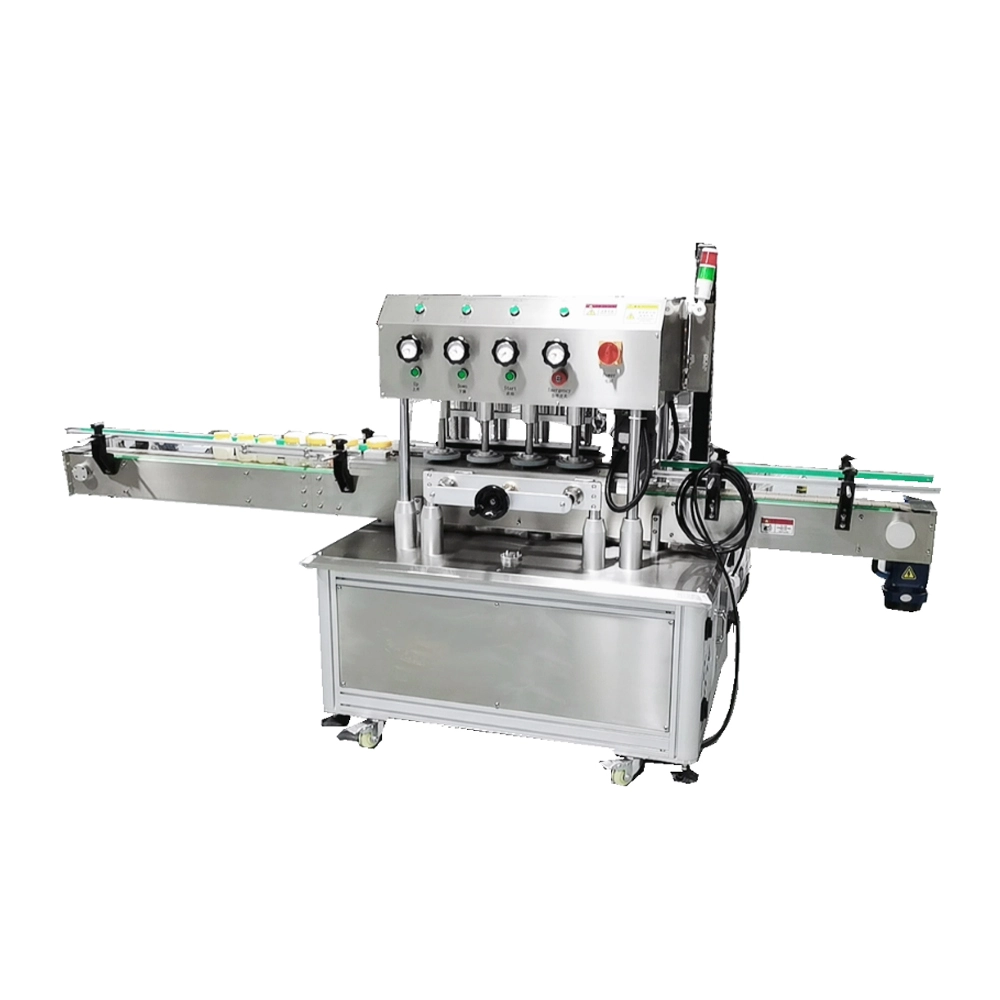
Automatic High Speed Capping Machine for Sale
The Yuanyang automatic high-speed capping machine is a kind of 8-wheel bottle-capping machine with fast working efficiency. The automatic capper is often used to close lids of containers such as bottles and jars, especially for plastic bottles, which are widely used in food, medicine, chemical, cosmetic, and other industries for mass production and continuous production lines.
Features:
⦁ Electric drive;
⦁ Automated fast speed;
⦁ Suitable for various screw caps, pumps, and spray bottles.
 Scan QR Code
Facebook
YouTube
LinkedIn
Whatsapp: +8613434139712
Guangzhou Yuanyang Machinery