





Mixing Tank Materials: Selecting Stainless Steel and Coatings
- Choosing the Ideal Mixing Tank Material for Your Process
- Key factors that determine material selection
- Common choices: stainless steel grades and why they matter
- Surface Finish and Coatings: When to Use Them
- Polishing and electropolishing for sanitary performance
- Coatings and linings: epoxy, PTFE, and fluoropolymers
- Practical Comparisons: Stainless Steel Grades vs. Common Coatings
- Comparison table: corrosion resistance, cost, and hygienic suitability
- Choosing coatings vs. upgrade to higher-grade stainless
- Special Considerations for Homogenizing and High-Shear Mixing Tanks
- Mechanical wear and compatibility with scrapers and homogenizers
- Cleaning strategies: CIP, SIP and surface validation
- Applying These Principles: Yuanyang Homogenizing Mixer Case
- Product overview: Homogenizing Mixer for Sale
- Recommended materials and finishes for this product
- Installation, validation and maintenance checklist
- Maintenance, Repair and Life-Cycle Cost Considerations
- Inspection frequency and what to look for
- Repair strategies: welding, repassivation, or recoating
- Brand Advantages: Why Choose Yuanyang for Mixing Tank Solutions
- Product alignment with industry needs
- Support, customization and after-sales
- FAQ
- Q1: When should I choose SUS316L over SUS304 for a mixing tank?
- Q2: Are coatings acceptable for food-grade mixing tanks?
- Q3: How does electropolishing help with CIP effectiveness?
- Q4: Can PTFE scrapers damage coated tanks?
- Q5: What documentation should I request from suppliers?

Choosing the right materials and surface treatments for a mixing tank directly affects product quality, regulatory compliance, cleaning efficiency, and lifetime cost. This guide explains why stainless steel is the dominant choice for industrial mixing tanks, when to add coatings or linings, and how to match material selection to process requirements such as shear mixing, high-viscosity formulations, and sanitary operations. Semantic keywords embedded throughout: stainless steel mixing tank, homogenizer, tank lining, PTFE scraper, CIP (clean-in-place), SUS304, SUS316L, electropolishing, epoxy coating, food-grade stainless, corrosion resistance.
Choosing the Ideal Mixing Tank Material for Your Process
Key factors that determine material selection
Material selection for a mixing tank must be driven by process chemistry, regulatory constraints, mechanical demands, and cleaning method. Consider the chemical compatibility of the process fluid (acids, bases, solvents, saline), operating temperature, required surface finish for hygiene, and whether the process uses abrasive or high-shear devices such as a homogenizer or rotor-stator head. Mixing tank semantic considerations: corrosion resistance, sanitary tank design, homogenizer compatibility, agitator mounting integrity, and CIP compatibility.
Common choices: stainless steel grades and why they matter
Stainless steel is the default choice for industrial mixing tanks because of its strength, corrosion resistance, and hygienic properties. The most common grades for mixing tanks are SUS304 (304) and SUS316L (316L). SUS304 is suitable for many cleaning products and low-corrosivity formulations; SUS316L contains molybdenum, improving resistance to chlorides and aggressive chemistries. For guidance on stainless steel metallurgy, see Stainless steel - Wikipedia.
Surface Finish and Coatings: When to Use Them
Polishing and electropolishing for sanitary performance
Surface finish affects cleanability and biofilm risk. Mechanical polishing reduces roughness, while electropolishing creates a passive, smooth oxide layer that lowers microbial retention and improves corrosion resistance. Electropolishing is common in food, cosmetic, and pharmaceutical mixing tanks where CIP routines and sanitation validation are required. For hygienic design standards and best practices, refer to the EHEDG guidance on hygienic equipment design.
Coatings and linings: epoxy, PTFE, and fluoropolymers
Coatings are used when the process fluid is highly corrosive, when the base material is carbon steel for cost reasons, or when specific release properties are needed (e.g., sticky sauces). Typical coatings include epoxy novolac (for chemical resistance), PTFE or other fluoropolymer linings (for non-stick, chemical resistance), and rubber linings (for acid resistance). Coatings require proper surface preparation and have lifecycle trade-offs: repairability, potential delamination, and inspection needs. Where a tank uses a high-shear homogenizer at the bottom and PTFE wall scrapers at top (as in some homogenizing mixers), the compatibility of scraper and coating must be validated to avoid wear and particulate contamination.
Practical Comparisons: Stainless Steel Grades vs. Common Coatings
Comparison table: corrosion resistance, cost, and hygienic suitability
Below is a concise comparison to help choose between stainless steels and common coatings for a mixing tank application.
| Material / Coating | Corrosion Resistance | Hygienic / Cleanability | Typical Application | Relative Cost |
|---|---|---|---|---|
| SUS304 (304) | Good for mild chemicals, not ideal with chlorides | Good with polished or electropolished finish | Shampoos, soaps, many detergent formulations | Moderate |
| SUS316L (316L) | Excellent against chlorides, acids, and salt | Excellent after electropolishing | Saline formulations, solvents, more aggressive chemistries | Higher than 304 |
| Epoxy Novolac Coating | Very good for many acids and bases; limited at high-temp solvents | Good, but joints and damage points require inspection | Chemical storage tanks, some mixers for detergents | Lower than stainless 316L if using carbon steel base |
| PTFE / Fluoropolymer Lining | Excellent; broad chemical resistance | Good release, but seam inspection important | Highly corrosive chemicals, sticky products | High |
| Rubber Lining (e.g., Neoprene) | Good for some acids; poor for solvents | Poorer than stainless for sanitary products | Acid handling, mining slurries (not for food) | Moderate |
Choosing coatings vs. upgrade to higher-grade stainless
Decision logic: if sanitary cleanability and long life with minimal maintenance are critical, a higher-grade stainless (316L) with electropolish is often the best long-term choice despite higher upfront cost. If extreme chemical attack is expected and full stainless is not economical, a coated carbon steel tank or stainless tank with localized linings may be appropriate. Factor in inspection intervals and the possibility of coating repair downtime when calculating total cost of ownership.
Special Considerations for Homogenizing and High-Shear Mixing Tanks
Mechanical wear and compatibility with scrapers and homogenizers
High-shear homogenizers and PTFE wall scrapers impose mechanical wear on tank bottoms and walls. PTFE scrapers are excellent for reducing product buildup but will abrade softer linings. For a mixing tank fitted with a bottom mounted homogenizer and top PTFE scrapers, consider using stainless steel interiors (SUS316L) with an electropolished finish to resist wear and maintain hygiene. Also ensure agitator seals and homogenizer bearings are chemically compatible with the process fluid.
Cleaning strategies: CIP, SIP and surface validation
CIP (clean-in-place) is the norm for food, cosmetic, and pharmaceutical mixing tanks because it avoids disassembly and reduces contamination risk. Materials and coatings must withstand repeated exposure to caustic cleaners, acids, hot water, and sanitizers. Electropolished stainless with properly designed welds minimizes crevices and passes CIP validation more easily. For regulatory and best-practice context, see the FDA food guidance and industry mixing principles in Mixing (process engineering) - Wikipedia.
Applying These Principles: Yuanyang Homogenizing Mixer Case
Product overview: Homogenizing Mixer for Sale
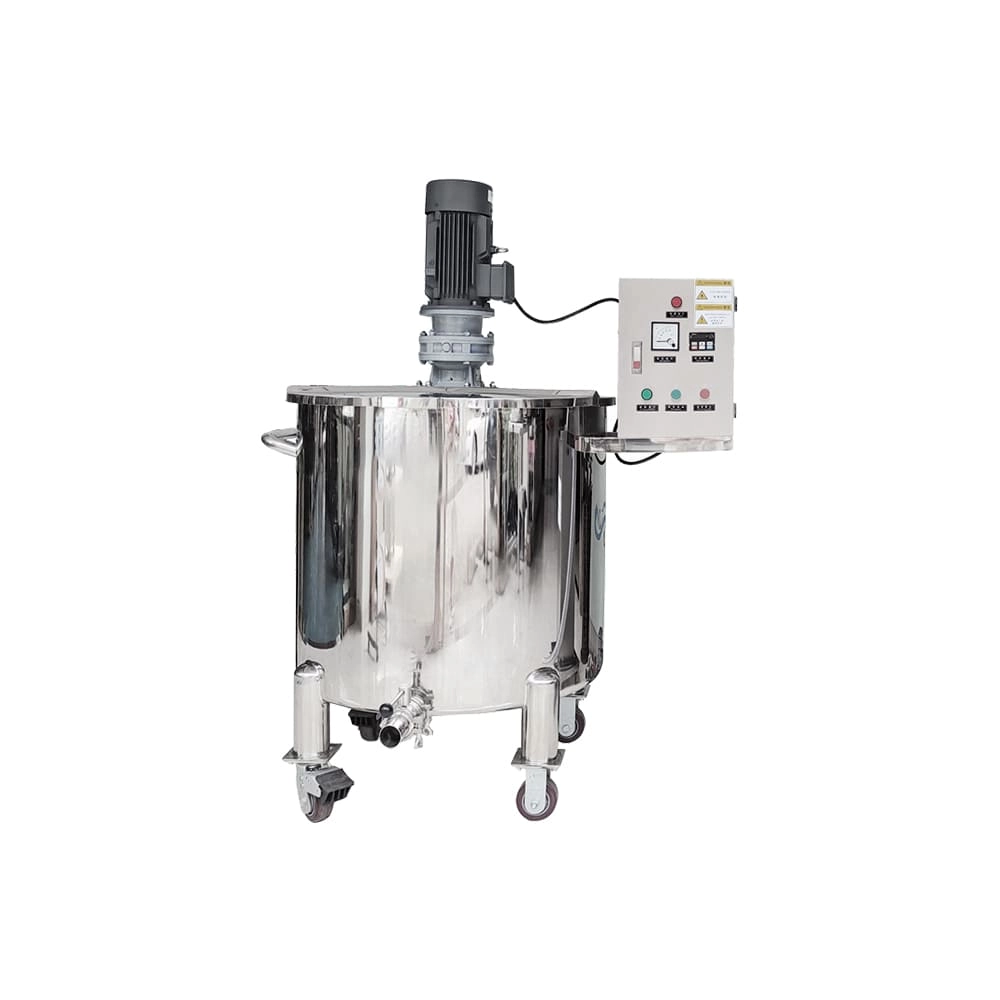
Homogenizing Mixer for Sale
Yuanyang homogenizing mixer is a liquid mixing tank with a high-shear homogenizer. The homogeneous mixing machine is the core part for the liquid soap production line for shampoo, body wash, laundry detergent, dish soap, hand sanitizer, and other thick liquids.
Features:
⦁ Flat top half-open lid, electric control system.
⦁ Suitable for various liquid cleaning products and sauces.
⦁ PTFE wall scrapers stirring at top, high shear homogenizer at bottom.
Recommended materials and finishes for this product
For a homogenizing mixer used in shampoo and detergent production, the recommended base material is SUS304 if budget-constrained and the chemistry is mild, but SUS316L is preferred to future-proof against chloride-containing additives and sanitizers. Electropolishing of the inner surface will improve cleanability and reduce foaming and product hang-up. PTFE scrapers are suitable for wall cleaning but should be used with an electropolished stainless interior to avoid wear on coatings.
Installation, validation and maintenance checklist
- Confirm material certificates (mill test reports) for stainless steel grade.
- Specify surface finish (Ra) and electropolishing requirements for the interior.
- Select homogenizer sealing compatible with process chemistry and CIP temperatures.
- Create CIP/SIP validation protocols and schedule periodic weld inspections.
- Train maintenance staff on coating repair (if any) and scraper replacement.
Maintenance, Repair and Life-Cycle Cost Considerations
Inspection frequency and what to look for
Inspect weld seams, coating integrity, scraper edges, and homogenizer seals on a scheduled basis. For coated tanks, look for blistering, delamination, or pinhole corrosion at defects. For stainless tanks, check passive layer integrity (passivation can be re-applied) and watch for pitting in aggressive environments. Routine inspections reduce unplanned downtime and extend service life.
Repair strategies: welding, repassivation, or recoating
Minor stainless steel repairs are typically welded and then ground/polished with re-passivation or electropolishing to restore corrosion resistance. Coating repairs require surface prep and qualified reapplication. The decision to repair versus replace should consider contamination risk, regulatory requalification costs, and projected remaining life.
Brand Advantages: Why Choose Yuanyang for Mixing Tank Solutions
Product alignment with industry needs
Yuanyang's homogenizing mixer is engineered for high-shear applications in liquid soap and detergent lines. The integration of PTFE wall scrapers, a bottom high-shear homogenizer, and a flat half-open lid with electric control offers a balanced design that addresses both mixing efficiency and sanitary concerns. This combination reduces dead zones, improves homogenization of viscous liquids, and helps maintain consistent product quality.
Support, customization and after-sales
Yuanyang provides material options (304, 316L), surface finish choices (mechanical polish, electropolish), and coating/lining alternatives to match client process needs. Technical support for validation, CIP programming, and spare parts for homogenizer heads and scraper elements is available to minimize downtime and support regulatory compliance.
FAQ
Q1: When should I choose SUS316L over SUS304 for a mixing tank?
A1: Choose SUS316L if your process includes chlorides, saline solutions, halogenated solvents, or elevated temperatures where chloride stress corrosion might occur. 316L offers better resistance to pitting and crevice corrosion in such environments.
Q2: Are coatings acceptable for food-grade mixing tanks?
A2: Coatings can be acceptable if they are food-grade approved and properly applied, but stainless steel with electropolish is generally preferred because it is more robust, easier to validate, and carries lower risk of particulate contamination from coating degradation.
Q3: How does electropolishing help with CIP effectiveness?
A3: Electropolishing smooths micro-roughness and removes embedded particles, decreasing surface area where microbes and residues can hide. This improves rinseability and reduces chemical demand during CIP cycles.
Q4: Can PTFE scrapers damage coated tanks?
A4: Yes, aggressive or misaligned PTFE scrapers can abrade softer linings. For scraper-equipped tanks, an electropolished stainless interior or a sufficiently hard fluoropolymer lining designed for mechanical interaction is recommended.
Q5: What documentation should I request from suppliers?
A5: Request material certificates (MTR), weld procedure and welder qualifications, surface finish specifications (Ra value), passivation or electropolishing certificates, and any applicable testing or validation data for coatings and homogenizer assemblies.
Once materials are defined, manufacturers should consider future growth through scale-up strategies from pilot to production mixing tanks.If you would like to discuss material selection for a specific application or view the Homogenizing Mixer for Sale options, contact our sales team or check product details. For inquiries, please contact us to discuss customization, quotes, and delivery schedules.
Authoritative references embedded above include: Stainless steel - Wikipedia, Mixing (process engineering) - Wikipedia, and EHEDG. Additional regulatory context available from the FDA food guidance.
Wholesale ro water filter price list manufacturer and supplier in US

Optimizing Mixing Performance: Agitator Types and Configurations
Maintenance Checklist for Stainless Steel Mixing Tanks
What are the different types of bottle labeling machine?
Sealed Storage Tank
Is this storage tank food grade?
Yes, the liquid tank is made of stainless steel 304 or 316L, can store food sauce, mayonnaise, cosmetic cream, lotion, pharmaceutical ointment, other liquids and paste...
Single Layer Agitator Tank
Does the mixing tanks have cooling function?
The single layer mix tank has no cooling function. If you client need cooling function, will customize at least two layers with one jacket for cooling purpose.
Washing Powder
How accurate is the filling process?
Our high-precision filling system ensures consistent and accurate filling every time.
Semi Automatic Double Sides Labeling Machine
Can you add a date printer for the double-side labeling machine?
Yes, optional ribbon coding machine and inkjet printer, to print production date and batch number information on the label, to achieve labeling - coding integration.
Desktop Labeling Machine
Do you have other types of labeling machine?
Yes, there are several types of labeling machine, including semi-automatic labeling machine, automatic labeling machine, round bottle labeling machine, flat labeling machine, double sides labeling machine, square bottle labeling machine.
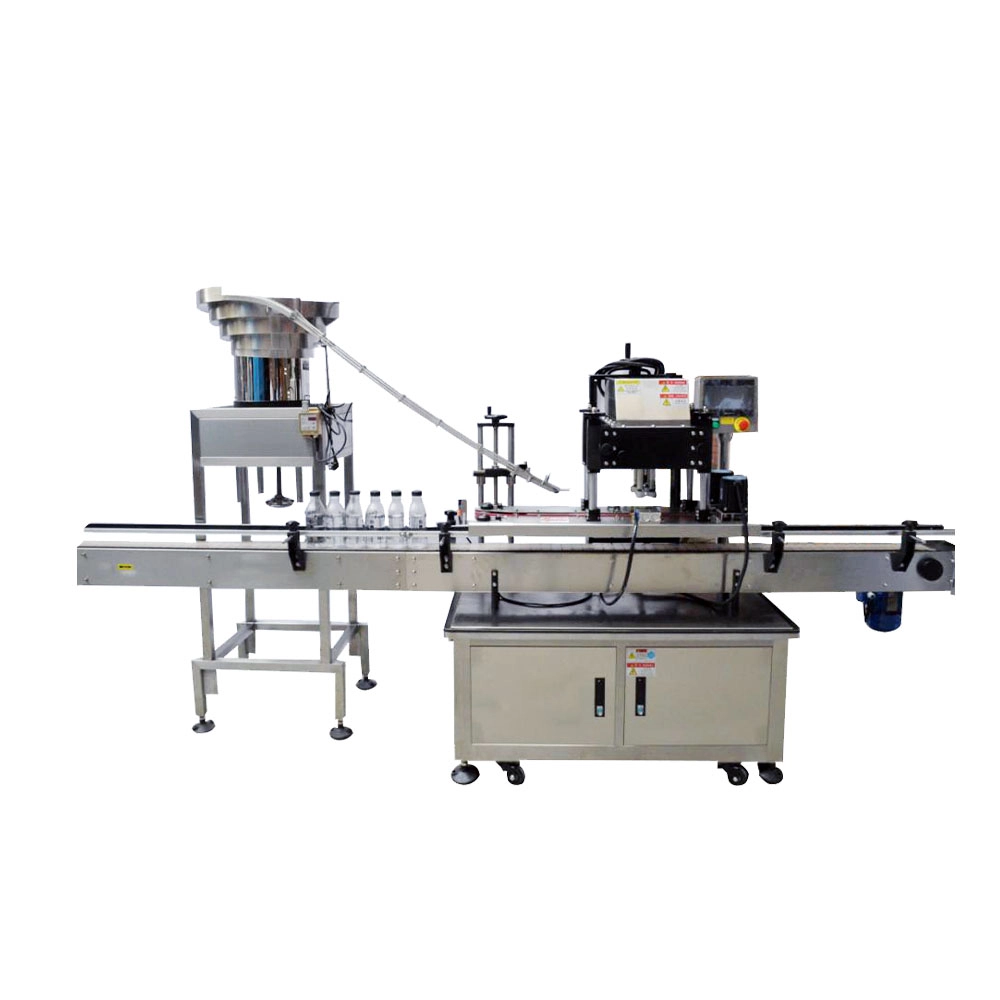
Automatic Plastic Caps Capping Machine with Vibrating Cap Feeder for Sale
Yuanyang automatic screw capping machine is a kind of four-wheel bottle capping machine. The automatic screw capper is often used to close lids of containers such as bottles and jars, especially for plastic bottles, which are widely used in food, medicine, chemical, cosmetic, and other industries for mass production and continuous production lines.
Features:
⦁ Full pneumatic drive;
⦁ Automated fast speed;
⦁ Suitable for various screw caps, pumps, and spray bottles.
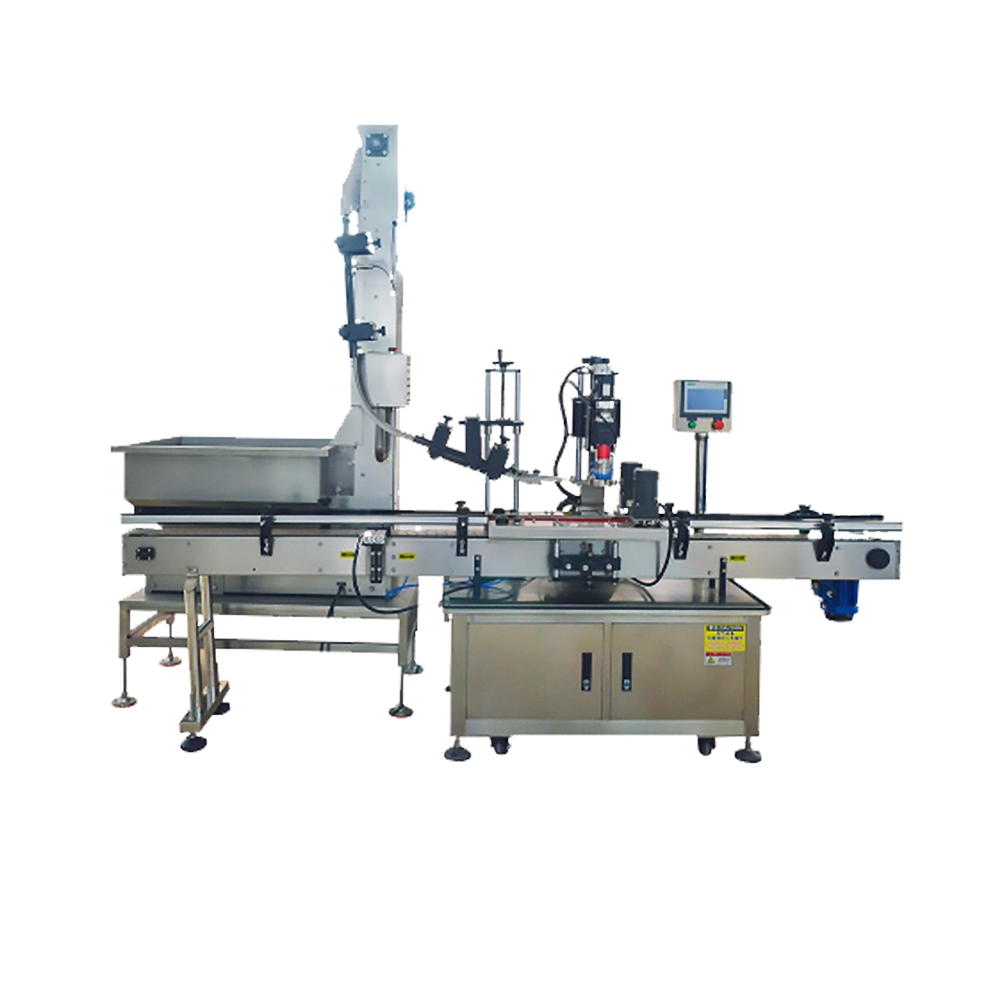
Automatic Metal Caps Capping Machine for Sale
Yuanyang automatic metal cap capping machine is a bottle capper for bottles with metal caps, which is often used to close lids of containers such as bottles and jars. The glass bottle metal capping machine is widely used in food, medicine, chemical, cosmetic, and other industries for mass production and continuous production line .
Features:
⦁ Pneumatic and electric drive;
⦁ Automated fast speed;
⦁ Suitable for glass bottles with metal caps.
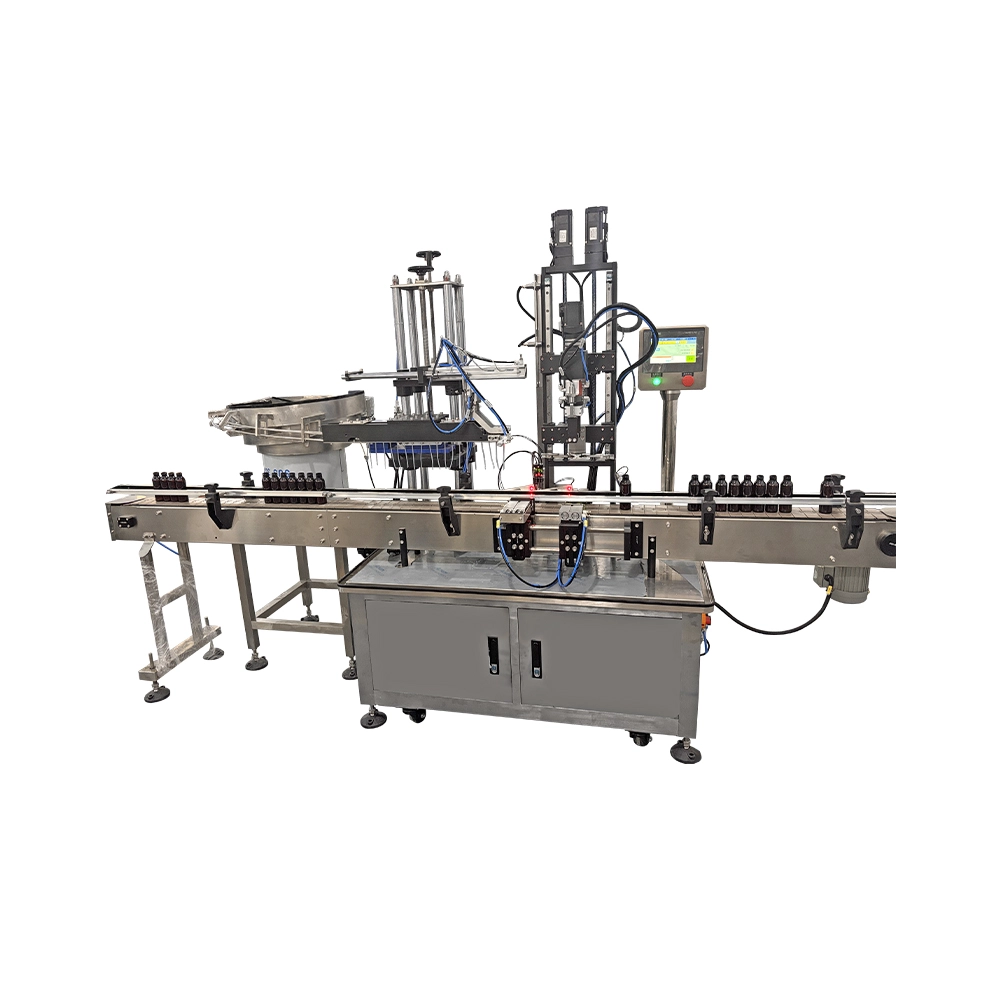
Automatic Pump Head Feeding and Capping Machine for Sale
Yuanyang automatic pump head feeding and capping machine is a bottle cap sorter and capper for bottles with pump heads, which is often used to close lids of containers such as nail polish, sprayers, and shampoo. The capping machine with a pump head feeder is widely used in food, medicine, chemical, cosmetic, and other industries for mass production and continuous production line .
Features:
⦁ Pneumatic and electric drive;
⦁ Automated fast speed;
⦁ Suitable for various types of caps.
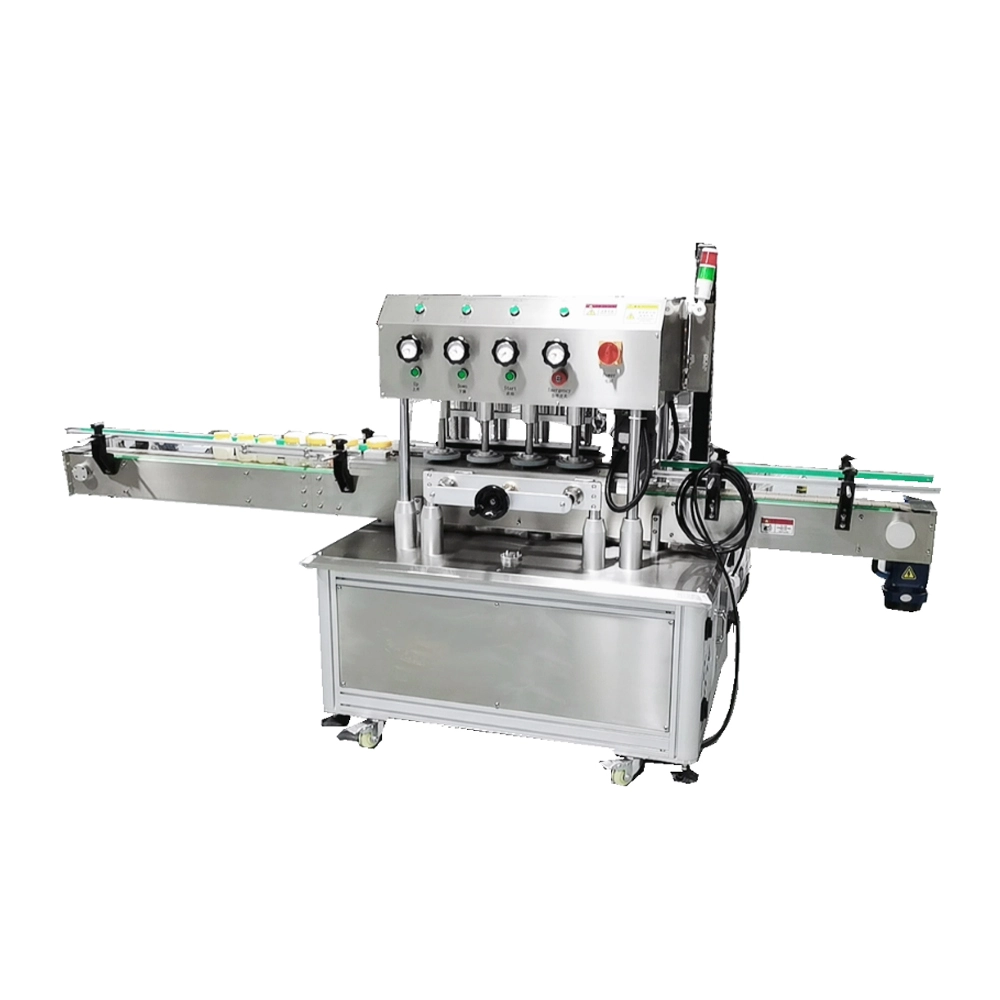
Automatic High Speed Capping Machine for Sale
The Yuanyang automatic high-speed capping machine is a kind of 8-wheel bottle-capping machine with fast working efficiency. The automatic capper is often used to close lids of containers such as bottles and jars, especially for plastic bottles, which are widely used in food, medicine, chemical, cosmetic, and other industries for mass production and continuous production lines.
Features:
⦁ Electric drive;
⦁ Automated fast speed;
⦁ Suitable for various screw caps, pumps, and spray bottles.
 Scan QR Code
Facebook
YouTube
LinkedIn
Whatsapp: +8613434139712
Guangzhou Yuanyang Machinery