





Procurement Checklist for Vacuum Emulsifying Mixer for Sale
- Procurement Checklist for Vacuum Emulsifying Mixer for Sale
- Why a proper emulsifying mixer procurement matters
- 1. Define your production and product requirements (embrace the )
- 2. Core technical checklist for an emulsifying mixer
- 3. Materials, welding and surface finish requirements (quality and compliance)
- 4. Homogenization performance and particle-size targets
- 5. Electrical, controls and automation checklist
- 6. Hygiene, cleaning, and maintainability (GMP readiness)
- 7. Certification, validation and documentation
- 8. Supplier evaluation and commercial considerations
- 9. Safety and environmental considerations
- 10. Commissioning, validation and operator training
- 11. Installation, utilities and facility requirements (practical checks)
- 12. Common procurement pitfalls and negotiation tips
- 13. Comparative specifications table (example)
- 14. Brand advantages: Why choose Yuanyang Vacuum Emulsifying Mixer for Sale
- 15. FAQ — Frequently Asked Questions
- Contact sales / View product
- Authoritative references and further reading
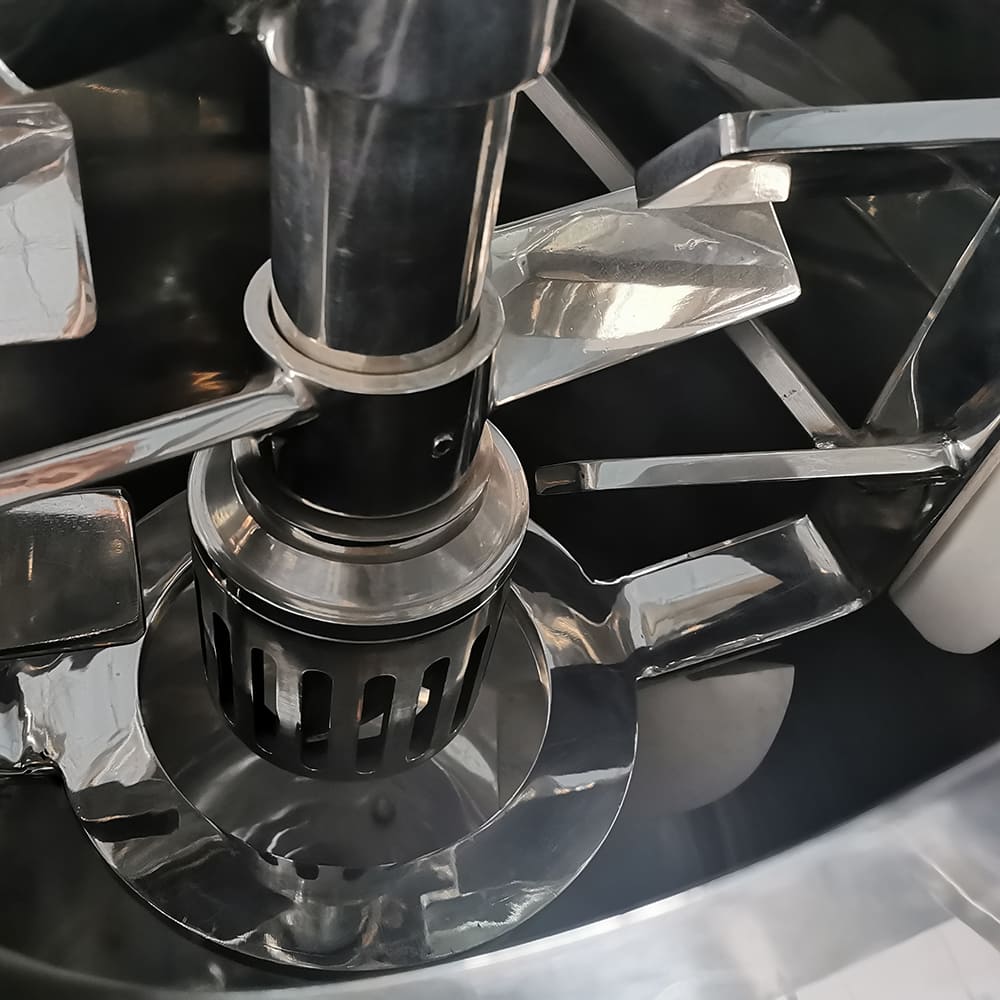
Procurement Checklist for Vacuum Emulsifying Mixer for Sale
Why a proper emulsifying mixer procurement matters
Purchasing an emulsifying mixer—specifically a Vacuum Emulsifying Mixer for Sale—represents a major investment for cosmetics, pharmaceutical, and specialty-chemical manufacturers. The right machine ensures consistent product quality, scalable production, and regulatory compliance. The Yuanyang vacuum emulsifying mixer is a kind of emulsifier machine, the most popular cosmetics production equipment for making cream, skin-care products, ointment, paste, and emulsions.
Features:
⦁ Composed of a main emulsifying pot, a water pot, and an oil pot.
⦁ With a hydraulic lifting system, vacuum system, and electric control system.
⦁ Suitable for products of 10,000~50,000 cps viscosity.
⦁ Perfect particle size of 2 microns and evenly distributed.
1. Define your production and product requirements (embrace the )
Begin every procurement by documenting your product portfolio and target output. For a Vacuum Emulsifying Mixer for Sale you should specify:
- Batch size range (e.g., 50 L, 200 L, 500 L, 1000 L).
- Target throughput (batches/day or kg/hr).
- Product viscosities (Yuanyang: suitable for 10,000~50,000 cps) and maximum allowable solids content.
- Desired end-particle size (e.g., 2 microns for fine cosmetics emulsions).
- Regulatory and cleanliness class (GMP, cosmetic regulations, HACCP where applicable).
Documenting these needs helps you shortlist emulsifying mixer models that match scale and technical performance, avoiding under- or over-specification.
2. Core technical checklist for an emulsifying mixer
Technical specifications separate reliable Vacuum Emulsifying Mixer for Sale offers from generic ones. Confirm these items with suppliers and include them in procurement contracts:
- Vessel material and finish: SUS316L or equivalent with sanitary surface polish—inside finish should typically be <0.6 Ra for cosmetics.
- Vessel configuration: main emulsifying pot plus dedicated water and oil pots (as in the Yuanyang design) for controlled heating and dosing.
- Heating/cooling system: jacketed vessels and independent temperature control; specify heating media (steam, hot water, electric) and cooling (chilled water, glycol).
- Homogenizer/emulsifier type: high-shear rotor-stator, high-pressure homogenizer or combination; verify capability to reach 2 micron particle size.
- Vacuum system: vacuum level (mbar), vacuum pump type, and ability to degas during and after mixing.
- Mixing drives and speeds: motor power, variable-speed drives (VFD), and torque ratings for high-viscosity products (10,000~50,000 cps).
- Hydraulic lifting: confirm hydraulic lift for safe tilt and discharge; check lifting capacity and safety interlocks.
- Seals and mechanical seals: sanitary seal types, glandless or mechanical seals suitable for cosmetic formulations.
- Instrumentation and control: PLC or HMI with recipe management, data logging, alarms, and remote access options.
- Cleaning capability: Clean-in-place (CIP) ports, spray balls, and accessibility for manual cleaning if required.
3. Materials, welding and surface finish requirements (quality and compliance)
Material quality affects product safety and cleaning. Specify:
- SUS316L (or equivalent) for all product-contact surfaces; avoid cast iron or carbon steel for wet parts.
- Electropolishing or mechanical polish to achieve required Ra (commonly 0.6 Ra or better for cosmetic products).
- Full-penetration welds and sanitary weld profiles with documented weld maps and non-destructive testing when required.
- Traceability documentation for material certificates (mill test reports) and welding qualifications (WPS/PQR records).
4. Homogenization performance and particle-size targets
For creams and skin-care emulsions, target particle size and distribution are critical. Ask suppliers to provide:
- Demonstrated particle-size data (D50, D90) from existing installations or lab trials showing <2 μm capability if required.
- Shear profile and rotor-stator geometry descriptions; how rotor speed and gap adjustments influence particle size.
- Test reports showing repeatability and stability (e.g., batch-to-batch PSD results, viscosity retention).
5. Electrical, controls and automation checklist
Specify control capabilities that match your plant automation strategy:
- PLC and touchscreen HMI with recipe storage, batch reporting and alarm logging.
- Integration options: OPC-UA, Modbus, or other protocols for MES/SCADA connectivity.
- Safety systems: emergency stops, safety doors, interlocks for lifting/tilting systems.
- Electrical ratings and certifications suitable for your region (e.g., 230/400V 50/60Hz; NEMA/IEC standards).
6. Hygiene, cleaning, and maintainability (GMP readiness)
Cleaning and maintenance drive long-term product safety and uptime:
- Confirm CIP capability and availability of CIP nozzles/spray balls.
- Ease of disassembly for rotor/stator and seals; quick-release clamps and hygienic flanges reduce downtime.
- Spare parts kit including seals, bearings, and rotor-stator wear parts should be offered.
- Provide spare parts lead times and local stocking options to minimize downtime.
7. Certification, validation and documentation
Request formal documentation to support compliance and commissioning:
- Factory Acceptance Test (FAT) protocol and witnessed FAT option.
- IQ/OQ/PQ documentation templates and on-site support for Installation and Operational Qualification.
- Material certificates (EN10204 3.1 or equivalent), welding records, and surface finish reports.
- CE, UL, or local electrical safety approvals; ISO 9001 certificate for supplier quality system.
8. Supplier evaluation and commercial considerations
Don't focus only on equipment price. Consider total cost of ownership and supplier capabilities:
- Supplier track record in cosmetics/pharma; request references and case studies.
- After-sales support: local service network, training, and spare parts availability.
- Warranty terms, response time SLAs for critical failures, and preventive maintenance programs.
- Delivery lead time, installation services, and commissioning support (onsite engineers).
- Total cost of ownership model: energy consumption, maintenance intervals, spare part costs, and expected useful life.
9. Safety and environmental considerations
Evaluate the safety and environmental footprint of the vacuum emulsifying mixer:
- Explosion-proof design if working with volatile solvents; ATEX compliance where required.
- Sealed vacuum systems to limit VOC emissions; check for solvent recovery or scrubber compatibility.
- Noise and ergonomics: hydraulic lifting safety, guarded moving parts, and safe access for operators.
10. Commissioning, validation and operator training
Plan for successful start-up:
- Include FAT, SAT (Site Acceptance Test), commissioning, and process validation in the contract.
- On-site training for operators and maintenance staff; provide operation and maintenance manuals.
- Trial runs using your actual formulations to confirm performance and quality (samples, PSD and viscosity test results).
11. Installation, utilities and facility requirements (practical checks)
Confirm facility readiness prior to delivery:
- Floor loading, foundation, and seismic considerations for heavy vessels and hydraulic lifts.
- Utility requirements: steam/water supply, chilled water, compressed air, electrical service, and vacuum systems.
- Material handling and access for raw-material tanks and finished-product transfer.
12. Common procurement pitfalls and negotiation tips
Avoid common mistakes that increase risk and lifecycle cost:
- Purchasing on price alone—verify performance data and references.
- Not requiring FAT and on-site validation—insist on witnessed tests with your formulations.
- Insufficient spare parts and support clauses—negotiate fixed response times and stocked spares.
- Omitting interoperability requirements—specify communication protocols for control integration.
13. Comparative specifications table (example)
Below is a short comparison template you can use to compare three shortlisted Vacuum Emulsifying Mixer for Sale models.
| Item | Model A (Yuanyang) | Model B | Model C |
|---|---|---|---|
| Batch size (L) | 200 / 500 / 1000 options | 250 | 500 |
| Homogenizer | High-shear rotor-stator (2 μm target) | High-pressure homogenizer | Rotor-stator |
| Materials | SUS316L, electropolished | SUS316L, mechanical polish | SUS304 |
| Vacuum system | Industrial vacuum pump, degassing | Vacuum capable | Optional |
| CIP | Standard CIP | Optional | No |
| FAT & Validation | Offered & witnessed | Offered | Not standard |
14. Brand advantages: Why choose Yuanyang Vacuum Emulsifying Mixer for Sale
When you evaluate brands, consider the complete package. Yuanyang offers several advantages aligned to buyer priorities:
- Specialized design: machines configured with a main emulsifying pot, water pot and oil pot—enabling precise thermal control and sequence dosing.
- Process performance: engineered to handle viscosities of 10,000~50,000 cps with particle-size capability down to 2 microns for stable emulsions.
- User-focused features: hydraulic lifting, vacuum degassing and an electric control system for recipe management and repeatability.
- After-sales service: training, spare parts and commissioning support available to ensure smooth ramp-up.
15. FAQ — Frequently Asked Questions
Q1: What is a vacuum emulsifying mixer used for?
A: It is used to mix oil and water phases with high shear under vacuum to create stable emulsions such as creams, ointments and lotions. Vacuum removes air and prevents oxidation and foaming, improving texture and shelf life.
Q2: Can a Vacuum Emulsifying Mixer for Sale handle high-viscosity products?
A: Yes. Machines like the Yuanyang model are suitable for 10,000~50,000 cps. Ensure motor torque, homogenizer design and heating systems are sized appropriately for your top viscosity.
Q3: How do I verify particle-size capability?
A: Request particle-size distribution (PSD) reports from the supplier using your formulation or similar products, plus a witnessed FAT demonstrating consistent D50/D90 results.
Q4: What documentation should I require from the supplier?
A: Material certificates (SUS316L), welding records, FAT reports, IQ/OQ templates, operation/maintenance manuals and safety certifications (CE, UL where applicable).
Q5: What are the typical delivery and installation lead times?
A: Lead times vary by customization level and capacity. Standard models may ship in 8–12 weeks; highly customized systems can take 16–24 weeks. Always confirm in the purchase agreement.
Contact sales / View product
After completing the checklist, you can refine your decisions and revisit the buying guide: vacuum emulsifying mixer for sale — key specs to confirm the best fit for your factory.If you are ready to evaluate a Vacuum Emulsifying Mixer for Sale for your production line, contact our sales team for a specification review, FAT scheduling, and a customized quotation. Request a product datasheet, case studies, and onsite demonstration using your formulations to validate performance.
Authoritative references and further reading
Below are authoritative sources used as industry references and for further technical context:
- Emulsion — Wikipedia: https://en.wikipedia.org/wiki/Emulsion
- Homogenizer — Wikipedia: https://en.wikipedia.org/wiki/Homogenizer
- FDA Cosmetics: https://www.fda.gov/cosmetics
- WHO Good Manufacturing Practices (GMP): https://www.who.int/teams/regulation-prequalification/quality-safety/gmp
- CE Marking (European Commission): https://ec.europa.eu/growth/single-market/ce-marking/
- ISO Standards search (ISO): https://www.iso.org/standards.
YUANYANG Best professional sieve vibration machine manufacturers and supplier brands in Europe
Tips for buy pharmaceutical powder mixer
How to start the bag packing machine business in UK ?
OEM/ODM high quality vacuum emulsifying mixer Manufacturers and Suppliers
Vacuum Emulsifier
What capacity do you provide for vacuum emulsifying mixer machine?
We can supply from 50 Liters to 5000 Liters for mixing tanks,but we recommend maximum 1000L for vacuum emulsifier homogenizer,whose the package sizes is just ok for regular 40” HQ container.
Homogneizer mixer tank
What function does the liquid washing homogenizer have?
The homogenizer is an integrated equipment with mixing, dispersing, homogenizing, heating system.
Can you provide custom service?
Definitely we offer customization service. For example, the thickness of layers, the brand of motor, the mixing types, the power of motor, power supply.
Portable Storage Tank
Can you add a lid for the storage tank?
Yes, the lid can be added and customized. For example, with a central hole for overhead mixer, with a material hopper for adding powder or liquids.
Chemicals
Does the equipment meet environmental standards?
Yes, our equipment meets the environmental standards for the chemical industry, reducing pollutant emissions.
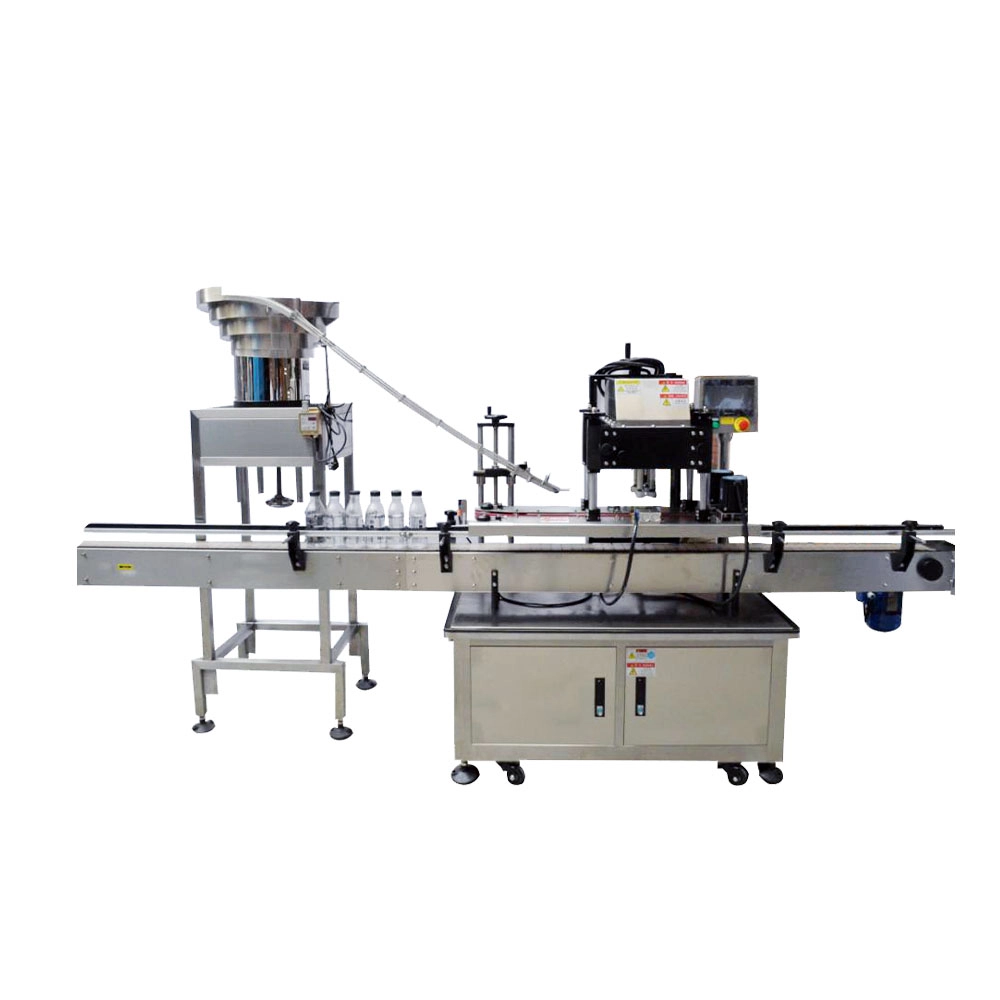
Automatic Plastic Caps Capping Machine with Vibrating Cap Feeder for Sale
Yuanyang automatic screw capping machine is a kind of four-wheel bottle capping machine. The automatic screw capper is often used to close lids of containers such as bottles and jars, especially for plastic bottles, which are widely used in food, medicine, chemical, cosmetic, and other industries for mass production and continuous production lines.
Features:
⦁ Full pneumatic drive;
⦁ Automated fast speed;
⦁ Suitable for various screw caps, pumps, and spray bottles.
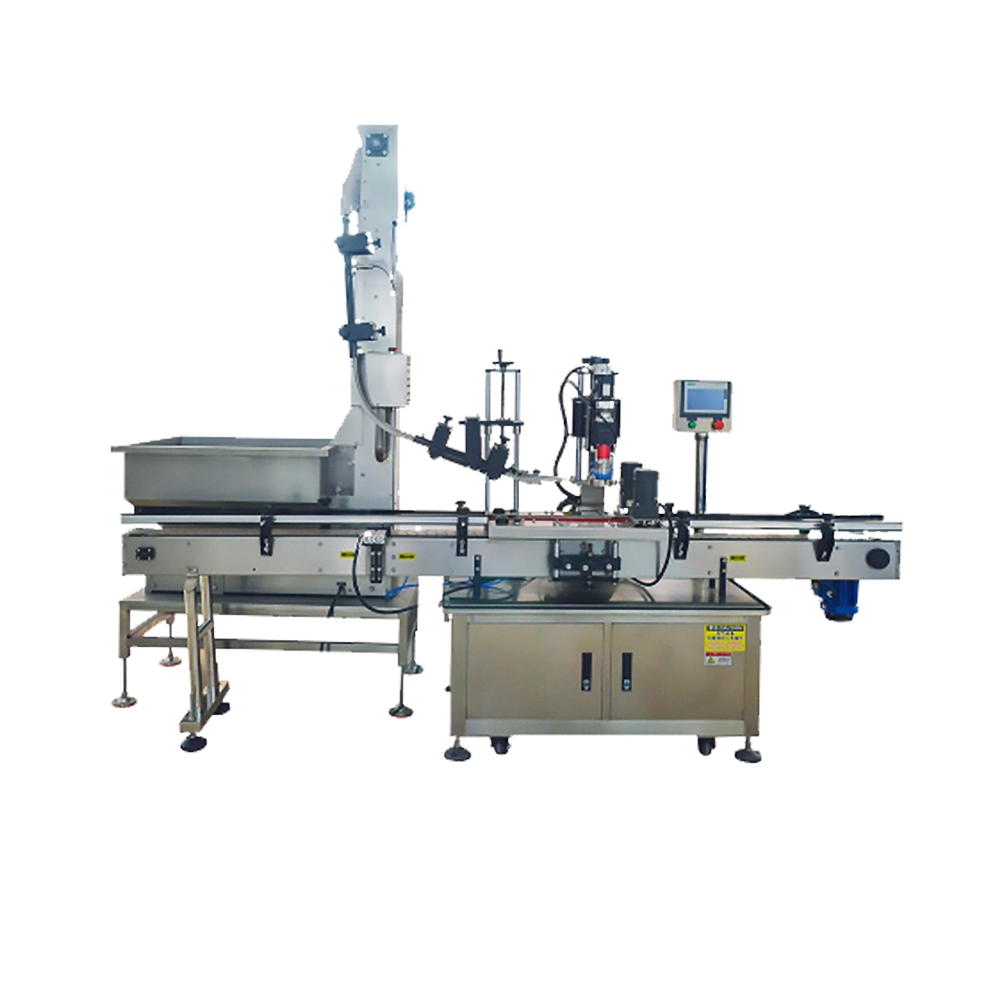
Automatic Metal Caps Capping Machine for Sale
Yuanyang automatic metal cap capping machine is a bottle capper for bottles with metal caps, which is often used to close lids of containers such as bottles and jars. The glass bottle metal capping machine is widely used in food, medicine, chemical, cosmetic, and other industries for mass production and continuous production line .
Features:
⦁ Pneumatic and electric drive;
⦁ Automated fast speed;
⦁ Suitable for glass bottles with metal caps.
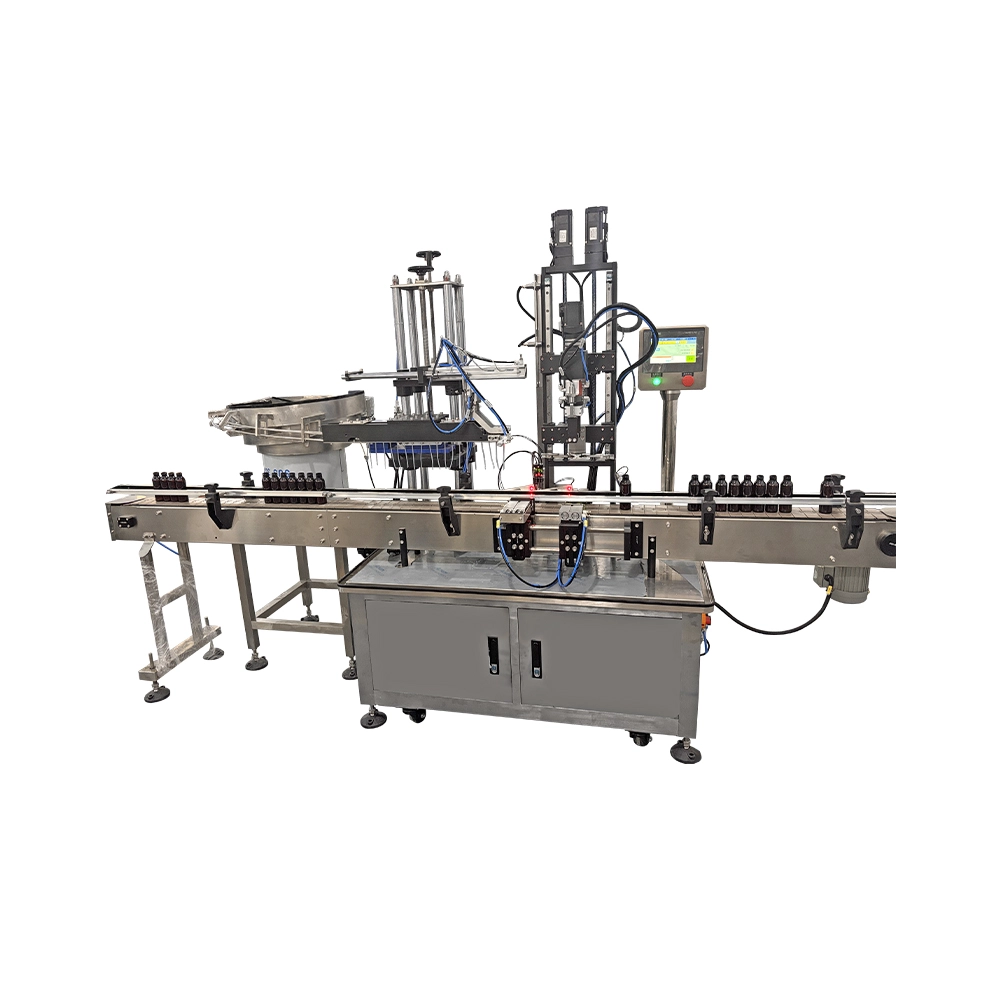
Automatic Pump Head Feeding and Capping Machine for Sale
Yuanyang automatic pump head feeding and capping machine is a bottle cap sorter and capper for bottles with pump heads, which is often used to close lids of containers such as nail polish, sprayers, and shampoo. The capping machine with a pump head feeder is widely used in food, medicine, chemical, cosmetic, and other industries for mass production and continuous production line .
Features:
⦁ Pneumatic and electric drive;
⦁ Automated fast speed;
⦁ Suitable for various types of caps.
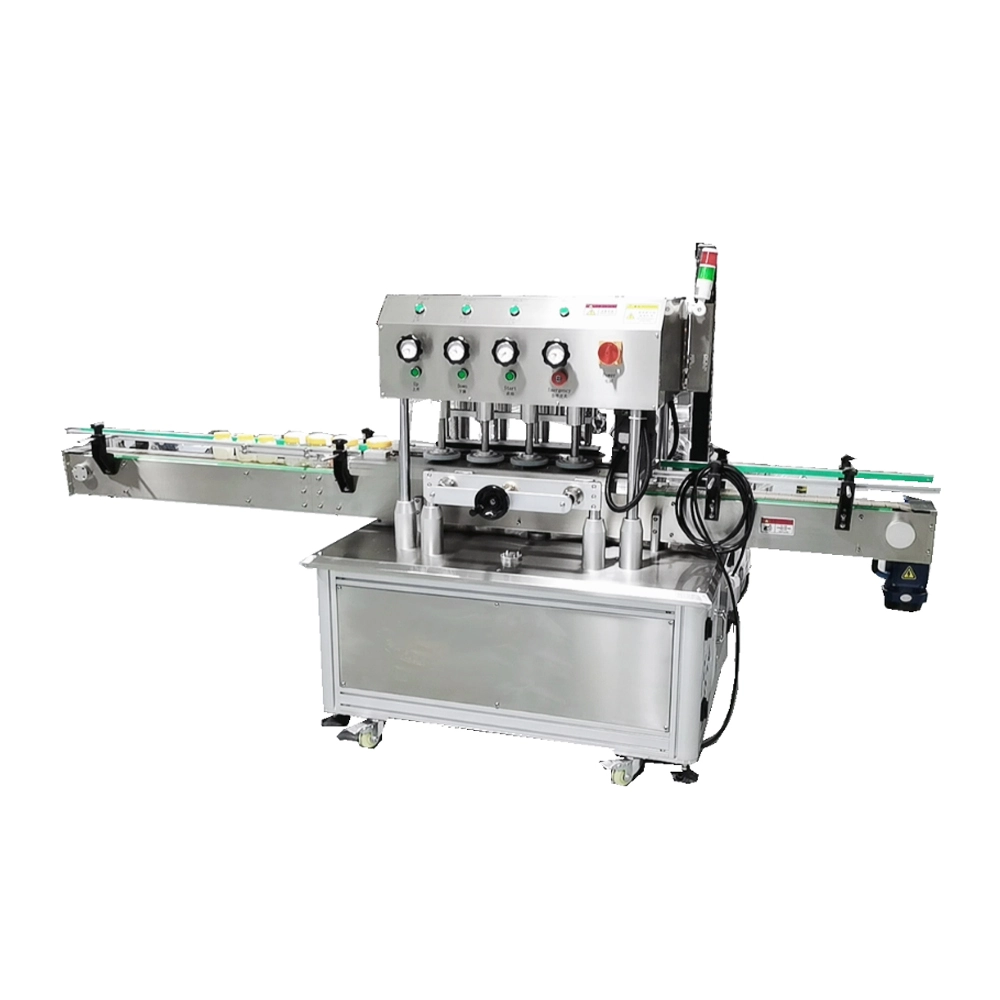
Automatic High Speed Capping Machine for Sale
The Yuanyang automatic high-speed capping machine is a kind of 8-wheel bottle-capping machine with fast working efficiency. The automatic capper is often used to close lids of containers such as bottles and jars, especially for plastic bottles, which are widely used in food, medicine, chemical, cosmetic, and other industries for mass production and continuous production lines.
Features:
⦁ Electric drive;
⦁ Automated fast speed;
⦁ Suitable for various screw caps, pumps, and spray bottles.
 Scan QR Code
Facebook
YouTube
LinkedIn
Whatsapp: +8613434139712
Guangzhou Yuanyang Machinery