





7 Powerful Reasons Why Vacuum Improves Emulsion Quality
- Why Vacuum Improves Emulsion Quality
- What Is Vacuum Emulsification?
- 7 Key Vacuum Mixing Benefits for Emulsion Quality
- 1. Eliminates Air Bubbles for a Smoother and More Refined Texture
- 2. Reduces Oxidation and Protects Sensitive Ingredients
- 3. Enhances Emulsion Stability Through Uniform Particle Size
- 4. Improves Homogeneity and Batch Consistency
- 5. Increases Production Efficiency and Reduces Processing Time
- 6. Enables Effective Processing of High-Viscosity Materials
- 7. Improves Final Product Appearance and Market Appeal
- Applications Across Industries
- Comparison: Vacuum vs Traditional Mixing
- Best Practices for Using Vacuum Mixing Technology
- FAQs About Vacuum Mixing Benefits
- Conclusion
Why Vacuum Improves Emulsion Quality
In modern manufacturing, achieving a stable and high-quality emulsion is critical across industries like cosmetics, pharmaceuticals, food, and chemicals. One of the most effective technologies behind superior emulsions is vacuum mixing. Understanding vacuum mixing benefits can help manufacturers dramatically improve product consistency, texture, and shelf life.
What Is Vacuum Emulsification?
Vacuum emulsification is a process where mixing and homogenization occur under reduced pressure (vacuum conditions). This setup removes air from the system during processing.
In a typical vacuum emulsifying mixer:
- Materials are drawn into a rotor-stator system
- High shear forces break particles into microscopic sizes
- Air bubbles are eliminated through vacuum suction
The result is a fine, stable emulsion with improved texture and uniformity.
👉 For a deeper understanding of the process, refer to this guide: Industrial Emulsification Process Guide
7 Key Vacuum Mixing Benefits for Emulsion Quality
1. Eliminates Air Bubbles for a Smoother and More Refined Texture
One of the most noticeable advantages of vacuum mixing is its ability to remove air from the system during processing. In traditional mixing, air is easily trapped inside the formulation, leading to foaming, uneven texture, and even instability over time.
Under vacuum conditions, these air pockets are continuously extracted, allowing the material to compact more effectively. This results in a visibly smoother and denser product. For industries such as cosmetics, where texture and appearance directly influence customer perception, this benefit is especially critical.
In addition, the absence of air improves the spreadability of creams and lotions, making the final product feel more premium and consistent during application.
2. Reduces Oxidation and Protects Sensitive Ingredients
Oxygen exposure is a major factor that can degrade product quality during emulsification. Ingredients such as vitamins, essential oils, and active compounds are particularly vulnerable to oxidation, which may cause discoloration, odor changes, or reduced effectiveness.
Vacuum mixing significantly minimizes contact with oxygen throughout the process. By maintaining a controlled low-pressure environment, it preserves the integrity of sensitive components and ensures that the formulation retains its intended properties.
This is especially important in pharmaceutical and skincare manufacturing, where product stability and efficacy must meet strict quality standards.
3. Enhances Emulsion Stability Through Uniform Particle Size
A stable emulsion depends heavily on how evenly dispersed the particles are within the mixture. Vacuum emulsifying systems combine high shear force with air removal, allowing droplets to be broken down into extremely fine and uniform sizes.
This uniformity prevents phase separation, which is a common issue in poorly mixed emulsions. As a result, products maintain their consistency over time without layering or settling.
Moreover, smaller particle sizes improve the overall texture and absorption of the product, which is particularly beneficial in applications like creams and pharmaceutical gels.
4. Improves Homogeneity and Batch Consistency
Consistency is essential in industrial production, especially for brands that rely on standardized formulations. Vacuum mixing ensures that all ingredients—whether liquids, powders, or viscous substances—are evenly distributed throughout the batch.
Unlike conventional methods, where uneven mixing can lead to localized inconsistencies, vacuum systems create a uniform environment where materials are processed evenly. This leads to predictable results across multiple production cycles.
For manufacturers, this translates into better quality control, reduced waste, and improved customer satisfaction.
5. Increases Production Efficiency and Reduces Processing Time
Another key advantage of vacuum mixing lies in its ability to streamline the production process. By removing air resistance and improving material flow, vacuum conditions allow mixing and homogenization to occur more quickly and efficiently.
This not only shortens processing time but also reduces energy consumption. In large-scale manufacturing, even small improvements in efficiency can lead to significant cost savings.
6. Enables Effective Processing of High-Viscosity Materials
Handling high-viscosity products is often a challenge in traditional mixing systems. Thick formulations such as creams, gels, and pastes tend to trap air and resist uniform blending.
Vacuum emulsifying mixers are specifically designed to overcome this issue. By eliminating air and applying strong shear forces, they can process highly viscous materials with ease.
This capability ensures that even dense products achieve a smooth, lump-free consistency, which is essential for both functional performance and visual appeal.
7. Improves Final Product Appearance and Market Appeal
Beyond technical performance, vacuum mixing also plays a significant role in enhancing the overall look and feel of the final product. Consumers often judge quality based on visual and tactile cues, such as smoothness, shine, and uniform color.
By producing air-free, finely emulsified formulations, vacuum systems deliver products that look more professional and feel more luxurious. This directly contributes to stronger brand positioning and higher customer satisfaction.
In competitive markets like cosmetics and food, these subtle improvements can make a meaningful difference in consumer preference and purchasing decisions.
Applications Across Industries
Vacuum emulsification technology is widely used in:
1.Cosmetics:Creams, lotions, serums;Shampoos and conditioners
2.Food Industry:Mayonnaise, sauces, dressings;Dairy-based emulsions
3.Pharmaceuticals:Ointments, gels, syrups
4.Chemicals:Detergents, lubricants
These industries rely on vacuum mixing to ensure consistent product quality and safety.
Comparison: Vacuum vs Traditional Mixing
|
Feature |
Vacuum Mixing |
Traditional Mixing |
|
Air removal |
Yes |
No |
|
Oxidation prevention |
High |
Low |
|
Emulsion stability |
Excellent |
Moderate |
|
Texture quality |
Smooth |
Often uneven |
|
Processing speed |
Fast |
Slower |
Best Practices for Using Vacuum Mixing Technology
To maximize vacuum mixing benefits:
- Maintain proper vacuum pressure levels
- Use high-quality rotor-stator systems
- Control temperature during mixing
- Optimize mixing speed and time
These factors ensure consistent and high-quality emulsions.
FAQs About Vacuum Mixing Benefits
1. What are vacuum mixing benefits in emulsification?
Vacuum mixing benefits include removing air bubbles, preventing oxidation, improving stability, and enhancing product texture.
2. Why is vacuum important in cosmetic production?
It ensures smooth textures, prevents oxidation, and improves the appearance and shelf life of products.
3. Can vacuum mixing handle high-viscosity materials?
Yes, it is specifically designed to process thick products like creams and gels efficiently.
4. Does vacuum mixing improve shelf life?
Yes, by preventing oxidation and ensuring stable emulsions, it extends product shelf life.
5. Is vacuum emulsification energy-efficient?
Yes, it reduces processing time and improves mixing efficiency, saving energy.
6. Which industries benefit most from vacuum mixing?
Cosmetics, pharmaceuticals, food, and chemical industries benefit the most.
Conclusion
Understanding vacuum mixing benefits is essential for any manufacturer aiming to produce high-quality emulsions. From eliminating air bubbles to improving stability and efficiency, vacuum technology has become a cornerstone of modern industrial mixing.
With companies like YUANYANG offering complete turnkey solutions, businesses can streamline production while achieving superior product quality.
If your goal is consistent, stable, and visually appealing emulsions, vacuum mixing isn’t just an option—it’s a necessity.
High Shear vs. Homogenization: Which Emulsification Tech Wins for Your Bottom Line in 2026?
Why Don't Oil and Water Mix? The Ultimate Guide to Polarity and Emulsification Science (2026)
How Emulsification Actually Happens in Industrial Mixing Systems (2026 Guide)
Understanding Vacuum Emulsifying Mixers as a System: From Process Logic to Production Outcomes
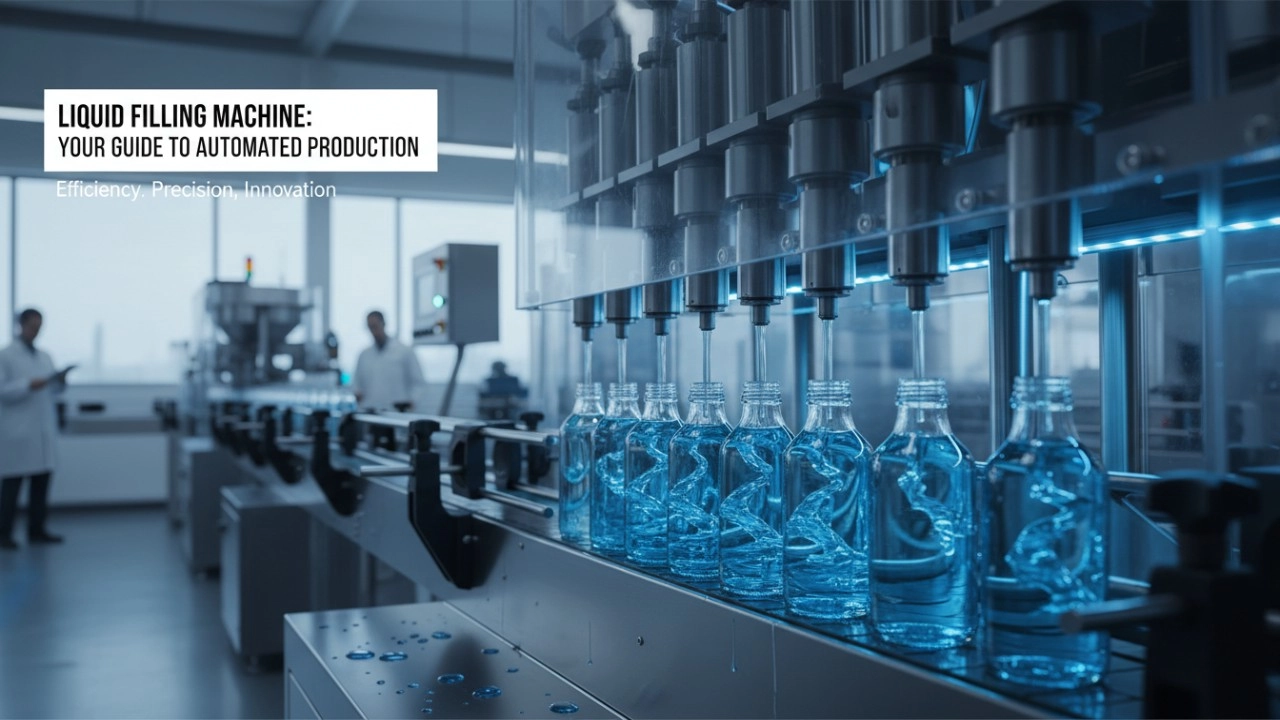
Beyond Automation: How Smart Liquid Filling Machines are Transforming Modern Packaging Lines
Automatic auger filling machine
What’s the maximum weight that the automatic powder packing machine pack?
The maximum filling weight is 1000g. For packing weight over 1000g, the semi automatic powder filler is recommended.
Homogenizer Mixing Tank with Circulation System
Can you send me a drawing of the industrial mixer tank with homogenizer?
Yes, we have professional designers to draw according to customized requirements, including the dimensions, parts, structures, wire drawing and so on.
Automatic powder feeder machine
Do you also supply powder or granules packing machine?
Yes,Yuany supplies different type of packing machines for powder, granules and liquids. Please contact customers services with details.
Semi automatic powder filling machine
What’s the filling range of the powder dosing machine?
The filling range of the semi auto powder filling machines is: 10-5000g. But we need to customize according to specific weight that clients plan to pack. The screw model will be different.
Vacuum Homogneizer
Is there any safety devices for the homogenizer tank?
Yes,there are safety valves for jacket pressure and vacuum pressure. When the pressure reaches the designed margin point, the safety valves can protect the machine by releasing the gas.
And circuit protection device is equipped in the control box, when the power supply of the factory is beyond the designed voltage of the machine, or occurs short circuit, it will operate self-protection system.
Leave a message
Have any questions or concerns about our products? Please leave us a message here, and our team will get back to you promptly.
 Scan QR Code
Facebook
YouTube
LinkedIn
Whatsapp: +8613434139712
Guangzhou Yuanyang Machinery