





High Shear vs. Homogenization: Which Emulsification Tech Wins for Your Bottom Line in 2026?
- What Is High Shear Emulsification?
- Key Takeaways: High Shear vs. Homogenization
- The Core Differences: How the Technologies Work
- Bottom Line Impact: ROI, Energy, and Maintenance Costs
- Data Comparison Table: High Shear vs. Homogenization
- Expert Tips & Common Emulsification Mistakes
- Scaling Smarter in 2026: From Batch to Continuous Inline Systems
- YUANYANG: Your Turnkey Emulsification Partner
- Conclusion
- FAQs About high shear emulsification
- What is the difference between homogenization and emulsification?
- What are the disadvantages of high-shear mixing?
- Can high shear mixers replace high-pressure homogenizers?
- How does rotor-stator geometry affect emulsion stability?
- What is the ideal tip speed for an industrial high shear mixer?
- Are vacuum emulsifying mixers necessary for cosmetics?
- How do I scale high shear emulsification from lab to production?
- What turnkey solutions does YUANYANG provide?
The landscape of industrial manufacturing in 2026 demands relentless efficiency. Whether you are producing advanced cosmetics, pharmaceuticals, or food products, the battle for profit margins often comes down to your processing equipment. At the heart of this battle is the choice of mixing technology. High shear emulsification has emerged as the dominant force for a vast majority of applications, but how does it truly compare to traditional high-pressure homogenization when evaluating total cost of ownership?
Understanding the nuanced differences between these two technologies is no longer just an engineering concern—it is a critical business decision. Selecting the wrong equipment can lead to exorbitant energy bills, frequent maintenance downtime, and compromised product quality. In this comprehensive guide, we will break down the mechanics, the financial implications, and the forward-looking strategies to ensure your production line is optimized for the future.
What Is High Shear Emulsification?
High shear emulsification is a process that uses a high-speed rotor and a stationary stator to create intense mechanical and hydraulic shear forces. This action rapidly breaks down immiscible liquids into extremely fine droplets, typically ranging from 2 to 5 microns, forming a stable emulsion.
To truly grasp the physics behind the process, one must look inside the mixing head. As the rotor spins at incredibly high speeds, it creates a powerful suction that draws both the continuous and dispersed phases into the center of the rotor-stator assembly. Centrifugal force then pushes the material toward the periphery, forcing it through the narrow gap (clearance) between the rotor blades and the inner wall of the stator.
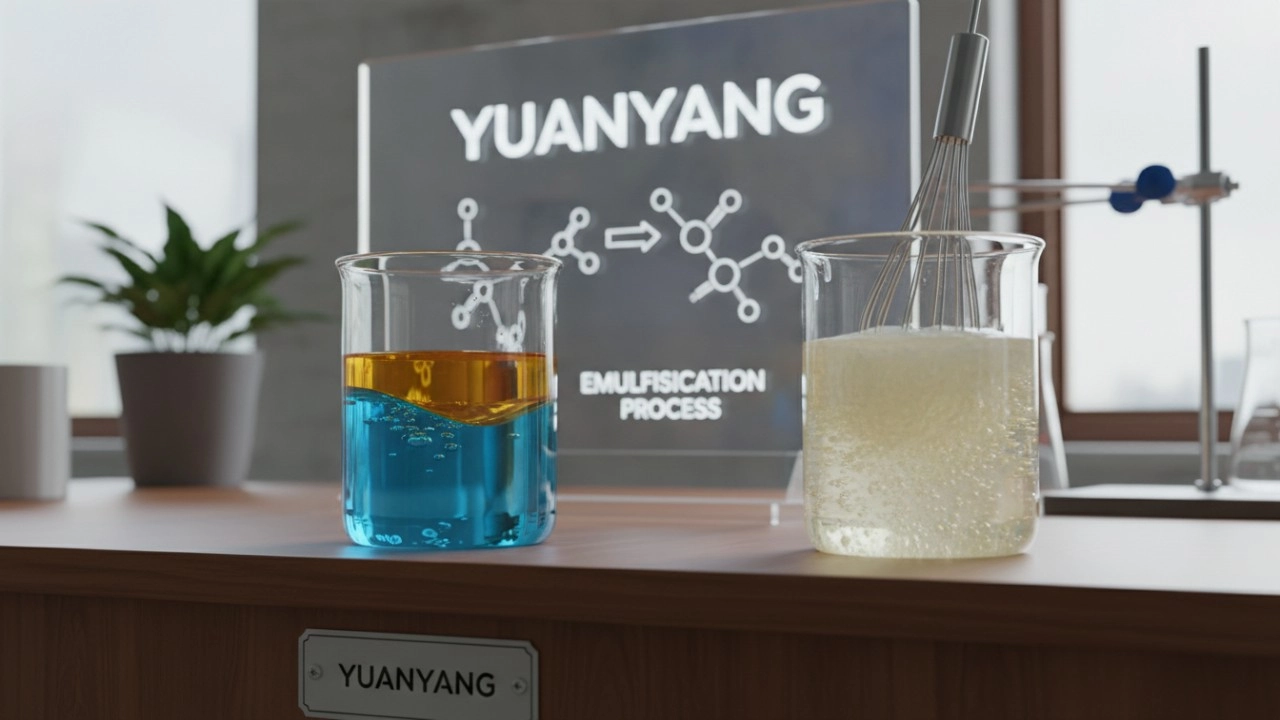
This is where the magic happens. The fluid is subjected to immense tearing and grinding. The role of cavitation and linear tip speeds—often ranging from 15 m/s to 40 m/s—is paramount in achieving homogenization. As the material is expelled through the stator's perforations at high velocity, it encounters fresh material being drawn in, creating a continuous cycle of intense turbulence. If you have ever wondered Why Don't Oil and Water Mix?, the answer lies in surface tension, which these extreme tip speeds are specifically designed to overcome.
Key Takeaways: High Shear vs. Homogenization
The quick summary is that high shear mixers excel at rapid throughput and processing high-viscosity materials, while high-pressure homogenizers are better for achieving sub-micron (nano) droplet sizes. Ultimately, your choice dictates your energy efficiency and total cost of ownership.
When evaluating these technologies for your 2026 production line, keep these core takeaways in mind:
- Energy Efficiency: High shear systems generally consume significantly less energy per batch compared to their high-pressure equivalents. High-pressure systems require massive power to force liquids through microscopic valves.
- Total Cost of Ownership: The maintenance differences have a direct impact on the bottom line. High-pressure pumps and valves wear out quickly due to the extreme forces involved, requiring frequent, expensive replacements.
- Versatility: Rotor-stator systems can handle a much wider range of viscosities. If your product line shifts from thin lotions to thick creams, a high shear mixer can adapt, whereas a homogenizer may fail to process the thicker fluid.
The Core Differences: How the Technologies Work
High shear mixers utilize tearing, grinding, and intense turbulence via the rotor/stator gap to process fluids. In contrast, high-pressure homogenizers force liquids through a narrow valve under extreme pressure to cause cavitation and impact, which struggles with non-flowing, highly viscous liquids.
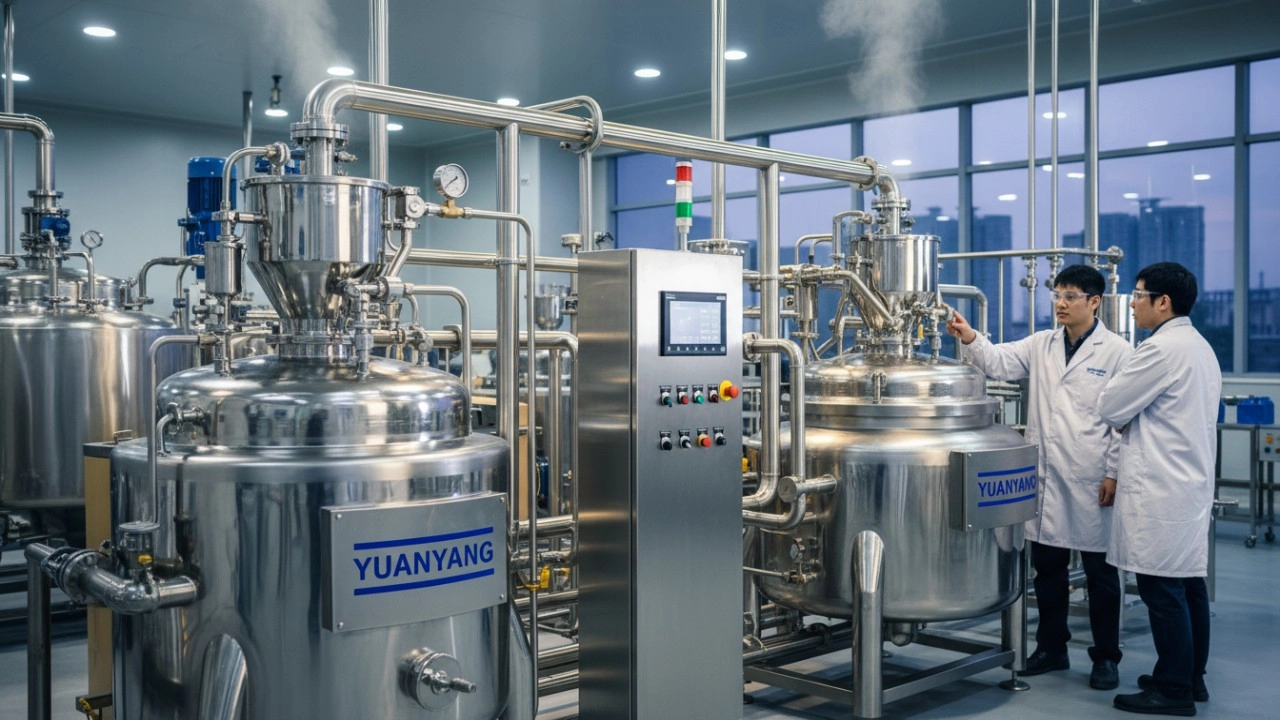
When conducting a high pressure homogenizer comparison, the mechanical distinction is stark. Rotor-stator high shear mixers are dynamic. They rely on the physical interaction between moving metal and stationary metal, combined with fluid dynamics. The fluid is sheared physically by the blades and hydraulically as it is pushed through the stator slots. To dive deeper into the fluid dynamics, you can explore How Emulsification Actually Happens in Industrial Mixing Systems.
High-pressure homogenizers, on the other hand, use a positive displacement pump to pressurize the fluid (often between 1,000 to 3,000 bar). The fluid is then forced through a specialized homogenizing valve. The sudden drop in pressure as the fluid exits the valve causes violent cavitation and impact against a collision ring, shattering the droplets.
Viscosity Handling: This mechanical difference explains why high shear is superior for thick creams, gels, and sauces. A rotor-stator mixer actively pulls thick material into the mixing head. A high-pressure homogenizer relies on the fluid being pumpable; if the material is too viscous to flow smoothly into the high-pressure pump, the machine will cavitate and fail. Therefore, for non-flowing liquids, high shear is not just the better option—it is the only option.
Bottom Line Impact: ROI, Energy, and Maintenance Costs
Assessing industrial emulsification ROI requires evaluating initial capital expenditure alongside long-term operational costs. High shear systems generally offer lower energy consumption and reduced maintenance downtime compared to the expensive valve replacements needed in high-pressure homogenizers.
To make an informed financial decision in 2026, plant managers must look beyond the sticker price of the equipment. The true cost of an emulsification system is realized over its operational lifespan.
Capital Expenditure (CapEx): Comparing the initial acquisition costs reveals a significant gap. High-pressure homogenizers are precision-engineered to withstand immense internal pressures, requiring specialized metallurgy and heavy-duty motor structures. This makes their initial CapEx substantially higher than that of a standard high shear mixer of equivalent volumetric throughput.
Operational Expenditure (OpEx): Energy draw and efficiency per liter processed heavily favor high shear technology. According to a 2023 study published in MDPI Energies, high-pressure homogenization requires significant additive energy consumption when multiple cycles or extreme pressures (up to 400 MPa) are needed to achieve the desired state. Rotor-stator systems achieve their target droplet sizes at a fraction of the energy cost per batch.
Maintenance Downtime: High-pressure homogenizers suffer from faster valve wear. The extreme pressure and cavitation literally eat away at the metal valves and impact rings, requiring frequent, costly rebuilds. Furthermore, they are notoriously complex to clean. High shear rotors, conversely, are highly durable, have fewer moving parts under stress, and are significantly easier to CIP (Clean-In-Place).
Data Comparison Table: High Shear vs. Homogenization
| Feature / Metric | High Shear Emulsification | High-Pressure Homogenization |
|---|---|---|
| Primary Mechanism | Rotor-stator mechanical & hydraulic shear | High-pressure valve cavitation & impact |
| Typical Droplet Size | 2 to 5 microns | < 1 micron (Nano-emulsions) |
| Viscosity Limit | Very High (up to 100,000+ cps) | Low to Medium (must be pumpable) |
| Initial CapEx | Moderate | High to Very High |
| Energy Consumption | Low to Moderate | High |
| Maintenance Frequency | Low (durable rotor/stator) | High (valve and seal wear) |
| Best Application | Cosmetics, thick sauces, bulk creams | Pharmaceuticals, clear nano-beverages |
Expert Tips & Common Emulsification Mistakes

Avoiding common processing mistakes, such as over-shearing delicate active ingredients or ignoring heat accumulation, is critical for product stability. Experts recommend matching your tip speed and stator geometry to the target droplet size rather than arbitrarily increasing RPM.
Even with the best equipment, poor formulation and processing strategies can ruin a batch. Here are the most critical mistakes and expert tips for 2026:
- Mistake: Over-shearing delicate active ingredients. Not all emulsions benefit from maximum shear. Over-shearing can break polymer chains, degrade heat-sensitive active ingredients, and actually reverse the emulsification process, leading to separation.
- Mistake: Ignoring heat accumulation. High energy input inevitably creates heat. If you are running a high shear mixer at 30 m/s tip speeds, the friction will rapidly heat the product. Jacketed cooling tanks are absolutely essential to maintain temperature control and protect the formulation.
- Expert Tip: Optimize stator geometry. The droplet size distribution in emulsions is heavily influenced by the design of the stator head. A 2024 study published in Langmuir by the American Chemical Society demonstrated that the droplet size distribution in high-shear emulsification follows a log-normal distribution dictated by the capillary number and shear rates, meaning that selecting the correct slotted or holed stator is more effective than simply increasing the motor's RPM.
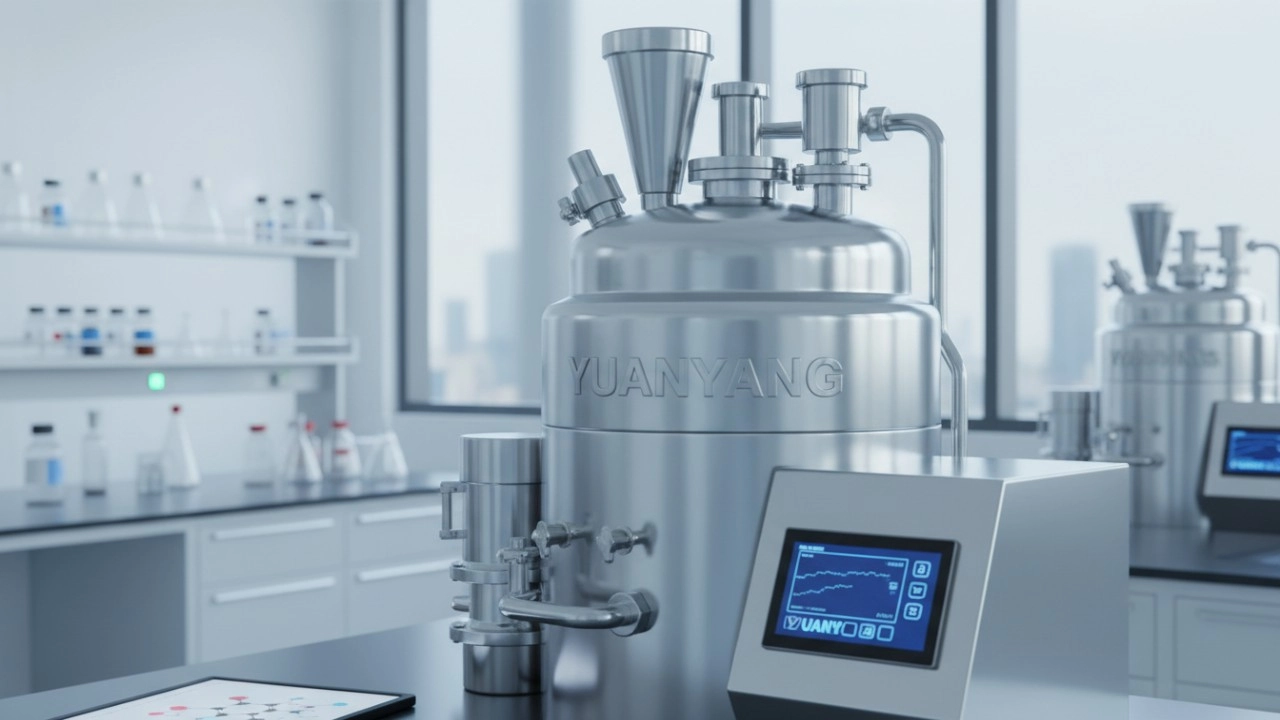
- Expert Tip: Utilize vacuum technology. Use vacuum emulsifying mixers to prevent air entrapment. When you mix at high speeds in an open tank, a vortex forms, pulling air into the product. This air causes oxidation, ruins the texture, and drastically reduces shelf life. A vacuum system eliminates this issue entirely.
Scaling Smarter in 2026: From Batch to Continuous Inline Systems
Transitioning from batch tank mixing to single-pass inline ultra-high shear emulsification is the smartest way to scale in 2026. This shift reduces batch rejection rates, ensures repeatable quality across massive production volumes, and seamlessly integrates with Industry 4.0 process automation.
As production quotas increase, relying solely on massive batch tanks becomes inefficient. The industry is moving rapidly toward continuous inline processing. In an inline system, the rotor-stator workhead is housed in a casing outside the tank. The mixture is pumped through the workhead in a single pass or recirculated.
This method guarantees that 100% of the product passes through the high shear zone, eliminating the risk of unmixed pockets that often occur in large batch tanks. By integrating smart sensors, automated valves, and PLC controls, manufacturers can monitor shear rates, temperature, and flow in real-time. This Industry 4.0 approach minimizes human error, reduces waste, and maximizes overall equipment effectiveness (OEE).
YUANYANG: Your Turnkey Emulsification Partner
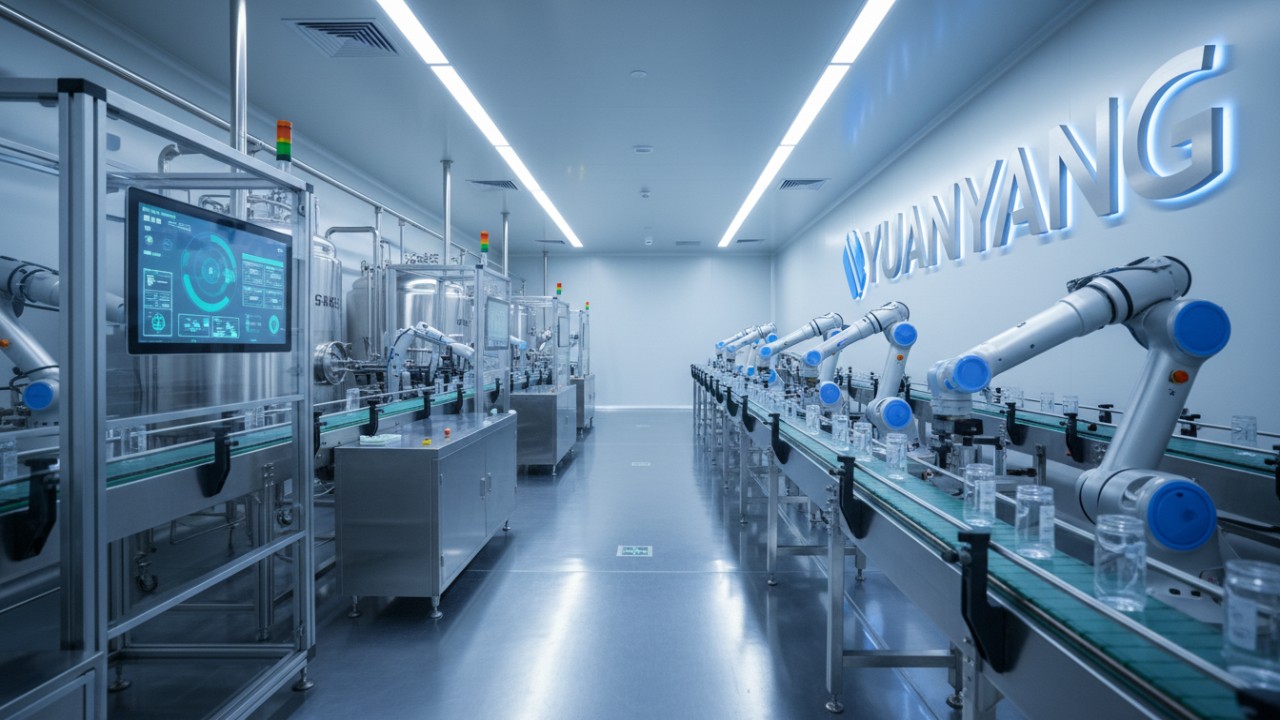
Guangzhou Yuanyang Mechanical Device Co., Ltd. is a leading manufacturer of high shear mixers and vacuum emulsifying mixers since 2008. We provide CE-certified equipment and complete one-stop turnkey production lines, including liquid mixing tanks, filling machines, and water treatment systems.
When optimizing your bottom line, partnering with an experienced manufacturer is just as important as the technology itself. YUANYANG has spent over 15 years perfecting industrial mixing solutions. Our vision is to become the best industrial mixer and agitator manufacturer in the world, and we achieve this by focusing on comprehensive, end-to-end solutions.
We don't just sell isolated machines. We understand that a high shear mixer is only one part of your operation. That is why we provide complete turnkey lines. From the initial water treatment equipment to the liquid mixing tanks, and all the way through to automatic liquid filling lines, aluminum foil sealing machines, capping machines, and automatic labeling machines, we ensure seamless integration.
Furthermore, all YUANYANG equipment is backed by CE certification, ensuring strict adherence to EU safety and health standards. To guarantee your ROI, we provide free technical training and one-stop installation support, ensuring your team is fully equipped to operate the machinery at peak efficiency from day one.
Conclusion
The choice between high shear and homogenization comes down to target droplet size, material viscosity, and budget constraints. While high-pressure homogenizers are necessary for specific nano-emulsions, high shear emulsification offers a vastly superior ROI for the majority of industrial applications due to its lower energy consumption, reduced maintenance, and ability to handle high-viscosity materials. Maximizing your bottom line requires looking beyond individual machines and investing in complete, automated production lines that guarantee consistency, safety, and scalability for the future.
Contact us today to optimize your high shear emulsification strategy.
FAQs About high shear emulsification
What is the difference between homogenization and emulsification?
Emulsification is the specific process of mixing two immiscible liquids (like oil and water) into a stable blend. Homogenization is a broader term for making a uniform mixture, which can include breaking down solid particles or reducing the droplet size of an existing emulsion.
What are the disadvantages of high-shear mixing?
Intense mechanical action generates significant heat, which can damage heat-sensitive ingredients if not properly cooled. There is also a risk of over-shearing, which can break polymer chains or disrupt certain emulsion structures.
Can high shear mixers replace high-pressure homogenizers?
Yes, in many cases. Ultra-high shear inline mixers can achieve droplet sizes comparable to high-pressure homogenizers. However, for true nano-emulsions (under 0.5 microns) with low viscosity, high-pressure homogenization is often still required.
How does rotor-stator geometry affect emulsion stability?
The clearance (gap) between the rotor and stator dictates the shear rate. Finer, slotted stators provide higher shear and smaller droplets, leading to a tighter droplet size distribution and longer shelf life.
What is the ideal tip speed for an industrial high shear mixer?
Standard high shear mixers operate between 15 m/s to 25 m/s. Ultra-high shear mixers can reach tip speeds of 30 m/s to 40 m/s or higher, which is necessary for very fine emulsions.
Are vacuum emulsifying mixers necessary for cosmetics?
Yes, they are highly recommended. The vacuum environment removes air bubbles drawn into the mix. This prevents oxidation, improves the texture, and significantly extends the shelf life of creams and lotions.
How do I scale high shear emulsification from lab to production?
Scalability relies on maintaining constant tip speeds, identical rotor/stator geometries, and consistent shear rates. Flow dynamics and tank turnover rates must also be calculated to ensure the production batch sees the same processing energy as the lab sample.
What turnkey solutions does YUANYANG provide?
YUANYANG offers end-to-end production lines starting from water treatment and vacuum emulsifying mixers. The line extends to automatic liquid filling, aluminum foil sealing, capping, and labeling machines, fully backed by CE certification and free technical training.
Why Don't Oil and Water Mix? The Ultimate Guide to Polarity and Emulsification Science (2026)
How Emulsification Actually Happens in Industrial Mixing Systems (2026 Guide)
Understanding Vacuum Emulsifying Mixers as a System: From Process Logic to Production Outcomes
Beyond Automation: How Smart Liquid Filling Machines are Transforming Modern Packaging Lines
7 Dangerous Mistakes Most Companies Make with Underground Storage Tanks (USTs)
High shear homogneizer
Can I only purchase the parts and install at local, because the big package cost a lot?
As long as client can assemble by himself, can purchase a compete part. This is indeed saves cost. But it is better to buy a set if client are not professional for installation.
Horizontal Filling Machine
Can the hose be used to fill high temperature liquids?
The hose can bear 70 degree temperature.
What’s the production time of this semi automatic filler?
Normally it only takes 2-7 days to produce. Most often the popular 100-1000g filling range type is in stock.
Vacuum Emulsifying Mixer
Can the lid of this cosmetic cream mixing tank be open and lift up?
Yes, the cover of the sterile cosmetic mixing tank can be open and lift up by hydraulic system. What’s more, the main mixing tank can also tilt down to discharge
Liquid Soap Mixer Machine
Do you use brand parts for the mixing tank?
Yes, our we cooperate with core parts brand, such as Siemens motor, Beide motor, ABB motor, Delixi electricity, Schneider Electric, Delta frequency converter, Siemens PLC ,Mitsubishi touch screen, Mitsubishi frequency converter, German mechanical sealing, NSK bearing...
Yuany’s philosophy is quality first, service first, thus we get a good reputation in the market.
Leave a message
Have any questions or concerns about our products? Please leave us a message here, and our team will get back to you promptly.
 Scan QR Code
Facebook
YouTube
LinkedIn
Whatsapp: +8613434139712
Guangzhou Yuanyang Machinery