





Beyond Automation: How Smart Liquid Filling Machines are Transforming Modern Packaging Lines
- Key Takeaways: The Shift to Intelligent Packaging
- What is a Smart Liquid Filling Machine?
- Core Technologies Driving the Smart Packaging Revolution
- Beyond Speed: The Economic Impact of Intelligent Filling
- Expert Tips: Avoiding Common Mistakes When Upgrading
- Industry Solutions: Leading the Charge in Smart Filling
- Frequently Asked Questions (FAQ)
- What is the difference between volumetric and net weight filling machines?
- How do smart filling machines improve accuracy?
- Can smart liquid fillers handle high-viscosity products?
- What is the role of predictive maintenance in liquid filling?
- Are smart filling machines difficult to clean?
- How much faster are smart machines compared to semi-automatic ones?
- Do I need a new conveyor system for a smart filler?
- What is the ROI timeline for a smart liquid filling machine?
- Conclusion
The era of "set it and forget it" in manufacturing is over. In 2026, the competitive edge belongs to facilities that leverage data, not just mechanics. A liquid filling machine is no longer just a standalone hardware unit; it is becoming an intelligent node within a connected ecosystem. As production demands for speed and versatility rise, the shift from traditional automatic liquid filling machine systems to "smart" platforms is reshaping the packaging landscape.
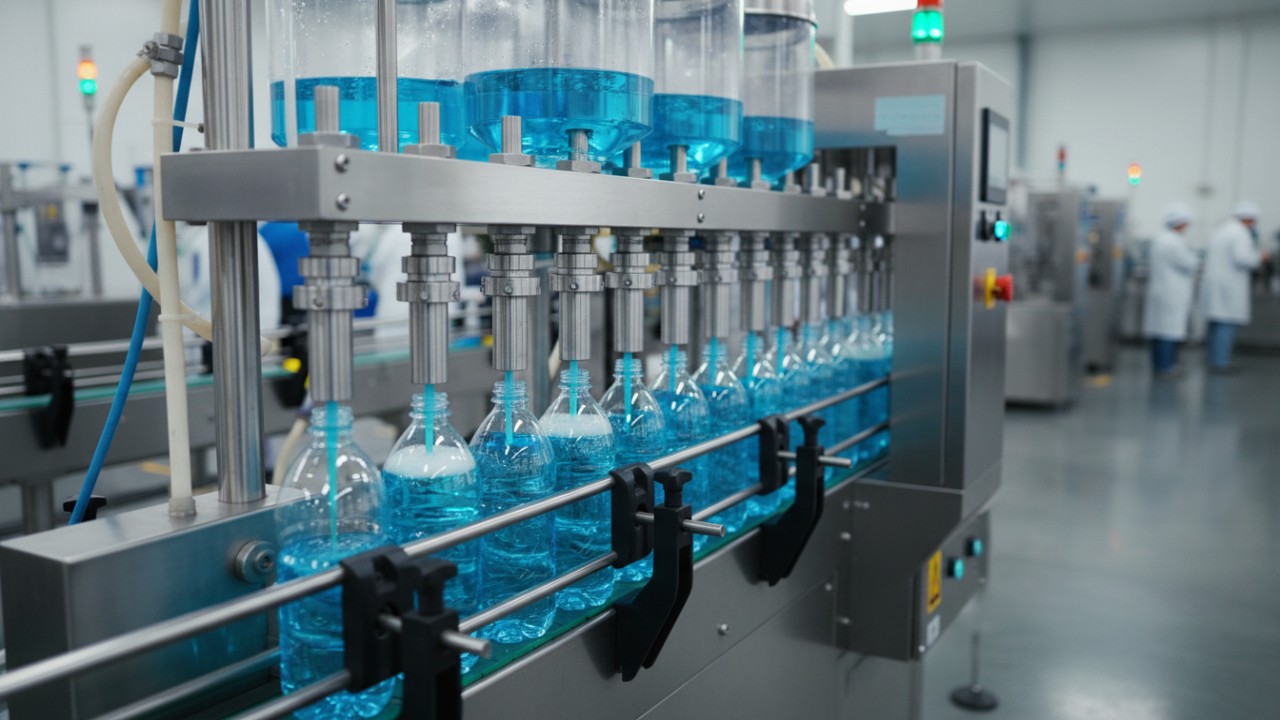
Key Takeaways: The Shift to Intelligent Packaging
- Real-Time Optimization: Smart filling machines utilize IoT data to optimize speed and accuracy instantly, reducing manual oversight.
- Predictive Power: Transitioning from reactive repair to predictive maintenance can reduce downtime by significant margins.
- Seamless Integration: Modern systems connect with ERP and SCADA for full visibility, unlike older liquid filler machine models.
- Sustainability: Enhanced dosing precision significantly reduces product waste, a critical factor for high-value liquids.
What is a Smart Liquid Filling Machine?
A smart liquid filling machine is an advanced packaging system that integrates IoT sensors, AI-driven analytics, and automated controls to self-adjust filling parameters in real-time. Unlike traditional liquid filling machines that follow static, pre-programmed instructions, smart fillers actively monitor flow rates, viscosity changes, and equipment health to maintain peak performance without human intervention.
The primary goal of this technology is to maximize Overall Equipment Effectiveness (OEE). According to OEE, the industry standard for manufacturing productivity, a score of 100% represents perfect production: manufacturing only good parts, as fast as possible, with no stop time. Smart fillers use data to chase this theoretical maximum by eliminating the micro-stops and speed losses that plague conventional liquid bottle filling machine setups.
Core Technologies Driving the Smart Packaging Revolution
The "intelligence" in these machines is powered by four distinct technologies that allow them to "feel" and "communicate" with the production line.
- IoT Connectivity: Integrated sensors monitor critical physical metrics like vibration, temperature, and pressure to detect anomalies long before a mechanical failure occurs.
- Adaptive Flow Control: Sophisticated algorithms adjust nozzle timing instantly. This is crucial for a viscous liquid filling machine handling products like honey or gels, where temperature fluctuations can alter flow characteristics mid-batch.
- Digital Twins: Virtual simulations of the filling line allow operators to test new bottle shapes or liquid types without halting physical production.
- Self-Cleaning (CIP) Integration: Automated Clean-In-Place cycles are verified by digital conductivity sensors, ensuring hygiene without manual disassembly.
Beyond Speed: The Economic Impact of Intelligent Filling
While speed is often the headline feature, the true ROI of a smart automatic filling machine for liquid lies in cost avoidance and resource efficiency. The economic argument for upgrading goes far beyond simply filling more bottles per minute.
- Waste Reduction: Precision volumetric filling significantly reduces "overfill" giveaway. For expensive products, saving even 1 ml per bottle can save thousands in raw material costs annually.
- Predictive Maintenance: Instead of waiting for a breakdown, smart systems alert maintenance teams to wear and tear early. According to data cited by McKinsey, predictive maintenance strategies can reduce machine downtime by up to 50% and increase machine life by 20-40%.
- Labor Optimization: Intuitive Human-Machine Interfaces (HMIs) allow fewer, less-specialized operators to manage complex lines.
- Energy Efficiency: Smart servo motors consume energy only when active, unlike the continuous-run pneumatic systems often found on older liquid filling machine for sale listings.
Expert Tips: Avoiding Common Mistakes When Upgrading
Transitioning to smart automation requires careful planning. Whether you are installing a 2-ingredient liquid filling machine or a high-speed rotary line, avoiding these pitfalls is essential for success.
- Don't ignore data integration: Ensure your new filler can "talk" to your existing ERP or MES software. A smart machine isolated from the network loses half its value.
- Avoid over-specifying: Choose a machine adaptable to your current needs with modular scalability. You want a system that grows with you into 2030.
- Check viscosity range: Ensure smart sensors are calibrated for your specific product. A chemical liquid filling machine needs different sensor calibration than one handling food-grade sauces (foaming vs. dripping).
- Prioritize hygienic design: Look for 316L stainless steel construction with minimal crevices. This supports faster changeovers and ensures compliance with strict safety standards.
For a deeper dive into selecting the right hardware, read The Ultimate 2026 Guide to Liquid Filling Machines.
Industry Solutions: Leading the Charge in Smart Filling
At Guangzhou Yuanyang Mechanical Device Co., Ltd. (YUANYANG), we understand that modern production lines require a partner who masters both mechanical engineering and software integration. Since 2008, we have focused on providing complete production line equipment—from vacuum emulsifying mixers to automatic capping machines.
- Turnkey Expertise: We provide a full set of turnkey services, including free technical training and one-stop installation support.
- Certified Safety: Yuanyang has obtained multiple CE certifications, ensuring our equipment meets rigorous EU safety and health standards.
- Holistic Approach: Our vision is to be the world's best manufacturer by focusing on the "Total Cost of Ownership," ensuring that your investment yields long-term profitability through durability and smart design.
Frequently Asked Questions (FAQ)
What is the difference between volumetric and net weight filling machines?
Volumetric machines fill based on a pre-set volume of liquid, making them ideal for consistent bottle sizes. Net weight fillers use scales to fill based on the liquid's weight, which is better for high-value products or inconsistent containers.
How do smart filling machines improve accuracy?
They use feedback loops from flow meters and check-weighers to auto-correct fill levels during production. This eliminates manual calibration errors and compensates for temperature-induced viscosity changes.
Can smart liquid fillers handle high-viscosity products?
Yes, smart piston and pump fillers are specifically designed to handle thick pastes and creams. Servo-driven controls provide the necessary torque and precision for thick liquids.
What is the role of predictive maintenance in liquid filling?
It uses sensor data to predict component failures (like seals or pumps) before they happen. This prevents unplanned downtime and allows maintenance to be scheduled during non-production hours.
Are smart filling machines difficult to clean?
No, most feature automated Clean-In-Place (CIP) systems. Smart controls monitor the cleaning cycle to ensure sanitation standards are met without disassembly.
How much faster are smart machines compared to semi-automatic ones?
Smart, fully automatic lines can exceed 100+ bottles per minute (BPM), whereas semi-auto is limited by operator speed (usually 10-15 BPM). Consistency is also significantly higher in smart automated systems.
Do I need a new conveyor system for a smart filler?
Often yes, smart fillers rely on synchronized indexing conveyors to position bottles precisely. However, many modern smart fillers can be retrofitted onto existing standard conveyor lines.
What is the ROI timeline for a smart liquid filling machine?
ROI typically ranges from 12 to 24 months depending on production volume. Savings come from reduced product waste, lower labor costs, and increased throughput.
Conclusion
The era of static automation is ending; the future belongs to responsive, data-driven liquid filling systems. Investing in smart technology not only improves accuracy but secures a competitive advantage through agility and sustainability. Whether you need a single machine or a complete production line, Guangzhou Yuanyang Mechanical Device Co., Ltd. is ready to support your transformation.
Contact us today to discuss your specific needs and request a free consultation.
High Shear vs. Homogenization: Which Emulsification Tech Wins for Your Bottom Line in 2026?
Why Don't Oil and Water Mix? The Ultimate Guide to Polarity and Emulsification Science (2026)
How Emulsification Actually Happens in Industrial Mixing Systems (2026 Guide)
Understanding Vacuum Emulsifying Mixers as a System: From Process Logic to Production Outcomes
7 Dangerous Mistakes Most Companies Make with Underground Storage Tanks (USTs)
High shear homogneizer
What’s the working principle of high shear homogenizer?
The shear mixer mainly through the high-speed relative rotation of the rotor and the stator to produce a strong shear force to achieve the refinement and homogenization of the material.
Detergent powder mixer
Can you also help to purchase raw powder for the washing powder mixer?
Sure, we have professional partner who has been engaged in raw powder supply for over 20 years. The price is competitive in the market. If clients need to purchase together, it is recommend to take a container.
Hydraulic Lift Vacuum Mixer
How do you pack for the cosmetic emulsifier?
The emulsifying equipment will be wrapped with film first, then packed with wooden case. The machine is well-protected during shipment.
Homogenizer Mixing Tank with Circulation System
Do you have a water pump with flow meter installed for the shampoo mixer machine?
Yes, water pump with flow meter can be added upon requirements.
Portable Storage Tank
Can you add heating function for the storage tank for liquids?
Yes, the tank can be customized with jacket for heating upon requirements.
Leave a message
Have any questions or concerns about our products? Please leave us a message here, and our team will get back to you promptly.
 Scan QR Code
Facebook
YouTube
LinkedIn
Whatsapp: +8613434139712
Guangzhou Yuanyang Machinery