





Optimizing Emulsification Parameters for Stable Emulsions
- Optimizing Emulsification Parameters for Stable Emulsions
- Why parameter optimization matters for emulsifying machine performance
- About the product: 50L Hydraulic Lift Vacuum Emulsifier
- Core physical principles that determine emulsion stability
- Which parameters to optimize on an emulsifying machine
- 1. Rotor/stator speed and shear rate
- 2. Homogenization time and residence strategy
- 3. Temperature control
- 4. Vacuum level
- 5. Phase addition sequence and shear application
- 6. Surfactant concentration and HLB matching
- Recommended parameter guide for common targets
- Scale-up guidance: moving from lab to production
- Quality control: tests to confirm stability
- Troubleshooting common problems with emulsifying machines
- Problem: Large droplet sizes or bimodal distribution
- Problem: Excessive foaming or air entrainment
- Problem: Overheating and active degradation
- Cleaning, validation and GMP considerations
- Case study: Achieving 2 µm droplet size in a cosmetic cream
- Brand advantages and why choose the 50L Hydraulic Lift Vacuum Emulsifier
- FAQ — Frequently Asked Questions
- Q: What is the single most important parameter to control for smaller droplet size?
- Q: Can I use the same parameters for different oils?
- Q: How do I prevent oxidation of sensitive actives during emulsification?
- Q: What tests should I run to validate the process?
- Q: What droplet size can the 50L Hydraulic Lift Vacuum Emulsifier reliably achieve?
- Contact and call to action
- References and further reading
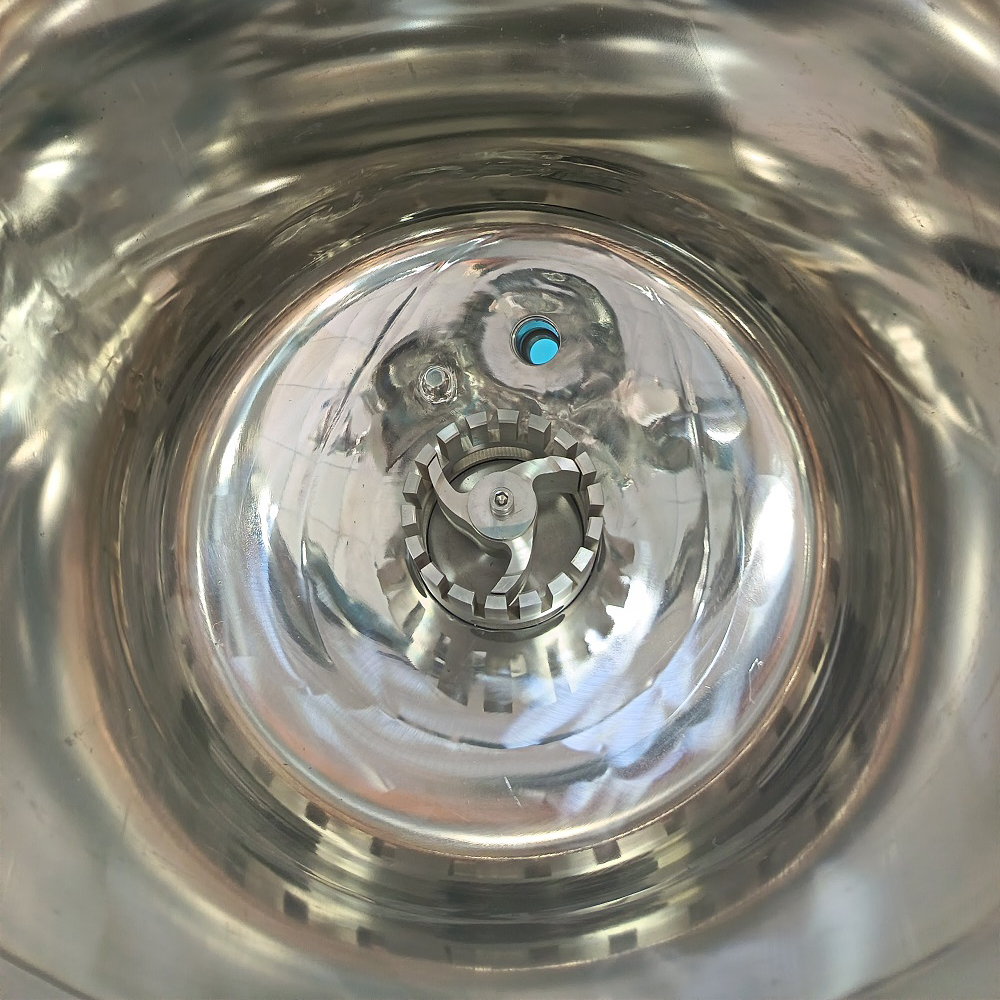
Optimizing Emulsification Parameters for Stable Emulsions
Why parameter optimization matters for emulsifying machine performance
Emulsions are ubiquitous in cosmetics, food, pharmaceuticals and chemical formulations. Stability, texture and performance of an emulsion are determined not only by ingredient selection, but by how those ingredients are processed in the emulsifying machine. Optimizing key process parameters — speed, shear, temperature, vacuum, residence time, and formulation ratios — is essential to achieve a fine droplet distribution, consistent rheology and long-term stability. The right settings reduce downstream defects such as creaming, coalescence, phase separation or excessive viscosity increase.
About the product: 50L Hydraulic Lift Vacuum Emulsifier
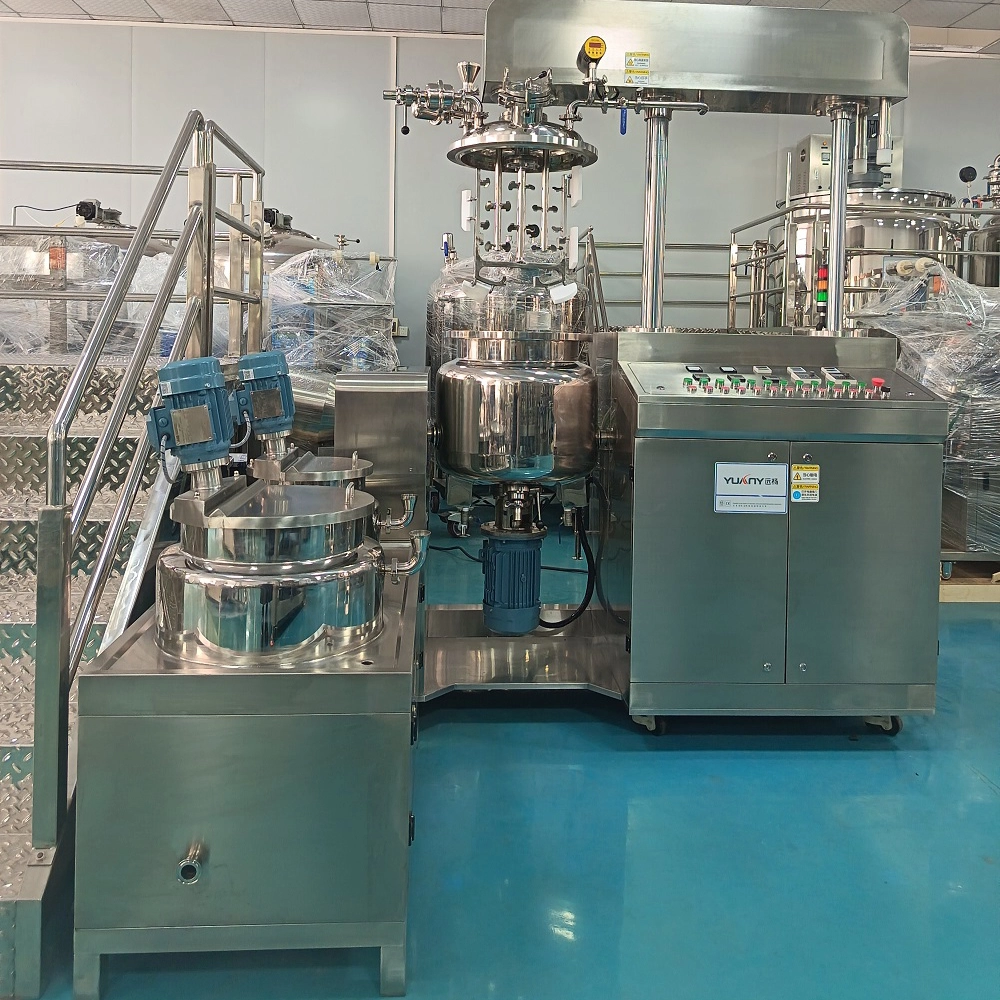
50L Hydraulic Lift Vacuum Emulsifier
Yuanyang hydraulic lift vacuum emuslifier is a combined mixing equipment with a main vacuum homogenizer tank, a water tank, and an oil tank, which is an integrated equipment with a mixing, dispersing, homogenizing, emulsifying, vacuumizing and powder absorption system that is widely used in cosmetics, food, pharmaceutical, and chemical fields.
Features:
⦁ With a hydraulic lift lid & tilting pot, vacuum system, and electric control system.
⦁ Suitable for products of 10,000~50,000 cps viscosity.
⦁ Perfect particle size of 2 microns and evenly distributed.
Core physical principles that determine emulsion stability
To optimize any emulsifying machine you need to understand the physical drivers of stability:
- Interfacial tension: Surfactants reduce the energy cost of creating new surface area. Lower interfacial tension enables smaller droplets at the same mechanical input.
- Shear and energy density: Rotor-stator, high-shear and homogenizer elements provide the mechanical energy to break droplets. Energy per unit volume (energy density) determines achievable droplet size.
- Viscosity of the continuous phase: Viscosity damps hydrodynamic forces and stabilizes droplets; too high viscosity can impede droplet break-up during processing.
- Droplet size distribution: Narrow, small droplet distributions reduce creaming and Ostwald ripening and improve optical and rheological properties.
- Temperature: Affects viscosity, interfacial tension and solubility of components; temperature control during emulsification is critical.
Which parameters to optimize on an emulsifying machine
Below are the parameters that have the largest impact when using a machine such as the 50L Hydraulic Lift Vacuum Emulsifier. Each parameter interacts with others — optimization is iterative.
1. Rotor/stator speed and shear rate
Recommended approach: Start at moderate rotor speed to wet and pre-disperse the phases, then increase speed in steps during homogenization. High speeds produce smaller droplets but also raise temperature and can entrain air. Typical optimized ranges (for a 50L lab/ pilot unit):
- Pre-mixing: 200–800 rpm
- Homogenization: 2000–6000 rpm (dependent on rotor geometry)
Use particle size measurement to find the minimum speed that achieves required Dv50 or D90. Pushing speed higher may give diminishing returns and stress heat-sensitive actives.
2. Homogenization time and residence strategy
Short, intense passes often produce a better size distribution than very long single passes. For a 50 L batch, a common approach is multiple passes of 2–10 minutes each with cooling intervals as needed. Total homogenization time typically ranges 5–30 minutes depending on formulation and target particle size.
3. Temperature control
Control both phase temperatures before mixing and temperature during homogenization. For many cosmetic emulsions, oil and water phases are heated to 60–75°C to ensure complete solubilization of waxes and emulsifiers, then cooled through homogenization under vacuum to lock droplet size and reduce air entrapment. For heat-sensitive pharmaceutical or natural actives keep processing temperatures as low as formulation allows and increase shear instead.
4. Vacuum level
Vacuum is essential to remove entrained air during emulsification and to improve homogeneity and shelf appearance. Typical vacuum levels used during homogenization are 20–50 kPa absolute (approx. 200–500 mbar). The 50L Hydraulic Lift Vacuum Emulsifier integrates vacuum to degas during processing, reducing bubble defects and oxidation risk for sensitive formulations.
5. Phase addition sequence and shear application
Common sequences: Water phase heated & mixed, oil phase heated & mixed, then oil slowly added into water under moderate shear (for oil-in-water emulsions) while applying homogenization once the pre-emulsion is formed. Slow, controlled addition avoids oversized droplets and reduces the need for extreme shear later.
6. Surfactant concentration and HLB matching
Optimize surfactant concentration to achieve desired interfacial coverage without excessive foaming or skin irritation (in cosmetics). Matching surfactant HLB to the oil phase is critical: a correct hydrophilic-lipophilic balance leads to smaller droplets and improved stability.
Recommended parameter guide for common targets
The table below gives starting parameter windows when using a 50L emulsifying machine such as the 50L Hydraulic Lift Vacuum Emulsifier. These are starting points — finalize settings by small-batch trials and particle size analysis.
| Target | Rotor Speed (rpm) | Homogenization Time | Temperature (°C) | Vacuum | Notes |
|---|---|---|---|---|---|
| Cosmetic O/W, fine texture | 3000–5000 | 5–15 min (in 2–3 passes) | 65–75 (pre-heat), cool to 40–45 | 200–400 mbar | Aim for Dv50 < 2–5 µm |
| Pharmaceutical emulsion (sterile/stable) | 3000–6000 | 10–30 min (multiple passes) | As low as formulation allows (often 40–60) | 100–400 mbar | Minimize oxidative exposure; control asepsis |
| Food emulsions (sauces, dressings) | 2000–5000 | 5–20 min | 40–70 (depends on ingredients) | 200–500 mbar | Target viscosity and mouthfeel; watch foaming |
Scale-up guidance: moving from lab to production
Scale-up is not a linear increase in rpm: maintain similar energy density (kW/m3) and shear profiles rather than identical rpm. For the 50L Hydraulic Lift Vacuum Emulsifier, use batch similarity calculations: keep tip speed or specific energy per unit volume close between scales and replicate the same sequence (pre-heat, addition rate, homogenization passes, vacuum). Validate by particle size analysis and rheology comparison between pilot and production batches.
Quality control: tests to confirm stability
Essential tests to confirm your parameter choices:
- Particle size distribution (laser diffraction) — Dv10/Dv50/Dv90; goal often Dv50 < 2 µm for high-end creams
- Viscosity and rheology — ensure expected flow and feel; measure at multiple shear rates
- Accelerated stability — centrifugation, freeze-thaw cycles, elevated temperature storage
- pH and conductivity — to detect phase changes or chemical degradation
- Microscopy — to detect coalescence, flocculation or crystal formation
Troubleshooting common problems with emulsifying machines
Problem: Large droplet sizes or bimodal distribution
Check oil addition rate, increase homogenization shear or time in controlled steps, verify surfactant concentration and HLB. Ensure phases were properly pre-wetted before high shear.
Problem: Excessive foaming or air entrainment
Confirm vacuum is applied appropriately during homogenization. Reduce pre-mix speed, adjust rotor geometry or defoam with approved antifoaming agents. The integrated vacuum in the 50L unit is effective at minimizing these issues when used correctly.
Problem: Overheating and active degradation
Lower homogenization speed, add cooling intervals between passes, or process at lower temperature and compensate with increased shear. Monitor product temperature in real time.
Cleaning, validation and GMP considerations
For pharmaceutical and high-end cosmetic processing, follow validated cleaning protocols (CIP where available), maintain material traceability and certificates of conformity for wetted materials. The hydraulic-lift lid and tilting pot of the 50L Hydraulic Lift Vacuum Emulsifier speed up cleaning and reduce operator exposure, improving GMP compliance and line turnaround time.
Case study: Achieving 2 µm droplet size in a cosmetic cream
Goal: 2 µm Dv50, smooth sensory profile, 12-month shelf stability.
Approach:
- Oil phase: waxes and emollients melted at 70°C
- Water phase: dissolved humectants and preservatives at 70°C
- Pre-mix: add oil to water slowly under 400 rpm to form pre-emulsion
- Homogenize under vacuum at 4200 rpm in 3 passes (4 min each) with 2 min cooling between passes
- Cool to 40°C and add heat-sensitive actives under low shear
Result: Dv50 = 1.8 µm (laser diffraction), no creaming after accelerated stability at 45°C for 4 weeks.
Brand advantages and why choose the 50L Hydraulic Lift Vacuum Emulsifier
When optimizing emulsification parameters, equipment design matters. The 50L Hydraulic Lift Vacuum Emulsifier offers:
- Integrated vacuum system to remove air and improve appearance and oxidative stability.
- Hydraulic lift lid and tilting pot for safe, rapid loading and unloading, and simplified cleaning/CIP.
- Wide viscosity handling (10,000–50,000 cps) making it suitable for a range of cosmetic, pharmaceutical and food emulsions.
- High homogenization performance capable of producing consistent particle sizes down to ~2 µm.
- Electric control system for reproducible, programmable processing that supports process validation.
These features reduce variability, shorten development cycles and improve the reproducibility of optimized parameter sets, helping manufacturers meet regulatory and market expectations efficiently.
FAQ — Frequently Asked Questions
Q: What is the single most important parameter to control for smaller droplet size?
A: Energy density (combination of rotor/stator speed and homogenization time) is the primary driver, but it must be balanced with surfactant concentration and temperature. Optimize energy density while monitoring particle size to avoid unnecessary heat generation.
Q: Can I use the same parameters for different oils?
A: No. Oil viscosity and interfacial properties change how droplets break. Re-optimize rotor speed, surfactant HLB and mixing time for oils with substantially different viscosities or phase behavior.
Q: How do I prevent oxidation of sensitive actives during emulsification?
A: Use vacuum degassing to minimize oxygen exposure, process at the lowest effective temperature, add antioxidants if compatible, and limit processing time at high shear. The integrated vacuum system on the 50L unit helps significantly.
Q: What tests should I run to validate the process?
A: At minimum run particle size distribution, viscosity/rheology, accelerated stability (temperature cycling), pH, and microbiological testing as applicable for your industry. Document parameters, equipment logs and analytical results for reproducibility and regulatory records.
Q: What droplet size can the 50L Hydraulic Lift Vacuum Emulsifier reliably achieve?
A: Under optimized conditions it can reliably achieve particle size around 2 microns with even distribution for appropriate formulations, as stated in product specifications. Actual size depends on formulation and parameter optimization.
Contact and call to action
Well-optimized processes still require hygienic operation, making cleaning and CIP tips for 50L vacuum emulsifiers critical for quality assurance.If you need help optimizing emulsification parameters or want to view technical specifications for the 50L Hydraulic Lift Vacuum Emulsifier, contact our sales and technical team. We provide process development support, trial runs, and parameter optimization to ensure your formulation meets stability and sensory targets.
Contact us to arrange a demo, request a pilot batch, or receive a detailed datasheet for the 50L Hydraulic Lift Vacuum Emulsifier.
References and further reading
- Emulsion — Wikipedia: https://en.wikipedia.org/wiki/Emulsion
- Emulsion — Britannica: https://www.britannica.com/science/emulsion
- Emulsions (pharmaceutics) — NCBI Bookshelf: https://www.ncbi.nlm.nih.gov/books/NBK557502/
- ScienceDirect topic overview — Emulsion: https://www.sciencedirect.com/topics/chemistry/emulsion
- U.S. Food & Drug Administration — Cosmetics: https://www.fda.gov/cosmetics
Authoritative testing and data collection during optimization, combined with suitable equipment like the 50L Hydraulic Lift Vacuum Emulsifier, will allow formulators to reliably produce stable, high-quality emulsions. Contact our technical team to accelerate your development and scale-up process.
Sourcing Criteria for Industrial Emulsion Mixers: Purchase Guide
OEM/ODM liquid agitator mixer Manufacturers and Suppliers
Everything You Need to Know About cosmetic mixing blending equipment
Top sachet packaging machine Manufacturers and Suppliers in US
Automatic Round Bottle Labeling Machine
What types bottles are suitable for this bottle sticker labeling machine?
Standard round bottle labeling machine are suitable for various different sizes of round bottles in daily application. For special bottles, such as square type,Hexagonal flask, bottle with tapper, just send your bottle design to us to customize , to make sure our labeling machine are suitable for client’s bottles.
Vertical Filling Machine
Can it fill 10 liters bottle?
No, the biggest filling volume is 5L. But you can fill twice to achieve you target. Over 5L, another drum filling machine will be recommended.
Open Lid Storage Tank
Is the material of the cosmetic tank anti-corrosive?
Yes, the tank is made of stainless steel 304 or 316L, it can store corrosive chemicals. But it is recommend to use PP storage tank if the liquid is strong acid, alkali and corrosive chemical liquid
Water Cooling Induction Sealer
Do you also have conveyor for the bottle lid sealing machine?
Yes, we can add a conveyor for the bottle sealing machine. And customize the conveyor height according to requirement if need.
Chemicals
How is the safety of the equipment ensured?
The equipment is equipped with multiple safety protection measures and meets chemical industry safety standards.
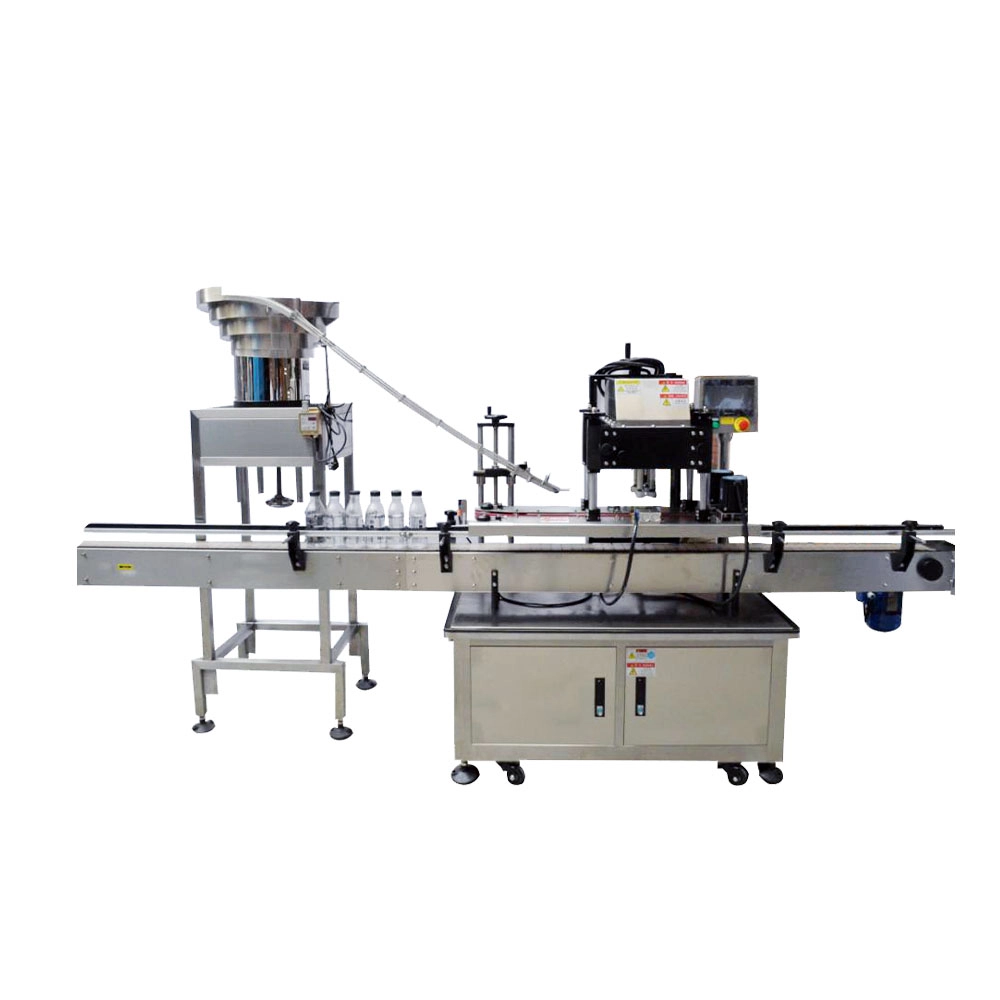
Automatic Plastic Caps Capping Machine with Vibrating Cap Feeder for Sale
Yuanyang automatic screw capping machine is a kind of four-wheel bottle capping machine. The automatic screw capper is often used to close lids of containers such as bottles and jars, especially for plastic bottles, which are widely used in food, medicine, chemical, cosmetic, and other industries for mass production and continuous production lines.
Features:
⦁ Full pneumatic drive;
⦁ Automated fast speed;
⦁ Suitable for various screw caps, pumps, and spray bottles.
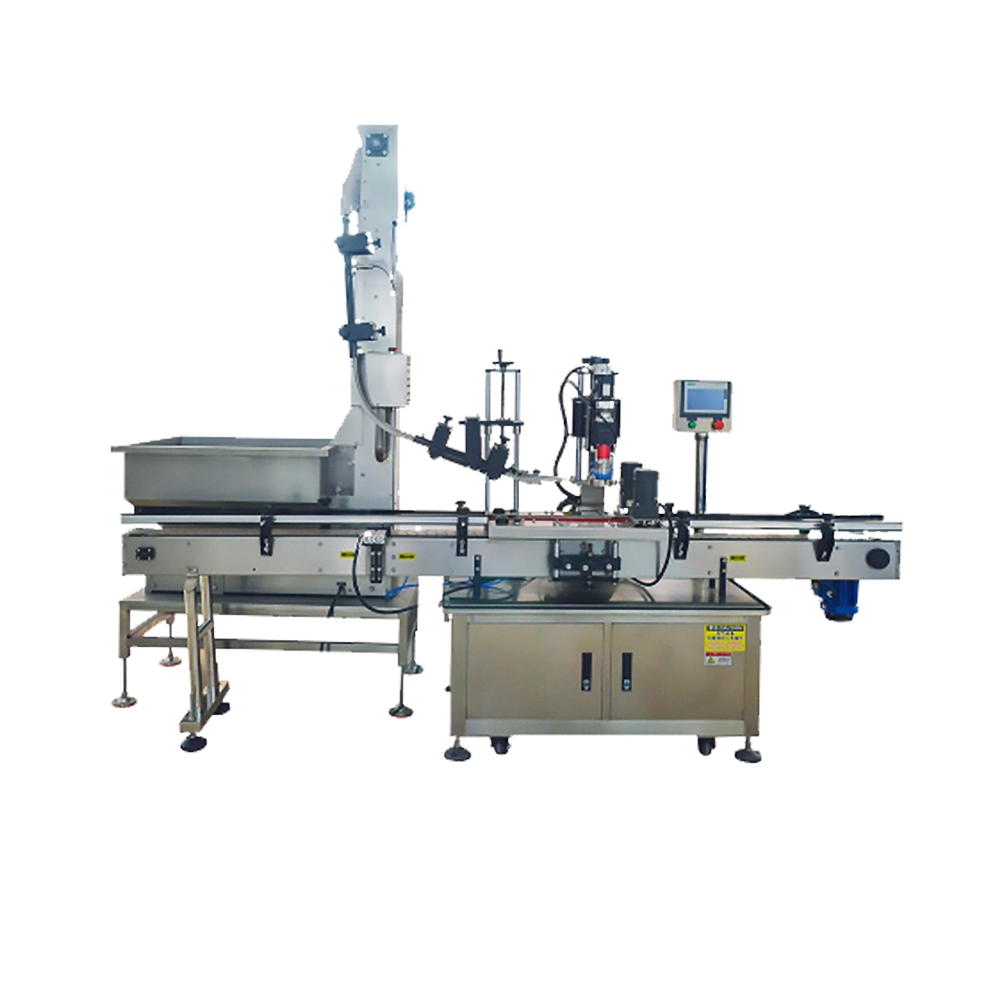
Automatic Metal Caps Capping Machine for Sale
Yuanyang automatic metal cap capping machine is a bottle capper for bottles with metal caps, which is often used to close lids of containers such as bottles and jars. The glass bottle metal capping machine is widely used in food, medicine, chemical, cosmetic, and other industries for mass production and continuous production line .
Features:
⦁ Pneumatic and electric drive;
⦁ Automated fast speed;
⦁ Suitable for glass bottles with metal caps.
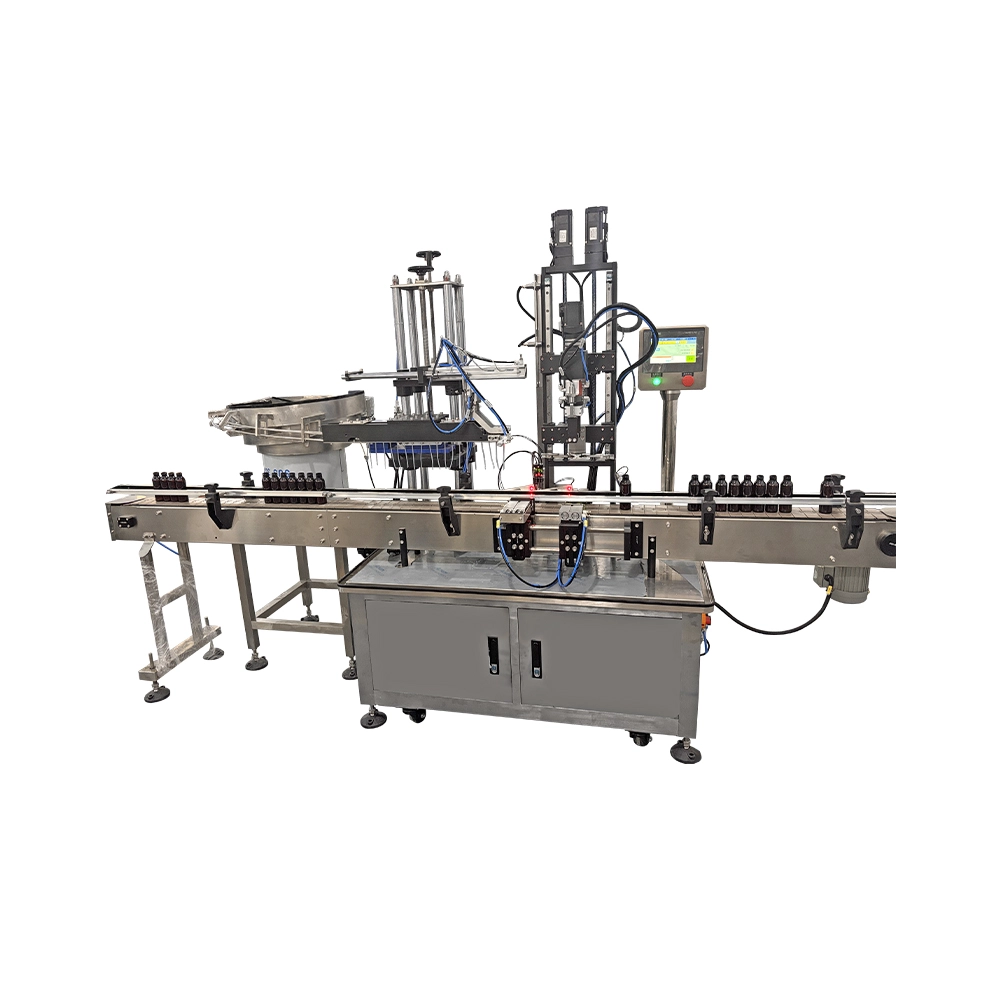
Automatic Pump Head Feeding and Capping Machine for Sale
Yuanyang automatic pump head feeding and capping machine is a bottle cap sorter and capper for bottles with pump heads, which is often used to close lids of containers such as nail polish, sprayers, and shampoo. The capping machine with a pump head feeder is widely used in food, medicine, chemical, cosmetic, and other industries for mass production and continuous production line .
Features:
⦁ Pneumatic and electric drive;
⦁ Automated fast speed;
⦁ Suitable for various types of caps.
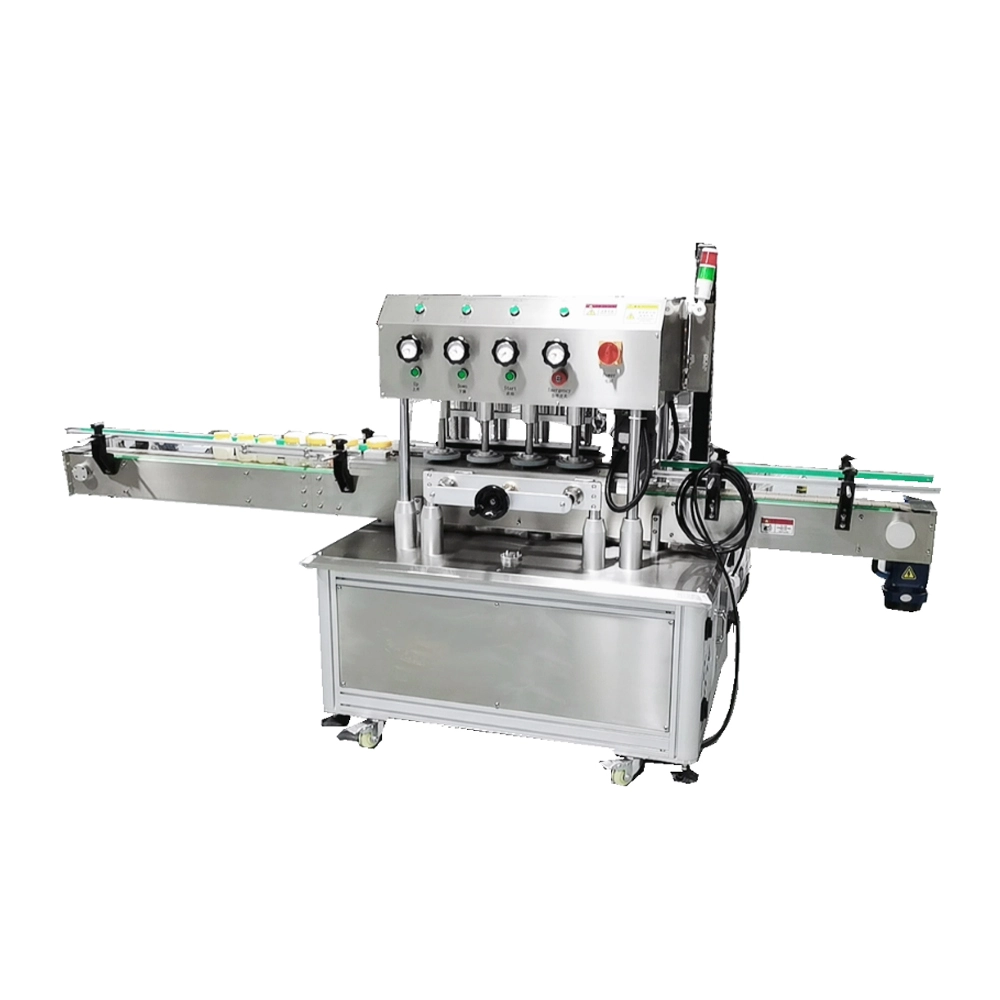
Automatic High Speed Capping Machine for Sale
The Yuanyang automatic high-speed capping machine is a kind of 8-wheel bottle-capping machine with fast working efficiency. The automatic capper is often used to close lids of containers such as bottles and jars, especially for plastic bottles, which are widely used in food, medicine, chemical, cosmetic, and other industries for mass production and continuous production lines.
Features:
⦁ Electric drive;
⦁ Automated fast speed;
⦁ Suitable for various screw caps, pumps, and spray bottles.
 Scan QR Code
Facebook
YouTube
LinkedIn
Whatsapp: +8613434139712
Guangzhou Yuanyang Machinery