





Scale-Up Strategies from Lab Mixer to 50L Emulsifier
- Scale-Up Strategies from Lab Mixer to 50L Emulsifier
- Why scale-up matters for your emulsifying machine
- Understand the process: lab mixer versus 50L Hydraulic Lift Vacuum Emulsifier
- Key parameters to control during scale-up for your emulsifying machine
- Selecting the right emulsifying machine: lab mixer vs 50L vacuum emulsifier
- Process validation and testing protocols for scale-up
- Designing recipes and formulations for the 50L emulsifying machine
- Operational best practices for the 50L Hydraulic Lift Vacuum Emulsifier
- Troubleshooting common scale-up challenges with emulsifying machines
- Cost, safety and regulatory considerations when scaling
- Example scale-up workflow: lab to 50L emulsifying machine (practical steps)
- Why choose Yuanyang 50L Hydraulic Lift Vacuum Emulsifier for scale-up?
- FAQ — Frequently Asked Questions about scaling to a 50L emulsifying machine
- Contact us / View product
- References and authoritative sources
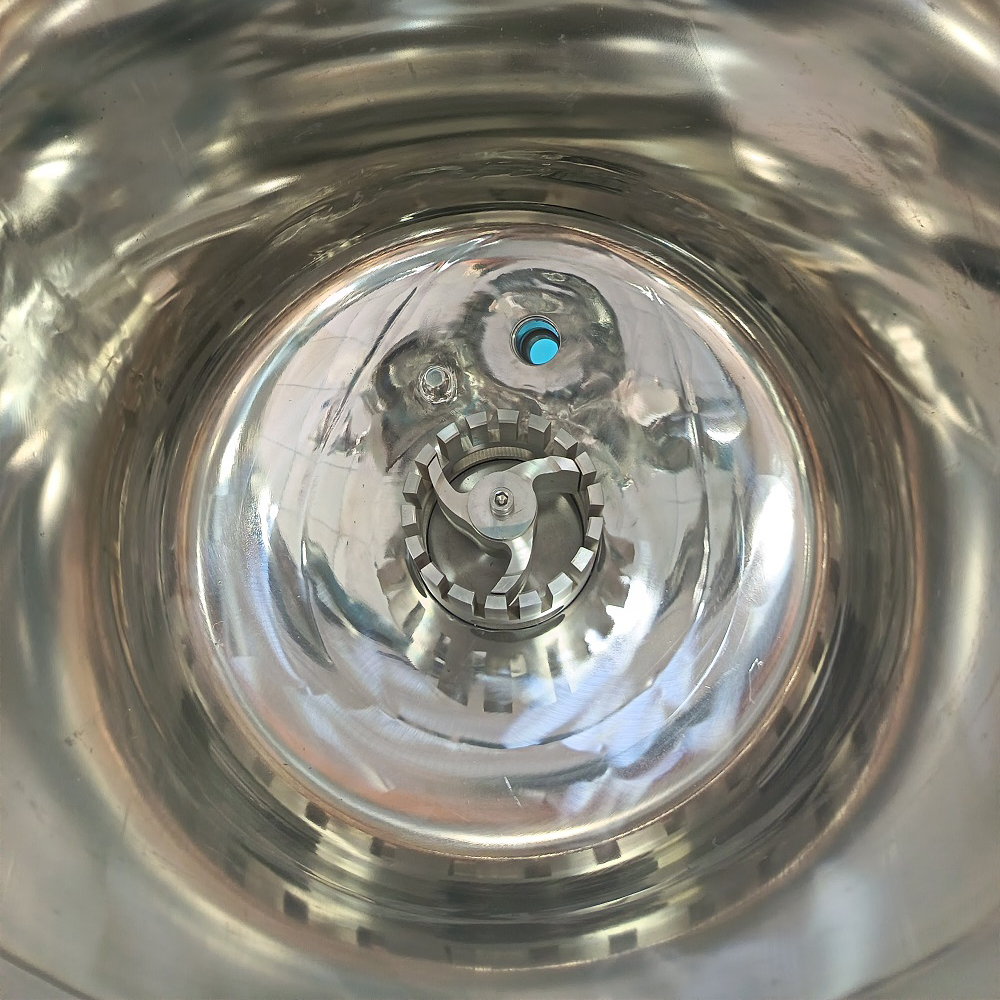
Scale-Up Strategies from Lab Mixer to 50L Emulsifier
Why scale-up matters for your emulsifying machine
Scaling a formulation from a bench-top lab mixer to a production-level emulsifying machine is more than simply increasing batch size. It is about preserving product performance — droplet size, rheology, stability, sensory attributes — while improving efficiency, safety and regulatory traceability. Whether you are in cosmetics, food, pharmaceutical or specialty chemicals, understanding the science and engineering behind scale-up helps avoid costly reformulation, product failures or line stoppages. During scale-up, vacuum performance becomes more noticeable, so understanding vacuum mixing and how it enhances air-free emulsions is crucial.
Understand the process: lab mixer versus 50L Hydraulic Lift Vacuum Emulsifier
The equipment you choose for production defines what is feasible at scale. Here is the product we reference in this guide:
Yuanyang hydraulic lift vacuum emuslifier is a combined mixing equipment with a main vacuum homogenizer tank, a water tank, and an oil tank, which is an integrated equipment with a mixing, dispersing, homogenizing, emulsifying, vacuumizing and powder absorption system that is widely used in cosmetics, food, pharmaceutical, and chemical fields.
Features:
⦁ With a hydraulic lift lid & tilting pot, vacuum system, and electric control system.
⦁ Suitable for products of 10,000~50,000 cps viscosity.
⦁ Perfect particle size of 2 microns and evenly distributed.
This 50L Hydraulic Lift Vacuum Emulsifier is an emulsifying machine designed to combine high-shear homogenization with vacuum capability and material handling features (water/oil tanks and powder absorption). These attributes help control entrapped air, improve wetting and powder incorporation, and achieve fine particle distributions comparable to lab-scale homogenizers.
Key parameters to control during scale-up for your emulsifying machine
Successful scale-up maintains critical parameters rather than exact equipment settings. Focus on:
- Tip speed and shear rate — maintain geometric similarity or equivalent tip speeds to reproduce shear-sensitive phenomena.
- Energy density (kW/m3) — aligning energy input per volume often predicts droplet size.
- Residence time in high-shear zone — longer or shorter exposure can change droplet breakup.
- Temperature profiles — heat affects viscosity and interfacial tension; scale-up often requires enhanced cooling/heating control.
- Vacuum level — reduces entrapped air and improves stability for many emulsions.
- Order of addition and premix quality — ensure oil and aqueous premixes match lab behavior.
- Viscosity — products between 10,000 and 50,000 cps can be handled by the 50L emulsifying machine, but filling, pumping and homogenizing steps must be adapted accordingly.
Document each parameter at lab scale so you can target equivalence on the 50L unit.
Selecting the right emulsifying machine: lab mixer vs 50L vacuum emulsifier
Not all mixers are created equal. Use the table below to compare typical lab mixers and a 50L Hydraulic Lift Vacuum Emulsifier for scale-up decisions.
| Feature / Metric | Lab Mixer (Bench) | 50L Hydraulic Lift Vacuum Emulsifier |
|---|---|---|
| Typical batch volume | 0.1–5 L | 10–50 L |
| Shear mechanism | Rotor–stator, magnetic stirrer | High-shear homogenizer + rotor–stator + vacuum |
| Control of vacuum | Limited or none | Integrated vacuum system |
| Particle size capability | Down to microns depending on homogenizer | Consistently ~2 microns (as specified) |
| Viscosity handling | Lower viscosities easier | Designed for 10,000–50,000 cps |
| Material handling (powders/oils) | Manual addition | Powder absorption system + oil/water tanks |
| Cleaning / maintenance | Simple | Designed for production cleaning; tilting pot and hydraulic lift aid access |
Process validation and testing protocols for scale-up
Before full production, validate the scaled process using objective metrics:
- Droplet/particle size distribution — use laser diffraction or microscopy to confirm target ~2 microns and distribution width.
- Viscosity and rheology — measure shear thinning behavior and target viscosity at relevant shear rates.
- Stability testing — accelerated stability (heat, centrifuge, freeze-thaw) to detect phase separation.
- Microbiological testing — for food and cosmetics, ensure appropriate microbial limits and validations for cleaning/CIP.
- Repeatability — run multiple batches to assess batch-to-batch variability.
- Scale equivalence runs — run an intermediate pilot (e.g., 5–20 L) where possible to reduce risk.
Document SOPs and acceptance criteria clearly as part of GMP or internal QA requirements.
Designing recipes and formulations for the 50L emulsifying machine
Recipe adjustments are common when scaling. Practical tips:
- Maintain the same mass fractions of ingredients, but be aware that surfactant concentration near phase inversion points may need fine-tuning.
- Use premix tanks: prepare oil and water phases separately in the provided oil/water tanks before transfer to main homogenizer.
- Powder absorption systems significantly improve dispersion of thickeners or powders — use them to avoid lumps and air entrapment.
- Temperature control is essential during emulsification — incorporate jacketed tanks and active cooling when scaling up to thicker systems.
- Order of addition: dissolve actives and hydrophilic components in water first, then slowly add oil phase under shear; add heat-sensitive actives after cooling under low shear.
Operational best practices for the 50L Hydraulic Lift Vacuum Emulsifier
To get consistent results from a 50L emulsifying machine:
- Use the hydraulic lift lid and tilting pot to improve ergonomics for loading and cleaning; this reduces downtime and contamination risks.
- Use vacuum during emulsification to remove air and prevent foam; this often improves emulsion stability and appearance.
- Set homogenizer speeds and duration to reproduce the energy input per unit volume used in lab trials.
- Monitor temperature closely — employ automated electric control systems to maintain setpoints.
- Keep a robust maintenance schedule for seals, rotor–stator assemblies and vacuum pumps to maintain performance.
Troubleshooting common scale-up challenges with emulsifying machines
Common issues and remedies:
- Excessive foaming: increase vacuum, reduce stir speed during initial addition, use defoamers compatible with the formulation.
- Large droplets or bimodal distribution: increase energy density, prolong pass time through homogenizer or adjust rotor–stator gap.
- Phase inversion: verify surfactant HLB balance and check order of addition and temperature during mixing.
- Poor powder wetting: use powder absorption system and pre-wet powders in a small portion of the aqueous phase.
- Overheating and viscosity loss: improve cooling and control shear duration.
Cost, safety and regulatory considerations when scaling
Scaling affects CAPEX and OPEX. Consider:
- Material of construction (316L stainless steel) for product safety and regulatory compliance.
- Energy costs — high-shear homogenization is energy intensive; estimate kW requirements for consistent budgeting.
- GMP and documentation — batch records, maintenance logs and validated cleaning procedures are essential for pharmaceuticals and many cosmetics/food lines.
- Operator safety — hydraulic lids and tilting pots should have interlocks and safe procedures for maintenance.
Example scale-up workflow: lab to 50L emulsifying machine (practical steps)
A typical, low-risk scale-up path:
- Define critical quality attributes (CQA): droplet size, viscosity, pH, stability.
- Characterize lab process: record shear rates, mixing times, temperatures, vacuum level and energy input.
- Run an intermediate pilot (5–20 L) if possible to test geometric and thermal similarities.
- Translate to 50L by targeting energy density and tip speed equivalence rather than rpm alone. Document settings.
- Perform three consecutive validation batches, measuring CQAs and adjusting as needed.
- Finalize SOPs and train operators; implement QC testing for incoming materials and final product.
Why choose Yuanyang 50L Hydraulic Lift Vacuum Emulsifier for scale-up?
Yuanyang's 50L Hydraulic Lift Vacuum Emulsifier is engineered for reliable scale-up from lab to pilot and small production runs. Key advantages include:
- Integrated oil and water tanks plus a powder absorption system simplify formulation workflow and reduce manual handling.
- Vacuum homogenizer tank and high-shear homogenization capability help achieve consistent particle sizes around 2 microns, critical for High Quality emulsions.
- Hydraulic lift lid and tilting pot provide safer, cleaner, and faster access for loading and cleaning, reducing downtime.
- Robust electric control system for repeatable process control and traceable production batches fitting GMP needs.
- Designed to handle viscosities from 10,000 to 50,000 cps, allowing production of thick creams and gels without compromise.
FAQ — Frequently Asked Questions about scaling to a 50L emulsifying machine
Q: What is the most critical parameter to match between lab and 50L?
A: Energy density (kW/m3) and effective shear (tip speed) are generally the most predictive parameters for matching droplet size and dispersion. Track both during lab runs.
Q: Can the 50L unit really achieve 2 micron particle sizes?
A: Yes. The integrated high-shear homogenizer with vacuum control in the 50L Hydraulic Lift Vacuum Emulsifier is designed to deliver particle sizes around 2 microns when process parameters are optimized.
Q: Do I need a pilot scale between lab and 50L?
A: An intermediate pilot run (5–20 L) is recommended when feasible, especially for complex formulations or when lab and production equipment are geometrically dissimilar. It reduces risk and fine-tunes parameters.
Q: How do I handle powders in scale-up?
A: Use the powder absorption system or pre-wet powders into a portion of the aqueous phase. Proper powder handling reduces lumps and protects the homogenizer from damage.
Q: What cleaning options are available?
A: The tilting pot and hydraulic lift lid facilitate manual cleaning; for higher-throughput operations, integrate CIP (clean-in-place) cycles per SOP and validate cleaning efficacy.
Contact us / View product
If you are planning scale-up from a lab mixer to a 50L emulsifying machine, our technical sales team can help evaluate your formulation and recommend process parameters or demonstrations. Contact us: [email protected] or visit the product page to learn more about the 50L Hydraulic Lift Vacuum Emulsifier.
References and authoritative sources
What are the application scenarios of ro water filter cost?
How to start the 500 gallon mixing tank business in UK ?
How to Choose the food bag sealing machine manufacturer and supplier in America?
Top vertical ribbon mixer Manufacturers and Suppliers in Dubai
Horizontal Filling Machine
Can the liquid filler be delivered by air?
If clients need it in a hurry, just choose to delivery by air. The desktop cream filling machine is not big, can arrange international express to pick-up the package. In order to save cost, client can choose by sea, which is much slower.
Aluminum Foil Sealing Machine
Can you explain the working principle of this air cooling sealing machine?
Working principle: the host sends the ultra-audio current to the sensor head, which is generated by electromagnetic induction in the head of the sensor The flow, to the instant high temperature, the aluminum foil composite film is melted and bonded to the bottle opening, to achieve the effective high quality sealing effect.
Homogenizing Mixer
What’s the rotation speed of the bottom homogenizer head of the liquid detergent mixer?
The standard homogenizer is with high speed 3000 rpm, we can customize other bigger speed according to actual needs.
Automatic Piston Filling Machine
How to add liquids into the hopper of the fully automatic bottle filling machines?
The automatic liquid filling machine requires a pump to transfer liquids into hopper, and it can stop automatically with a liquid sensor inserted inside the hopper.
Ink Jet Printer
What package materials are required for this date printing machine?
The dater printer is suitable for various coated cardboard, film, non-coated, coated paper, aluminum foil, plastic card, self-adhesive, PP, PET, PVC, PE, etc
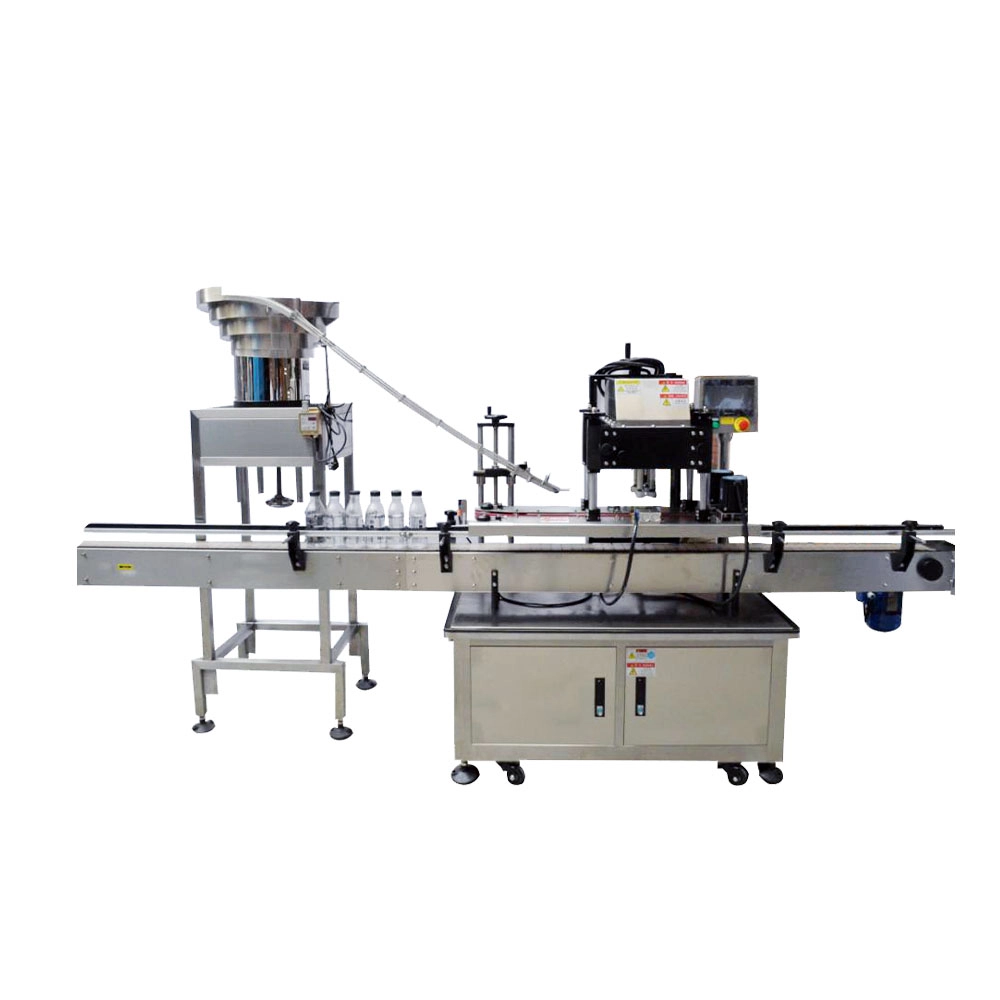
Automatic Plastic Caps Capping Machine with Vibrating Cap Feeder for Sale
Yuanyang automatic screw capping machine is a kind of four-wheel bottle capping machine. The automatic screw capper is often used to close lids of containers such as bottles and jars, especially for plastic bottles, which are widely used in food, medicine, chemical, cosmetic, and other industries for mass production and continuous production lines.
Features:
⦁ Full pneumatic drive;
⦁ Automated fast speed;
⦁ Suitable for various screw caps, pumps, and spray bottles.
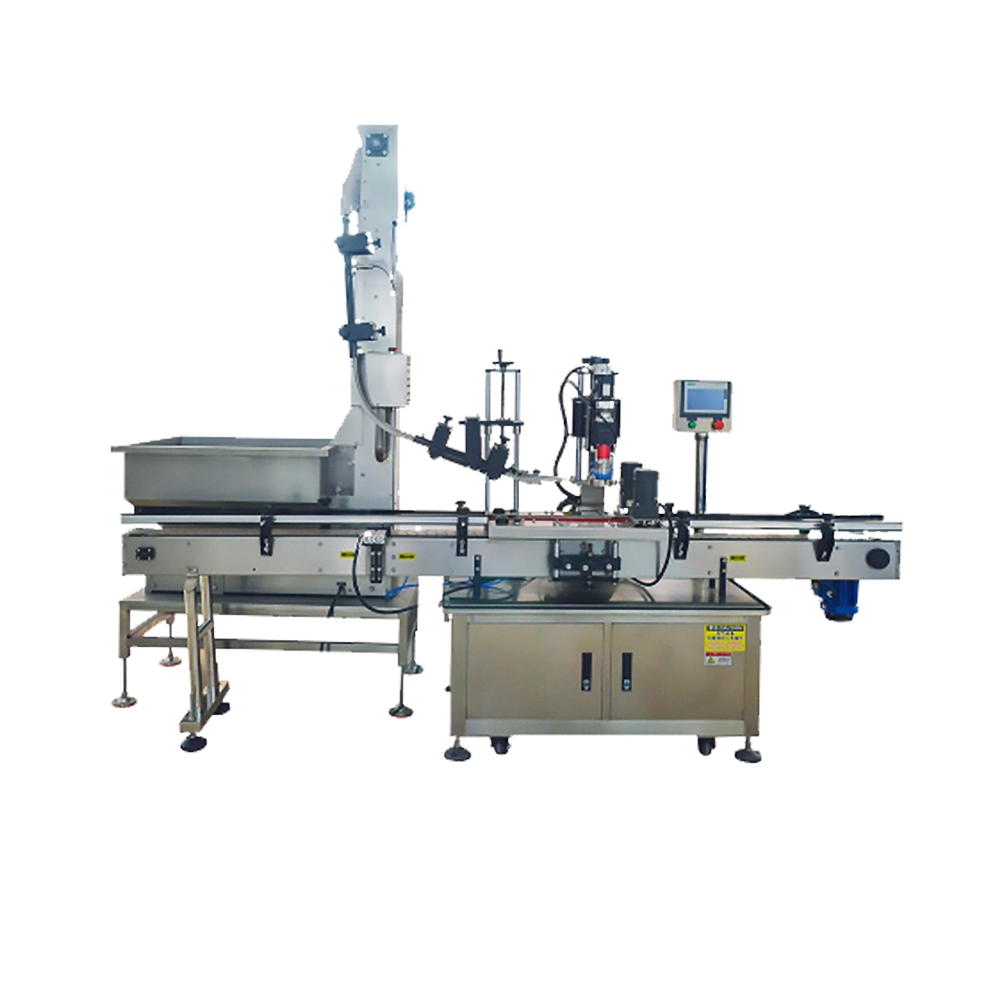
Automatic Metal Caps Capping Machine for Sale
Yuanyang automatic metal cap capping machine is a bottle capper for bottles with metal caps, which is often used to close lids of containers such as bottles and jars. The glass bottle metal capping machine is widely used in food, medicine, chemical, cosmetic, and other industries for mass production and continuous production line .
Features:
⦁ Pneumatic and electric drive;
⦁ Automated fast speed;
⦁ Suitable for glass bottles with metal caps.
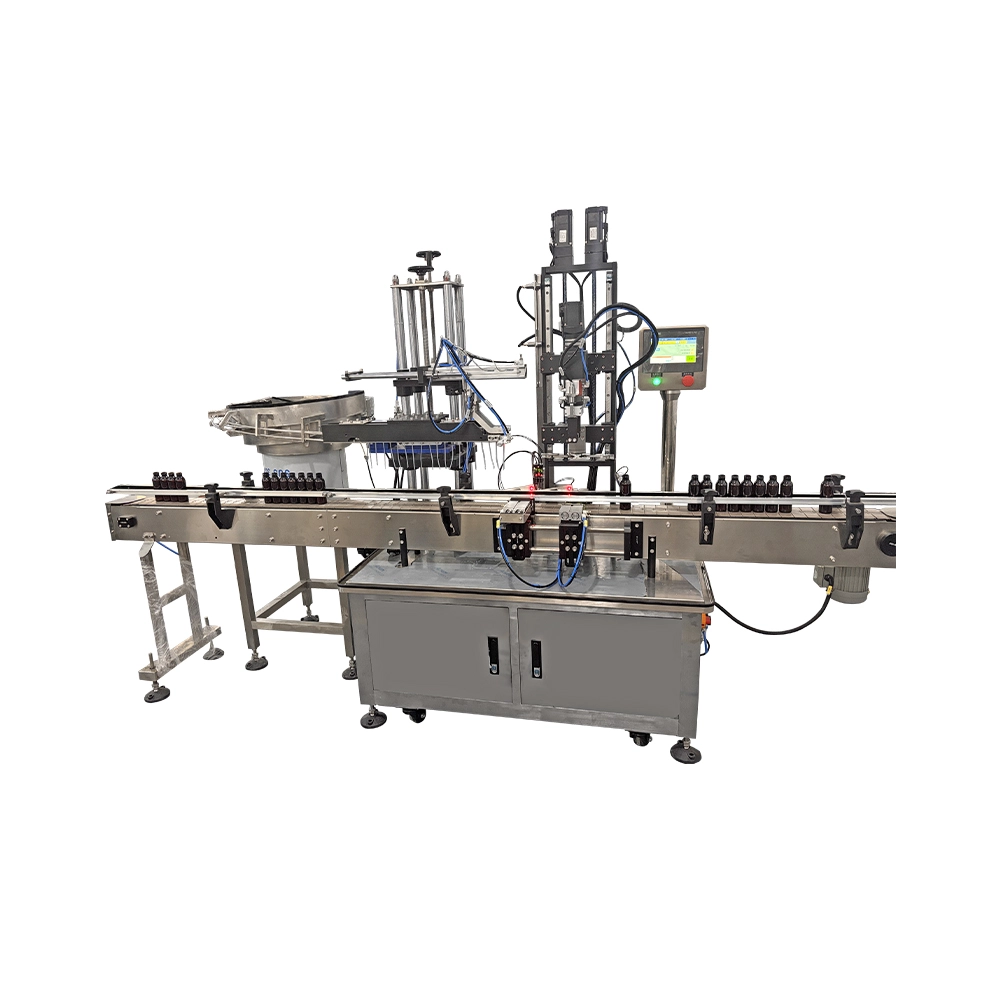
Automatic Pump Head Feeding and Capping Machine for Sale
Yuanyang automatic pump head feeding and capping machine is a bottle cap sorter and capper for bottles with pump heads, which is often used to close lids of containers such as nail polish, sprayers, and shampoo. The capping machine with a pump head feeder is widely used in food, medicine, chemical, cosmetic, and other industries for mass production and continuous production line .
Features:
⦁ Pneumatic and electric drive;
⦁ Automated fast speed;
⦁ Suitable for various types of caps.
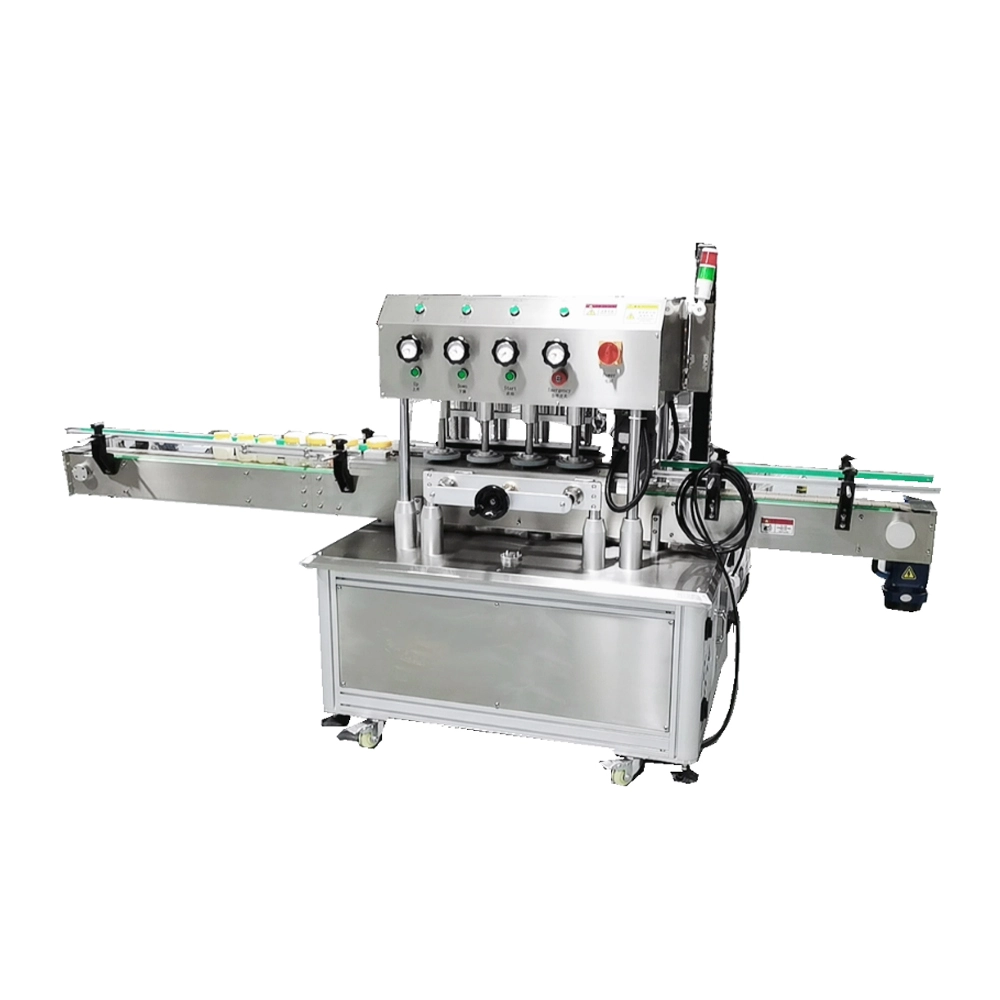
Automatic High Speed Capping Machine for Sale
The Yuanyang automatic high-speed capping machine is a kind of 8-wheel bottle-capping machine with fast working efficiency. The automatic capper is often used to close lids of containers such as bottles and jars, especially for plastic bottles, which are widely used in food, medicine, chemical, cosmetic, and other industries for mass production and continuous production lines.
Features:
⦁ Electric drive;
⦁ Automated fast speed;
⦁ Suitable for various screw caps, pumps, and spray bottles.
 Scan QR Code
Facebook
YouTube
LinkedIn
Whatsapp: +8613434139712
Guangzhou Yuanyang Machinery