





Production KPIs: Measuring Emulsifying Mixer Performance
- Production KPIs: Measuring Emulsifying Mixer Performance
- Why production KPIs matter for an emulsifying mixer
- Product snapshot: Vacuum Emulsifying Mixer for Sale
- Core KPIs to measure emulsifying mixer performance
- 1. Throughput and batch yield
- 2. Particle size distribution (PSD) and mean particle diameter
- 3. Viscosity control and rheological profile
- 4. Emulsification time and cycle time
- 5. Vacuum level and degassing efficiency
- 6. Energy consumption per batch
- 7. Clean-in-place (CIP) time and validation
- 8. Downtime, reliability, and maintainability
- Measurement tools and data strategies
- Example KPI table: metrics, measurement method, and suggested targets
- Troubleshooting common KPI failures
- Scaling and repeatability: from R&D to full production
- Digital practices: using data to improve KPI performance
- How Yuanyang Vacuum Emulsifying Mixer aligns with KPI goals
- Implementation checklist: deploying KPI monitoring for your emulsifying mixer
- Frequently asked questions (FAQ)
- Q: What is the most important KPI for an emulsifying mixer?
- Q: How often should PSD and viscosity be measured?
- Q: Does vacuum mixing always improve product quality?
- Q: Can I retrofit existing mixers to improve KPI outcomes?
- Q: How does Yuanyang support KPI optimization after purchase?
- Contact and product call-to-action
- Authoritative references
Production KPIs: Measuring Emulsifying Mixer Performance
Why production KPIs matter for an emulsifying mixer
Manufacturers of creams, skin-care products, ointments, pastes, and emulsions rely on repeatable mixing to meet quality, regulatory, and cost targets. Key performance indicators, or KPIs, provide objective measures to evaluate how well an emulsifying mixer performs in production. When you track the right KPIs, you can reduce batch variability, cut energy and material waste, speed up time to market, and make informed investment decisions — for example, when choosing a Vacuum Emulsifying Mixer for Sale that meets your plant needs.
Product snapshot: Vacuum Emulsifying Mixer for Sale
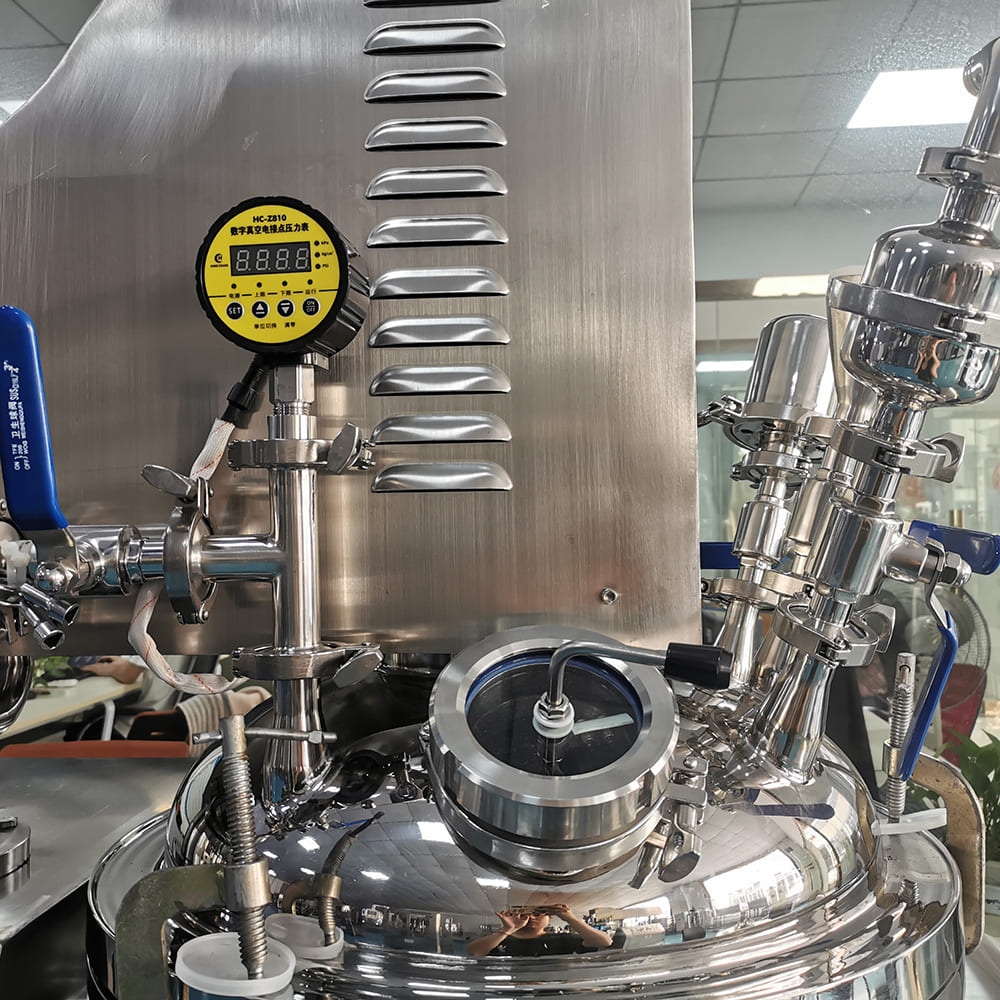
Yuanyang vacuum emulsifying mixer is a kind of emulsifier machine, the most popular cosmetics production equipment for making cream, skin-care products, ointment, paste, and emulsions.
Features:
⦁ Composed of a main emulsifying pot, a water pot, and an oil pot.
⦁ With a hydraulic lifting system, vacuum system, and electric control system.
⦁ Suitable for products of 10,000~50,000 cps viscosity.
⦁ Perfect particle size of 2 microns and evenly distributed.
Core KPIs to measure emulsifying mixer performance
Below are the KPIs you should measure regularly. Each KPI includes why it matters, how to measure it, recommended targets for cosmetic production, and common corrective actions.
1. Throughput and batch yield
Why it matters: Throughput (kg/h or kg/batch) and yield show how efficiently raw materials become finished product and how many usable units you get per batch. Lost yield directly increases production cost.
How to measure: Track input mass and final packaged mass per batch. Automate recording via weighing scales integrated with batch control.
Target: Aim for >98% yield for most creams and ointments after accounting for sampling and unavoidable hold-up. Target can be tighter in high-value products.
Corrections: Improve transfer line design, reduce hold-up volume, optimize vacuum and discharge procedures, and consider a vacuum emulsifying mixer with low dead-volume design like the Yuanyang model.
2. Particle size distribution (PSD) and mean particle diameter
Why it matters: Emulsion stability, texture, feel, and appearance depend heavily on droplet size and distribution. A finer, uniform PSD improves stability and consumer perception.
How to measure: Use laser diffraction particle size analyzers or dynamic light scattering for submicron to micron ranges. Take representative samples after homogenization step.
Target: For many cosmetics, a D50 of around 1-5 microns is ideal. Yuanyang claims a perfect particle size of 2 microns and even distribution, which is aligned with cosmetic industry targets for creams.
Corrections: Increase rotor-stator speed, adjust homogenization time, optimize emulsifier concentration, and ensure proper temperature control during emulsification.
3. Viscosity control and rheological profile
Why it matters: Final product viscosity affects pumpability, fill line performance, spreading behavior, and consumer acceptance.
How to measure: Use a laboratory or inline rotational viscometer/rheometer. Record viscosity at specified shear rates and temperatures to capture product rheology accurately.
Target: For Yuanyang-suitable products, 10,000 to 50,000 cps is the operating viscosity range. Define spec limits for your SKU, for example 20,000 ± 3,000 cps at 25 C and 10 s-1 shear.
Corrections: Modify emulsifier system, mixing shear, and temperature profile. For thick systems, use the mixer’s hydraulic lifting and strong shearing zones to achieve homogeneity before cooling.
4. Emulsification time and cycle time
Why it matters: Faster cycles increase throughput and reduce labor and energy per unit. But excessively fast cycles may compromise product quality if emulsification is incomplete.
How to measure: Log start and end times for each mixing stage: pre-mix, emulsification, homogenization, and cooling.
Target: Benchmark based on product complexity. For standard creams, emulsification and homogenization combined typically range from 10 to 40 minutes. Validate against quality attributes like PSD and viscosity.
Corrections: Optimize rotor-stator geometry, vacuum level, and pre-dispersion procedures. Consider a vacuum emulsifying mixer with efficient shear and homogenization capability to shorten cycle time without sacrificing quality.
5. Vacuum level and degassing efficiency
Why it matters: Vacuum reduces air entrapment, preventing bubbles and improving shelf life and sensory properties.
How to measure: Monitor vacuum gauge pressure continuously during vacuum steps and quantify residual entrained air via visual inspection or specific gravity checks.
Target: Typical vacuum levels for cosmetic emulsions range from -0.08 to -0.09 MPa (relative). Targets depend on formulation; verify by absence of visible bubbles and stable packaging mass.
Corrections: Improve pump capacity, check seals and gaskets, ensure proper pot design for efficient degassing. Yuanyang vacuum system is designed to assist in efficient degassing during emulsification.
6. Energy consumption per batch
Why it matters: Energy load is a significant production cost and contributes to sustainability metrics.
How to measure: Use power meters to log electrical energy (kWh) for each batch. Normalize by mass to get kWh/kg.
Target: Energy per kg depends on process and scale; track historical baseline and aim for continuous reductions through optimization.
Corrections: Optimize motor speed, reduce idle times, schedule batches to reduce heating and cooling losses, and choose efficient equipment with appropriate motor sizing.
7. Clean-in-place (CIP) time and validation
Why it matters: Cleaning time affects uptime and product changeover cost. CIP validation is critical for cosmetics with strict contamination controls.
How to measure: Log CIP start and finish times, cleaning solution volumes, and post-CIP swab results or TOC measurements.
Target: Minimize CIP time while meeting microbial and residue limits. Define acceptable limits per product family.
Corrections: Improve vessel accessibility, use integrated CIP nozzles, and design mixers for easy draining and smooth surfaces. Yuanyang designs often include features like hydraulic lifting that help access mixing tools for thorough cleaning.
8. Downtime, reliability, and maintainability
Why it matters: Unplanned downtime costs production and can delay shipments.
How to measure: Track mean time between failures (MTBF), mean time to repair (MTTR), and scheduled maintenance adherence.
Target: Industry targets vary; aim to increase MTBF and reduce MTTR through predictive maintenance and spare parts availability.
Corrections: Implement condition monitoring (vibration, temperature), maintain critical spares, and select mixers with proven components and clear service access.
Measurement tools and data strategies
To measure KPIs effectively, combine manual sampling with inline sensors and data capture systems. Common instruments and systems include viscometers, particle size analyzers, torque sensors, vacuum transducers, inline temperature and pressure sensors, PLC/SCADA logging, and laboratory QA equipment. Use statistical process control (SPC) charts to monitor trends and detect shifts early.
Example KPI table: metrics, measurement method, and suggested targets
| KPI | Measurement method | Suggested target (cosmetics) |
|---|---|---|
| Yield | Weigh in/out per batch | >98% |
| Particle size (D50) | Laser diffraction | 1–3 microns (D50); Yuanyang: 2 microns |
| Viscosity | Rotational viscometer at defined shear | 10,000–50,000 cps or product spec |
| Cycle time | PLC timestamps | Product dependent; minimize without quality loss |
| Vacuum level | Vacuum transducer | -0.08 to -0.09 MPa typical |
| Energy per kg | Power meter | Benchmark and reduce over time |
| CIP time | Process log + TOC/swabs | As short as possible while validated |
Troubleshooting common KPI failures
When KPIs deviate, use a root cause approach. Typical problems and checks include:
- High particle size: Check rotor-stator wear, homogenizer speed, emulsifier concentration, temperature, and pre-dispersion quality.
- High viscosity drift: Inspect batch recipe consistency, check water/oil temperature, and confirm correct emulsifier phase addition.
- Poor yield: Inspect valves and discharge design for dead volume; review transfer piping and draining procedure.
- Excessive CIP time or residues: Evaluate vessel geometry, gasket condition, and cleaning parameters; check for product entrapment zones.
- Vacuum instability: Check vacuum pump health, valves, and pot seals; confirm correct vacuum protocol.
Scaling and repeatability: from R&D to full production
KPIs must be consistent across scales. During scale-up, maintain dimensional similitude for shear zones, match tip speeds or energy dissipation rates, and validate that PSD and viscosity targets transfer. Use pilot trials to create transfer curves and update control recipes in the production PLC. Choosing a commercial-scale Vacuum Emulsifying Mixer for Sale that uses the same shear and homogenization principles as lab equipment helps preserve repeatability.
Digital practices: using data to improve KPI performance
Implement continuous data logging and basic analytics. Key steps:
- Integrate sensors with a historian or MES to centralize KPI data.
- Use SPC and run charts to detect drift before out-of-spec batches occur.
- Apply root cause analysis on persistent deviations and quantify improvements after corrective actions.
- Consider predictive maintenance models to reduce unexpected downtime.
How Yuanyang Vacuum Emulsifying Mixer aligns with KPI goals
When selecting equipment, check how the design supports KPI improvement. The Yuanyang Vacuum Emulsifying Mixer for Sale offers several features aligned to key production metrics:
- Three-pot design (main emulsifying pot, water pot, oil pot) supports accurate phase heating and addition, improving yield and batch consistency.
- Hydraulic lifting system enables safe and quick access for maintenance and cleaning, reducing CIP time and MTTR.
- Integrated vacuum system and control help remove entrained air efficiently, supporting degassing KPI targets.
- Electric control system and available options for data capture enable automated cycle-time logging and repeatable recipes.
- Designed for products with viscosity 10,000–50,000 cps and capable of producing a particle size around 2 microns, aligning with common cosmetic product specifications.
Implementation checklist: deploying KPI monitoring for your emulsifying mixer
Follow this practical checklist to operationalize KPI monitoring:
- Define KPI list and acceptable targets for each SKU.
- Install and calibrate measurement instruments: viscometer, particle size analyzer, vacuum transducer, power meters.
- Integrate sensors into PLC/MES for automated logging and alarms.
- Create SPC dashboards and routine review cadence for production and QA teams.
- Train operators on sampling methods and corrective actions.
- Run pilot batches to validate and adjust targets before full production.
Frequently asked questions (FAQ)
Q: What is the most important KPI for an emulsifying mixer?
A: It depends on your business objective. For quality-critical cosmetics, particle size distribution and viscosity are primary. For cost-focused operations, yield and energy per kg may be most important. Ideally track a balanced set of KPIs including PSD, viscosity, yield, cycle time, and CIP time.
Q: How often should PSD and viscosity be measured?
A: At minimum, measure PSD and viscosity on each new formulation batch and periodically during production as part of QA sampling. If you have inline instrumentation, continuous or near-continuous monitoring is possible and recommended for high-volume production.
Q: Does vacuum mixing always improve product quality?
A: Vacuum typically reduces entrapped air and improves stability, but its benefit depends on formulation. Some systems require careful control of vacuum level and timing to avoid excessive evaporation of volatile components.
Q: Can I retrofit existing mixers to improve KPI outcomes?
A: Many mixers can be retrofitted with improved control systems, vacuum pumps, or homogenizers, but structural limitations may remain. Evaluate expected improvements versus cost; sometimes replacing with a modern vacuum emulsifying mixer delivers faster ROI.
Q: How does Yuanyang support KPI optimization after purchase?
A: Yuanyang typically offers technical documentation, recommended operating profiles, and after-sales support. For best results, collaborate on commissioning trials to tune parameters for your formulations and targets.
Contact and product call-to-action
Once performance metrics are clear, the next step is evaluating vacuum emulsifying mixer quality and compliance, ensuring all regulatory and quality standards are met.
If you want to improve production KPIs and evaluate the Vacuum Emulsifying Mixer for Sale for your plant, contact our sales and technical team for a consultation, specification sheet, and demonstration. Request a quote or schedule a site visit to review how the Yuanyang mixer can meet your throughput, PSD, viscosity, and cleaning requirements.
Authoritative references
- Emulsification. Wikipedia. https://en.wikipedia.org/wiki/Emulsification
- Emulsion (chemistry). Wikipedia. https://en.wikipedia.org/wiki/Emulsion_(chemistry)
- Mixing (process engineering). Wikipedia. https://en.wikipedia.org/wiki/Mixing_(process_engineering)
- U.S. Food & Drug Administration (FDA) cosmetics overview. https://www.fda.gov/cosmetics
- Best practices in cleaning and validation for cosmetics and pharmaceuticals, example industry guidance articles (search providers like PharmTech and Cosmetics & Toiletries for technical articles)
Published by an experienced industrial mixing and cosmetics production consultant. For detailed specification, testing protocols, or on-site KPI implementation assistance, contact our technical team.
Everything You Need to Know About auger feeder system
The latest trends for pharmaceutical bottle filling machines
Sachet Packaging Machine Safety Features Buyers Should Know
Custom mini sealing machine Manufacturers and Suppliers in Europe
Washing Powder
What types of packaging does the equipment support?
Our machines accommodate various packaging formats, including bottles, bags, and small packs, to meet diverse market demands.
Semi Automatic Double Sides Labeling Machine
What’s the operation process?
Operation process: put the bottle on track- > step on the foot switch - > automatically taking the bottle in - > Automatically labeling - > Automatically taking the labeled bottle out.
Homogenizer Mixing Tank with Circulation System
Do you have CE certificate for the homogenizing mixer, which is a must of custom clearance for goods imported to European countries?
Yes, we have applied CE for the homogenizing mixers, all the mixers are manufactured according to the standard of CE.
Automatic Screw Capping Machine
Is this lid capping machine suitable for different shapes and sizes of bottles/jars?
Yes, the capping wheels can be adjusted higher or lower for different bottle height. The distance between wheels can be wider or closer for different cap diameter.
Cosmetic
Do your equipment meet GMP and other industry standards?
Yes. Our equipment fully complies with GMP, ISO, and other international industry standards and can be customized to meet specific regulatory requirements based on different markets and customers.
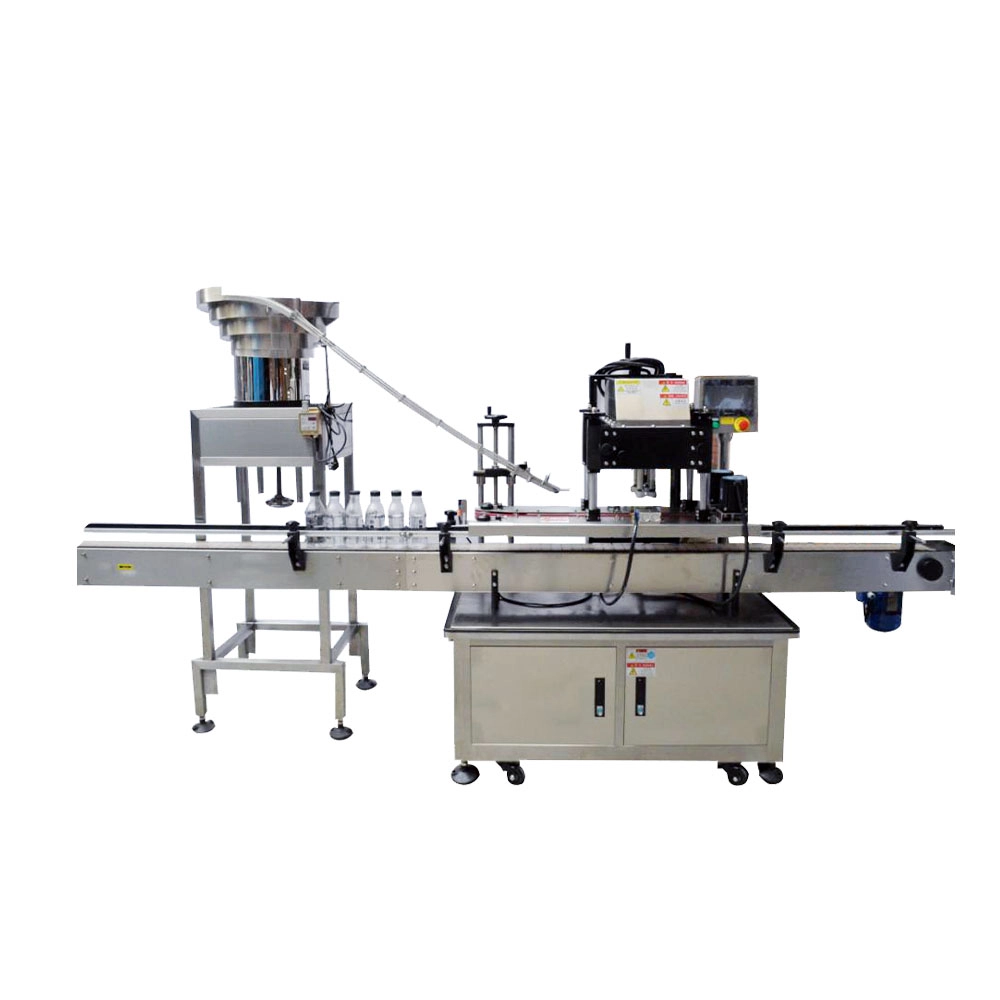
Automatic Plastic Caps Capping Machine with Vibrating Cap Feeder for Sale
Yuanyang automatic screw capping machine is a kind of four-wheel bottle capping machine. The automatic screw capper is often used to close lids of containers such as bottles and jars, especially for plastic bottles, which are widely used in food, medicine, chemical, cosmetic, and other industries for mass production and continuous production lines.
Features:
⦁ Full pneumatic drive;
⦁ Automated fast speed;
⦁ Suitable for various screw caps, pumps, and spray bottles.
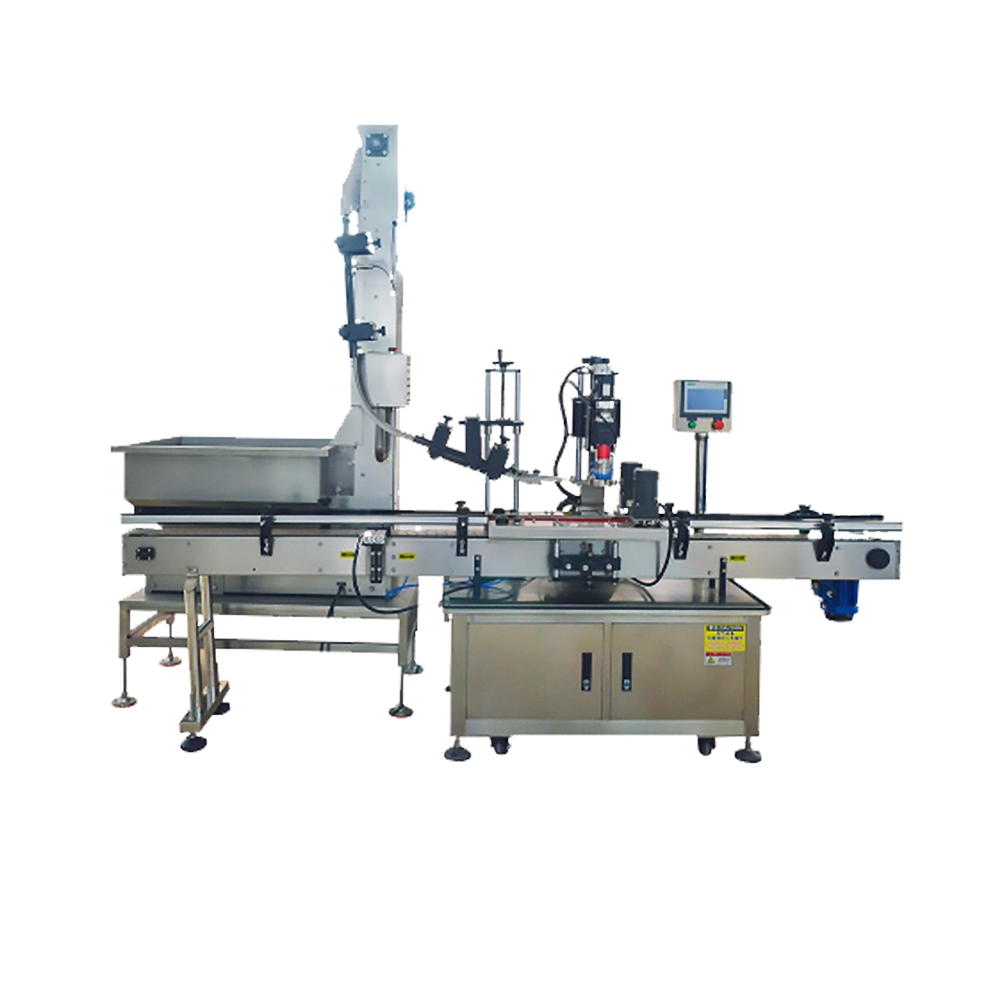
Automatic Metal Caps Capping Machine for Sale
Yuanyang automatic metal cap capping machine is a bottle capper for bottles with metal caps, which is often used to close lids of containers such as bottles and jars. The glass bottle metal capping machine is widely used in food, medicine, chemical, cosmetic, and other industries for mass production and continuous production line .
Features:
⦁ Pneumatic and electric drive;
⦁ Automated fast speed;
⦁ Suitable for glass bottles with metal caps.
Automatic Pump Head Feeding and Capping Machine for Sale
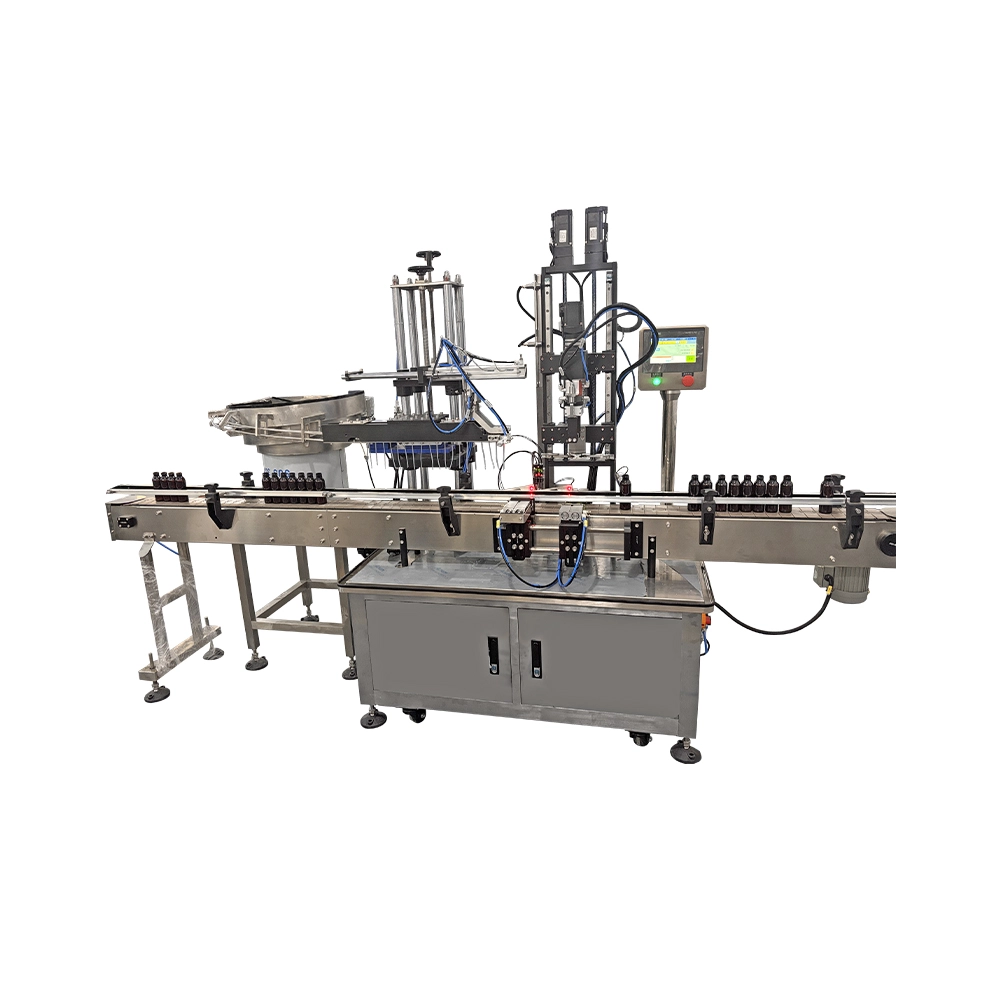
Yuanyang automatic pump head feeding and capping machine is a bottle cap sorter and capper for bottles with pump heads, which is often used to close lids of containers such as nail polish, sprayers, and shampoo. The capping machine with a pump head feeder is widely used in food, medicine, chemical, cosmetic, and other industries for mass production and continuous production line .
Features:
⦁ Pneumatic and electric drive;
⦁ Automated fast speed;
⦁ Suitable for various types of caps.
Automatic High Speed Capping Machine for Sale
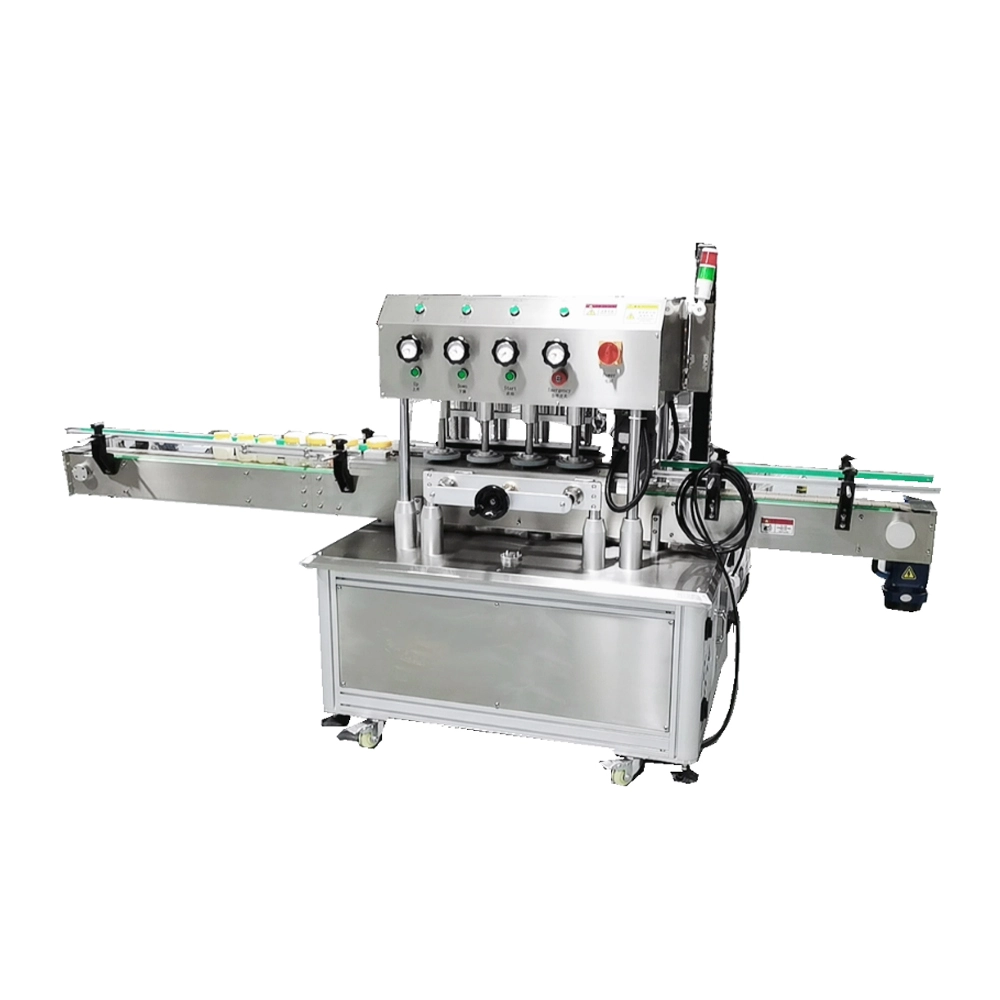
The Yuanyang automatic high-speed capping machine is a kind of 8-wheel bottle-capping machine with fast working efficiency. The automatic capper is often used to close lids of containers such as bottles and jars, especially for plastic bottles, which are widely used in food, medicine, chemical, cosmetic, and other industries for mass production and continuous production lines.
Features:
⦁ Electric drive;
⦁ Automated fast speed;
⦁ Suitable for various screw caps, pumps, and spray bottles.
 Scan QR Code
Facebook
YouTube
LinkedIn
Whatsapp: +8613434139712
Guangzhou Yuanyang Machinery